
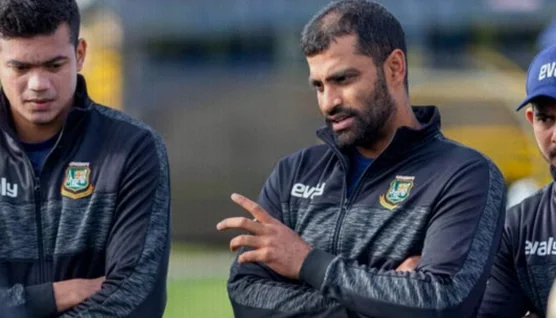
Tamim Iqbal’s first public remarks since stepping in as the interim head of the Bangladesh Cricket Board were framed less as a vision for the long haul and more as a call to repair what has been damaged. The former Bangladesh captain, taking charge after the previous board was dissolved amid allegations of irregularities surrounding the 2025 election, said the immediate focus must be restoring confidence in the board and the reputation of Bangladesh cricket. For him, rebuilding credibility is not a future project—it is the first job on the desk.
The 37-year-old, who ended his international playing career in 2023, is also Bangladesh’s only batter to have scored centuries in all three formats. His appointment to lead the ad hoc committee comes at a time when the board is already under heavy scrutiny, and the election controversy is only part of the wider picture. Bangladesh cricket has been dealing with the fallout from the turbulence of the last 18 months, including the board’s position surrounding the 2026 Men’s T20 World Cup, a stance that has reportedly dented its standing on the international stage.
Speaking after chairing the committee’s opening meeting in Mirpur, Tamim made his priorities unmistakably clear. He suggested that while incoming leaders are often associated with talk of development and future tours, his group believes the first and most urgent responsibility is to repair Bangladesh cricket’s image. “Usually, when people take on such responsibilities, they speak about development and other matters. But my team and I feel that our first and foremost task is to restore the reputation of Bangladesh cricket. The damage done over the past year and a half must be repaired; that is our top priority,” he said, setting the tone for an administration that begins with credibility rather than ambition.
At the same time, Tamim tried to convey urgency without making promises that could not be met by an interim structure. He said the committee would aim to finish the work “as quickly and as honestly as possible,” and added that the administration wants “a free and fair election in which everyone interested – cricketers, organisers, and all stakeholders – can participate.” That emphasis points to the central difficulty of his mandate: the new committee is expected to manage both a credibility crisis and an election process, with governance legitimacy hanging in the balance.
That challenge has already drawn pushback. Aminul Islam Bulbul, the ousted BCB president, has rejected the decision to dissolve the board, describing it as a “constitutional coup.” He also cautioned that such intervention could harm Bangladesh’s position in world cricket. In practical terms, Tamim’s interim period begins with pressure arriving from multiple directions—one front demanding stability inside the organisation, and another urging that Bangladesh avoids further governance complications that could spill over into its relationship with the ICC.
For now, though, Tamim has signposted the direction of travel. His first agenda is not built around grand promises or immediate glory; it is about restoring trust, securing legitimacy, and rebuilding the credibility that Bangladesh cricket has lost amid the upheaval of recent months.
