
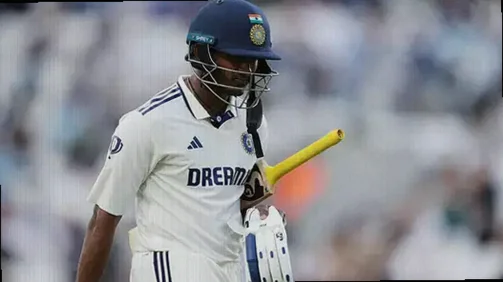
With India set to play a one-off Test against Afghanistan in Mullanpur on June 6, assistant coach Ryan ten Doeschate has acknowledged that the team’s search for the right No. 3 batting option in red-ball cricket has not gone as smoothly as hoped. After the retirements of Rohit Sharma and Virat Kohli, India’s top-order has largely relied on Yashasvi Jaiswal and KL Rahul as openers, while Shubman Gill has typically been used at No. 4. But the spot at No. 3 has seen several changes, and ten Doeschate admitted that frequent tinkering can’t be ideal—especially with the World Test Championship context adding urgency to making a clear call.
Key takeaways
- India begin their Afghanistan Test campaign in Mullanpur on June 6, with the No. 3 role still under review.
- After Rohit Sharma and Virat Kohli retired, the usual openers are Yashasvi Jaiswal and KL Rahul, with Shubman Gill commonly at No. 4.
- The No. 3 position has rotated among Sai Sudharsan, Devdutt Padikkal, and others, including Washington Sundar in the first South Africa Test in Kolkata.
- Ten Doeschate said India may “give a bit of a rope” to whoever gets picked, but stressed the need to decide and back the chosen batter.
- India’s schedule means there is limited time between Tests, which makes long-term experimentation difficult.
- With the Test starting early in the day just five days after the IPL final, ten Doeschate highlighted sleep-cycle adjustment and “detoxing” from white-ball habits.
The No. 3 question lingers
Ten Doeschate said the team could have done better by locking down the No. 3 spot earlier, calling it both a tough and crucial batting position in Tests. He explained that India have had to adapt after the retirements of Rohit and Kohli, with Jaiswal and Rahul stepping into the opening roles and Gill spending time at No. 4.
Above Gill, the No. 3 slot has been in flux. Sai Sudharsan and Devdutt Padikkal have had opportunities, and even Karun Nair—who received a Test outing during England—was among the contenders. Ten Doeschate also pointed to a particularly bold selection in the previous red-ball assignment, when India used Washington Sundar at No. 3 in the first Test against South Africa in Kolkata.
However, the second Test in Guwahati saw Sudharsan return to that position after Gill missed the match due to injury. That sequence was back in December 2025, and six months on, India still have not settled on a permanent answer for No. 3. Ten Doeschate summed up the situation by saying there has been “a lot of changes” in the role and that constant adjustments are not ideal.
“You need to look at the incumbents for that role and maybe stick with someone. It’s a difficult position to bat and a very important position to bat,” ten Doeschate said. He stressed that the team wants to make a decision, then trust the selected batter to develop quickly, particularly because India’s position in the World Test Championship leaves little room for extended trial and error.
Schedule pressure and form numbers
Ten Doeschate also made it clear that the calendar complicates any attempt to build a longer-term plan. After the one-off Test versus Afghanistan, India’s next assignment in the format comes only in the second half of August, when they tour Sri Lanka for two Tests. With such gaps, he suggested the competition for No. 3 could likely come down to Padikkal and Sudharsan—while also highlighting why choosing based purely on long-term projections is hard right now.
Padikkal has played two of his three Test innings at No. 3. In those opportunities, he recorded a 23-ball duck and a score of 25 off 71 deliveries. For Sudharsan, all of his 11 Test innings have been at No. 3, but the returns have not matched the expectations of the management. Ten Doeschate noted that Sudharsan has made 302 runs there at an average of 27.85, including just two half-centuries.
Even with those concerns, ten Doeschate pointed to reasons why both players remain in the mix. “Dev comes in with a ton of runs in domestic cricket across all the formats and obviously Sai’s got a nice IPL with Gujarat, so they’re both in good form,” he said. He added that whoever gets the opportunity will receive time to settle, but the manner and timing of that backing must fit the Test schedule.
He elaborated on the challenge of consistency: one Test appears, then there is a stretch without the format, then two more Tests come, and then another gap follows. In that rhythm, India have to balance the need for a decision with the reality of limited consecutive match practice at the same spot.
Ten Doeschate said the main objective is to commit to a player and enable them to grow into the role, ideally quickly. He reiterated that the team cannot afford to gamble further given where they stand in the WTC standings, and he also felt that India could have been more effective by nailing down the No. 3 position earlier.
Transition from IPL final to red-ball Test cricket
India go into the Afghanistan Test just five days after the IPL final, with six members of the Test squad having played that match. The group includes the captain, alongside Sai Sudharsan, Shubman Gill, Washington Sundar, Prasidh Krishna, and Devdutt Padikkal.
Ten Doeschate acknowledged that the switch in routine will be demanding. Players who were recently finishing intense cricket in the late evening now have to be ready to bat in the early part of the day, with expected temperatures around 34–35 degrees. “You’re playing in the IPL final five days ago at night-time and now you’ve got to come and start a Test match early in the morning at 34, 35 degrees. Just another challenge on the road and the guys will take it on like they always do,” he said.
He also explained that his role is to prepare the group for what lies ahead, highlighting sleep-cycle adjustment as a key part of the transition. “Sleep cycle is probably top of that list and that’s been addressed,” ten Doeschate added.
The assistant coach described the preparation as a process of “detoxing” players—moving them away from the mindset and habits required for white-ball cricket and back toward the patience, decision-making, and technical focus expected in Tests. He said that part of the work across the training period is ensuring players make decisions based on where the ball is pitched, along with technical refinements such as how they set up and how they keep their bat shape.
Ten Doeschate said the last two days, including the day of the comments and the following day, have been about that reset. “Just detoxing guys, making sure that those habits that are required to be successful in white ball cricket are put to bed and they focus on playing proper test cricket again,” he said.
