
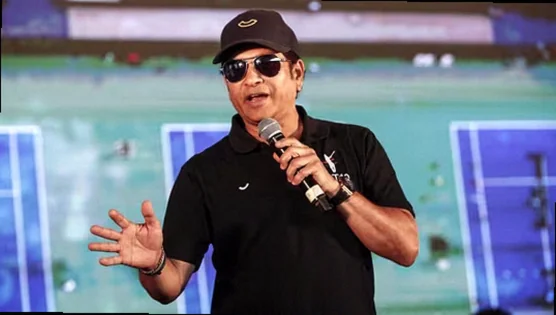
With IPL 2026 witnessing an extraordinary batting surge—run rates hovering around the 10 mark and boundary hitting at levels many previously thought unrealistic—even totals above 220 are increasingly viewed as potentially chaseable. That widening bat-versus-ball imbalance has prompted Sachin Tendulkar, one of T20’s most revered voices, to argue for a stronger sense of parity between batting and bowling. Speaking ahead of the IPL 2026 summit clash in Ahmedabad, the legendary batter laid out three bold changes he believes could restore competitive balance in the league.
Sachin’s calls for change ahead of the IPL 2026 final
Tendulkar delivered his proposals during the ESPNcricinfo Awards in Mumbai, with the IPL 2026 final scheduled for the next day in Ahmedabad. The title match features defending champions Royal Challengers Bengaluru taking on Gujarat Titans.
Proposal 1: Scrapping the Impact Player rule
As his first move, Sachin said the Impact Player rule should be removed from IPL cricket. He framed the concern around the format’s already limited overs and the additional batter slot that, in his view, further tilts the contest toward batting.
“I feel there are a few things which, on a personal note, I can say. I think the Impact Player rule needs to go away. In a T20 format, you are already playing just 20 overs, and then you are adding one more batter to the line-up. When bowlers are already being challenged, I find that imbalance,” he said.
How the rule works and why it has been criticised
- The Impact Player rule was introduced in 2023.
- Under the system, a team can replace a player from the starting XI with one of the substitutes listed at the toss.
- Senior cricketers have raised objections to the rule’s effect on the balance of power—Rohit Sharma and Virat Kohli are among those who have criticised it.
- Critics argue that it reduces the influence of bowlers in the match.
- Since the rule’s introduction, scoring rates have continued to rise steadily.
The topic was raised at the captains’ meeting before IPL 2026, but the BCCI indicated it would review the Impact Player rule only after the season concludes.
Proposal 2: A two-stage powerplay with flexible field control
Sachin’s second idea focuses on reshaping the powerplay structure. Instead of treating the opening overs as a single uniform phase, he suggested splitting the powerplay into two distinct segments—one that remains clearly batter-friendly, and another that can be managed strategically by the bowling side.
Tendulkar’s powerplay blueprint
- In the current six-over powerplay with restrictions, only two fielders are permitted outside the ring.
- Sachin proposed that the first four overs should be the batters’ powerplay with the same restrictions.
- He then suggested that the remaining two powerplay overs should be used by the fielding captain whenever he wants.
- During those final two powerplay overs, the same limitation—only two fielders outside the ring—should also apply.
“So you are able to control the game better,” Tendulkar added, pointing to the captain’s ability to choose when to apply pressure during the shortened, restricted-overs window.
Proposal 3: Letting one bowler deliver a fifth over
For his third suggestion, Tendulkar went further than a tweak—he proposed changing bowling usage in a way that would allow a team’s leading bowler to bowl one additional over.
The fifth-over concept
- He argued that one bowler should be permitted to bowl five overs.
- Tendulkar’s reasoning was that the best bowler in the side is typically the one who would be selected to deliver that extra over.
- He questioned why audiences should not see the most effective bowler bowl more, especially given the modern batting trend where top batters sometimes stretch their innings to nearly the full quota of overs.
“One bowler should be allowed to bowl five overs. Because invariably the best bowler of the side is going to bowl that fifth over. Wouldn’t you want to see that best bowler bowl more?” Tendulkar said. “The top batters are batting sometimes even 20 overs. Why shouldn’t the best bowler be bowling five overs?”
Why the debate is growing: higher totals and tougher bowling
Tendulkar’s suggestions arrive at a moment when IPL batting has exploded. Teams are frequently posting scores beyond the 200-run mark, and bowlers are finding it increasingly difficult to influence outcomes. While it remains uncertain whether the BCCI will take any of the ideas forward, the former India captain has undeniably reignited the discussion around how to rebalance T20 cricket so that the contest stays fairer for both batters and bowlers.
