
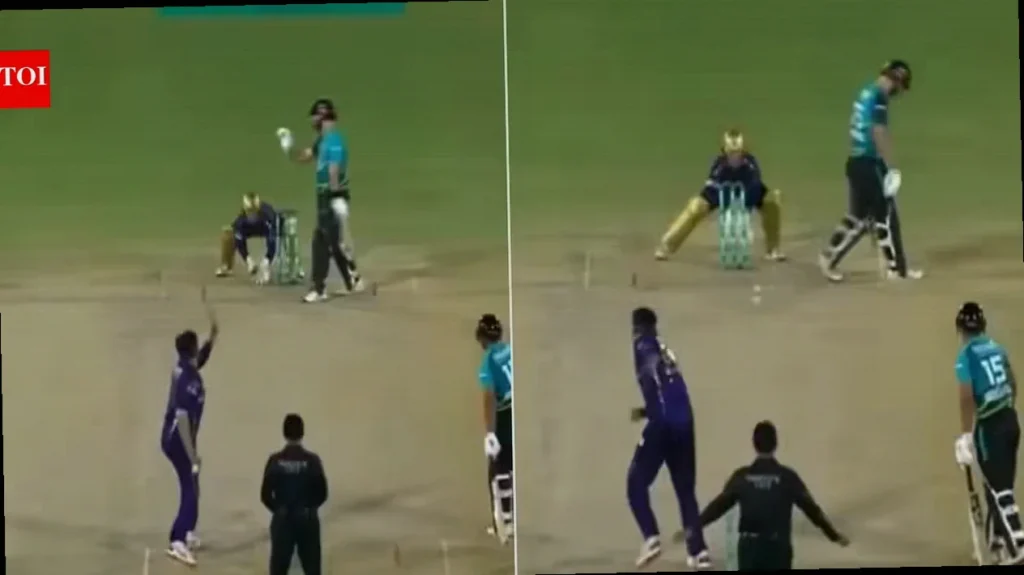
The Pakistan Super League (PSL) 2026 delivered another flashpoint on Friday during the clash between Quetta Gladiators and Rawalpindi Pindiz, after Daryl Mitchell twice walked away during a pause in Usman Tariq’s bowling spell. The New Zealand batter appeared to be questioning the length of the delay in Tariq’s action before the ball was released, and after he repeated the move, the on-field officials stepped in to get play back on track.
The incident unfolded in the match between Quetta and Rawalpindi Pindiz in Karachi. In the ninth over, Mitchell faced Tariq and played a paddle sweep on the first delivery of the over. However, he quickly seemed uncomfortable with the timing of the pause in the bowler’s action, walking away from the crease twice as the delay stretched. Each time, he gestured towards the mid-action pause, prompting the umpires to intervene, speak with the batter, and then allow the contest to continue.
From Tariq’s end, the over started modestly, with three consecutive singles coming off the first three balls. On the run up to the fourth delivery, Mitchell again left his stance at the last moment due to the continuing delay. After observing the repeated instances, the umpire approached him and held a brief conversation before play resumed.
Mitchell’s stay at the crease did not last much longer. He was eventually dismissed when he was caught and bowled by Saud Shakeel, and Rawalpindi Pindiz went on to lose the match by 61 runs. That result kept the focus on the stoppage debate, but also underlined how quickly a disruption in rhythm can affect a batter’s control and shot selection.
The controversy has also been linked to advice that Ravichandran Ashwin has discussed in the past. Tariq, in particular, had already been in the spotlight earlier in the year during the T20 World Cup, with Ashwin suggesting that batters should walk away in such situations. The idea, as explained by Ashwin, is that forcing the umpire to call a dead ball can shift the responsibility for the delay back onto the bowler and officials, while reducing any potential benefit created by disrupted timing.
Meanwhile, Tariq’s bowling has faced scrutiny for the way his delivery starts and then pauses before release. His run-up is followed by a still moment before he completes the action, and he then drops to his knees to finish the delivery. Tariq has previously been reported twice for a suspect action, and he was cleared on both occasions.
