
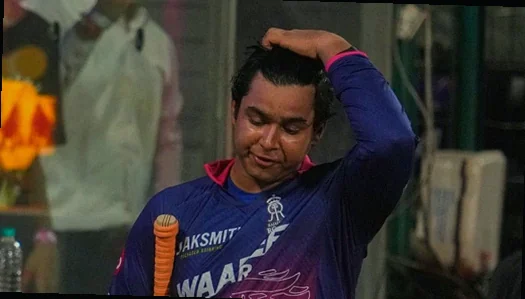
Vaibhav Sooryavanshi has already featured in 12 matches in the 2026 Indian Premier League, and the conversation around him has quickly turned from “who is he?” to “how far can he go?” The headline figures tell part of the story: 486 runs in those games, an average of 40.50, and a strike rate of 234.78—numbers that look tailor-made for T20 impact. Most recently, he added another electric burst in Rajasthan Royals’ loss to the home side Delhi Capitals, striking 46 off just 21 balls. That knock included three sixes, and with 43 maximums to his name so far, he is currently leading the season’s list for six-hitting.
Yet even with those fireworks, the bigger question remains whether he can convert his power into consistently large totals. His overall output has been undeniably good, even impressive—especially when you remember he is only 15. At an age when many players are still figuring out the pace and rhythm of elite cricket, Sooryavanshi has been launching massive hits against bowlers with international pedigrees. Names such as Josh Hazlewood, Bhuvneshwar Kumar, Pat Cummins and Mitchell Starc have all felt the force of his batting at some point this season.
Still, IPL success doesn’t automatically guarantee the same kind of dominance in every arena. If you bracket his performances without focusing on the novelty of his age, the raw totals start to feel less overwhelming. The IPL has seen plenty of Indian batters who can post similar strike rates, and Sooryavanshi’s current numbers, while strong, are not alone in standing out. Abhishek Sharma is one example, while Sanju Samson, Tilak Varma, Ishan Kishan and Shivam Dube can also play at a similar tempo. Among players who are yet to establish themselves fully at the international level, Priyansh Arya and Prabhsimran Singh, on their day, can trade blows in a comparable fashion. Even former India spinner R Ashwin has gone as far as rating Arya as a step ahead.
Sooryavanshi’s case, for now, is that he has demonstrated the ability to hit with real violence, but the second requirement—building innings that pile up runs in meaningful winning packages—has not been consistently satisfied. His strike rate and his six count could even dip slightly, and it would still be acceptable; what is harder to overlook is the lack of big innings. In T20 cricket, the difference between being a standout finisher and a match-winner is often the ability to stay in long enough to turn good starts into decisive totals.
The IPL, importantly, is the perfect environment to learn that lesson. In most matches, the balance of conditions tends to favour batters: wickets are generally more accommodating, and boundary sizes are often smaller than what players grow accustomed to in England and Australia. On top of that, every bowling unit typically has a couple of less-tested areas—whether it’s a bowler’s execution under pressure or a matchup that doesn’t quite land. If Sooryavanshi cannot consistently pile up runs in a tournament built for quick scoring, then the question becomes where that improvement can realistically happen.
International cricket, however, is a different landscape entirely. The competition level rises sharply, there are no easy “weak links” to exploit, and conditions change from country to country in ways that demand adaptability. Opponents will prepare specifically for him, and he is not the kind of batter whose game rests purely on technique and temperament without needing time. That is where the risk lies: the flashes of brilliance are already there, but the long-term expectations will only be met if he learns to sustain his impact.
Rajasthan Royals head coach Kumar Sangakkara has been candid about the one recurring issue this season—Sooryavanshi has struggled to keep his innings going for longer stretches. Sangakkara is comfortable with what the teenager is producing right now, but the bigger hope is that the Sri Lankan coach’s point becomes a lesson rather than a label. For a player of his quality, small innings alone won’t be enough to carry his growth forward in the long run.
Looking ahead, the pathway for that development is already taking shape. In line with Ravi Shastri’s thinking, Sooryavanshi—who has recently been named in the India A squad for an ODI tri-series in Sri Lanka in early June—should also be involved in the next phase of India’s schedule. He is expected to be part of the group that plays two T20Is in Ireland in late June, followed by five T20Is in England in July. India will also contest three ODIs in England during that window, and there is a clear rationale for ensuring he is included there as well. Even if he doesn’t get a chance to take the field in every game, the exposure to different conditions and higher-pressure match situations could be exactly what he needs to move beyond short bursts and start building larger innings at the next level.
