
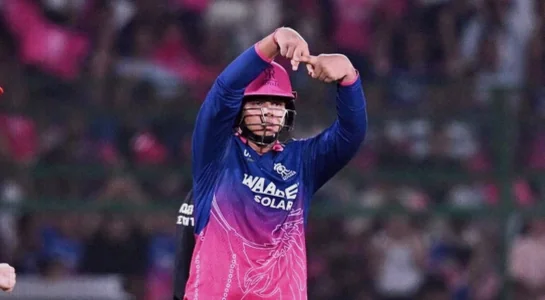
Vaibhav Sooryavanshi’s blistering 93 off 38 balls versus Lucknow Super Giants in IPL 2026 didn’t just swing the contest—it delivered one of the most lopsided “value for money” profiles seen in a single match. Rajasthan Royals paid him a match cost of ₹7.86 lakh, yet the innings generated ₹4.75 crore in match worth from that one spell. After accounting for cost, the profit portion stood at ₹4.67 crore, translating into a 60.4x return on total worth and a 59.4x return on profit.
Sooryavanshi’s innings: the numbers behind the charge
The scorecard captured the runs; the valuation ledger captured the shock. Sooryavanshi struck 93 in 38 deliveries at a strike rate of 244.73, giving Rajasthan the kind of top-order acceleration that reshapes how opponents respond and how match momentum is distributed.
- Innings output: 93 runs off 38 balls
- Strike rate: 244.73
- Match cost charged to the ledger: ₹7.86 lakh
- Rating-adjusted match worth: ₹4.75 crore
- Profit after cost: ₹4.67 crore
- Total return multiple (worth vs cost): 60.4x
- Profit return multiple (profit vs cost): 59.4x
Why the return looks so extreme: per-ball and per-over ROI
The magnitude becomes even clearer when the innings is broken down into value created per ball. With 38 balls faced, the profit after cost of ₹4.67 crore implies roughly ₹12.29 lakh in profit for every ball. The ledger also suggests that over each six-ball segment of his stay, the profit value sat around ₹73.7 lakh.
- Profit per ball faced: ~₹12.29 lakh
- Profit per six balls: ~₹73.7 lakh
- Profit per run: ~₹5.02 lakh
That’s why the knock cannot be treated as “just” a fast 93. In T20 terms, 93 off 38 is dominance. In valuation terms, it is surplus—an innings where the acceleration happens early enough to force the bowling side into reactive patterns and where the cost base is small enough to make the multiplier look enormous.
Impact, tempo and the “₹1 crore becomes ₹60 crore” framing
Alongside the raw scoring, the innings carried tactical weight. A batter operating at a strike rate of 244.73 removes the bowling side’s ability to build standard spells. Field plans spread sooner, bowlers have to shift to defensive options earlier, and captains lose the comfort of saving favourable match-ups for later stages. Rajasthan benefited from tempo that stayed beyond Lucknow Super Giants’ control window.
The financial reading rises because of the investment base. A highly priced player can produce a big innings and still end up with a relatively moderate multiplier, simply because the cost line is heavier. Here, Sooryavanshi started from a low-cost point and then generated one of the strongest batting outputs of the match, pushing the return curve sharply upward.
That is the logic behind the ₹1 crore framing: if ₹7.86 lakh turns into ₹4.75 crore in worth at the same rate, then ₹1 crore would equate to roughly ₹60.4 crore of match output. If the lens is restricted to profit after cost, then ₹1 crore would correspond to about ₹59.4 crore in profit. Both perspectives point to the same conclusion—an exceptionally out-of-range match efficiency for IPL standards.
Model quality checks: manual rating and impact score
The corrected valuation also reflects the quality of the performance. The innings received a manual rating of 15 and used an impact score of 95 for the money calculation. Those inputs kept the final worth aligned with the scale of the knock, treating the 93 off 38 at that strike rate as an exceptional-impact innings.
Method note: what the valuation means (and what it doesn’t)
The valuation model converts match impact into rupee terms by weighing a player’s contribution against his match cost. It includes batting, bowling and fielding value, with quality adjustments for the scale of the performance. These figures are model-based estimates for cricketing return on investment and are not official IPL salary accounts or franchise financial records.
