
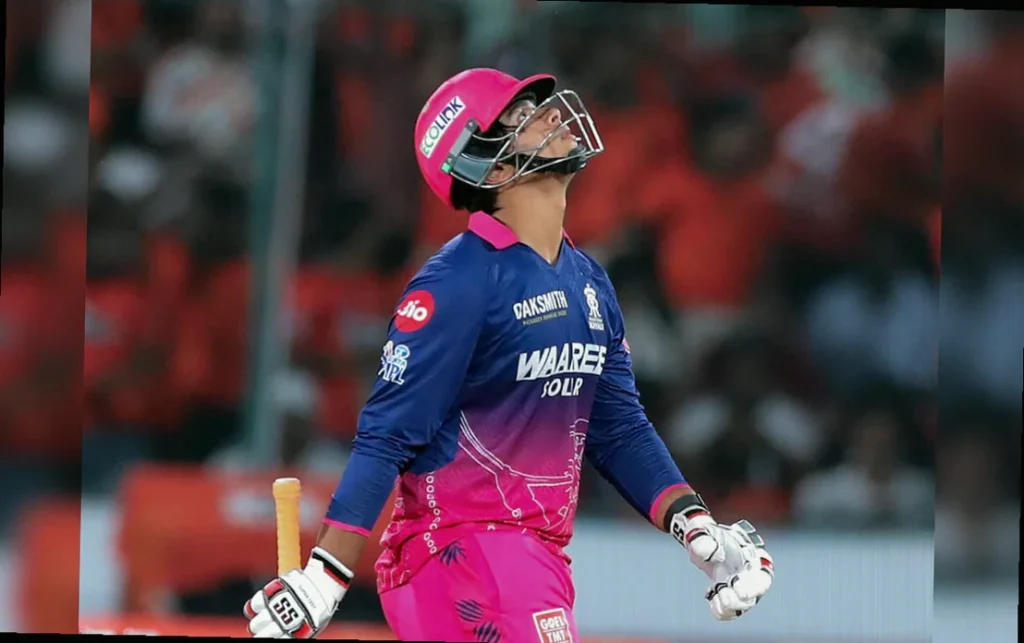
Vaibhav Sooryavanshi, widely viewed as the most exciting teenage prospect in world cricket right now, hit a rare roadblock during the IPL 2026 clash against Sunrisers Hyderabad. Entering the match as the current holder of the Orange Cap in the T20 competition, Vaibhav was dismissed for a first-ball duck, a surprise turn that came after Hyderabad’s debutant Praful Hinge executed a plan with precision. The quick dismissal was Vaibhav’s first failure of the season, and it quickly drew attention far beyond the boundary rope.
Former New Zealand fast bowler Simon Doull used the moment to deliver a stern but protective message to the Rajasthan youngster. Doull urged Vaibhav to “watch out for sharks,” suggesting there are people around the sport who are primarily interested in earning money from a young star rather than nurturing his long-term development. For Doull, the concern isn’t about talent—he believes Vaibhav’s rise is already real—but about the environment that surrounds such a rapid breakthrough.
Sooryavanshi’s stock has climbed sharply since the beginning of the IPL 2026 campaign. With performances already putting him in the spotlight, he has also reportedly secured several brand endorsements early in the season, underlining how quickly his reputation has moved beyond cricket alone. Doull believes the trajectory could be exceptionally bright for Vaibhav, particularly in white-ball formats where his skill set can keep evolving. But that promise, Doull argued, should come with caution—especially when it comes to who tries to manage his image, schedule, and opportunities.
Doull framed his warning in terms of the pressures that come with superstardom at a young age. “It is a word of caution,” he said, emphasizing that Vaibhav already carries the aura of a major star. He added that if things continue in the right direction, hopes are that the teenager can grow into an “Indian superstar,” with particular impact in white-ball cricket. The key, in his view, is the people Vaibhav chooses to be around—because the attention that follows a breakout can attract individuals whose priorities do not align with the player’s best interests.
He also reflected on how management structures often operate, arguing that too many stakeholders focus on their own upside rather than on building the player’s career. Doull noted that management companies and personnel are meant to support players, but that the wrong kind of involvement can shift the focus away from what matters most. “How much can I make of this young man? How much can my company make of this young man?” Doull questioned, calling that the central issue he sees with management companies worldwide.
From Doull’s perspective, these early years are foundational for Vaibhav’s development, and they should be handled with care. With Vaibhav only 15, the former international warned against pairing him with managers who are primarily concerned with profits instead of cricketing growth. Doull stressed that the right support should ensure the teenager is not pushed into decisions that compromise his progression. If the player pauses or dips in form, such self-interested managers, Doull suggested, will quickly move on to the next prospect—because that is how they operate.
In the final part of his advice, Doull returned to the core message: choose the right circle. “Just be careful who you surround yourself with,” he said, adding that strong family grounding and good upbringing would help Vaibhav navigate the noise. Still, even with that base, he reiterated the need to be alert to the “sharks” in the system—those who may look to profit first, and protect the player’s future only as an afterthought.
