
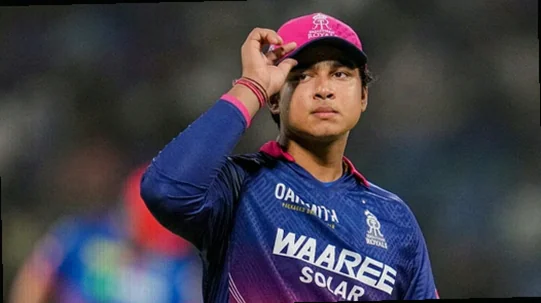
Rajasthan Royals walked into the night with a teenage batter’s high-value burst still ringing in their ears, yet they left with defeat. Vaibhav Sooryavanshi struck 46 off 21 balls, delivering the kind of powerplay acceleration that can usually push a T20 chase into a controlled rhythm. But the rest of the innings didn’t convert that advantage into a winning finish.
Sooryavanshi’s impact came with a visible scar too. During Delhi Capitals’ chase, a lapse in the 14th over surrendered three extra runs, trimming his overall ledger and giving the chasing side a softer path. His batting merit wasn’t erased, but the match became a tougher lesson in how one player can generate profit and still end up on the wrong side when the team around him doesn’t close the deal.
Vaibhav’s batting value: a ₹2.11 crore surge
In Rajasthan’s player-impact ledger, Sooryavanshi’s innings is valued at 60.30 batting impact points. When his match-specific manual rating multiplier is applied, that figure works out to roughly ₹2.11 crore in batting value for the game.
His match cost is estimated at about ₹7.86 lakh, derived from his ₹1.10 crore season price spread across the expected league period. That puts the batting return at nearly 27 times his per-match cost—an illustration of the scale of value RR received even before the chase could begin.
There was also plenty of evidence on the field. Sooryavanshi struck 5 fours and 3 sixes, and the boundary balls he produced carried real weight in the innings’s momentum. Those eight scoring shots alone were rated higher than the full value of many complete T20 efforts, largely because they helped Rajasthan create pace, disrupt the field, and seize early control.
Rajasthan were 75/1 after the powerplay, with Sooryavanshi contributing 42 runs from 16 deliveries. By the time he was dismissed at 7.3 overs, RR had surged to 89/2—proof that the launch had already taken shape.
At that point, Rajasthan didn’t require rescue. They needed conversion: the ability to turn a strong start into a total that feels unreachable, not merely defendable.
RR failed to turn the launch into a winning total
Rajasthan ended on 193/5, but the innings was dented by a significant collapse in the middle overs. A team reaching 89/2 in 7.3 overs still has enough room to push beyond the competitive zone, especially with early tempo, wickets in hand, and a teenage opener who had already damaged Delhi’s plans.
The next job was for the lower order to convert the platform into a chase-proof sum—something that would force Delhi to chase under constant stress. Instead, the finishing premium never arrived in full measure.
The loss therefore lands less on Sooryavanshi’s bat and more on Rajasthan’s inability to cash in on the advantage he created. RR received a premium opening burst, yet their final target remained huntable—something Delhi could keep within reach through a partnership and a few late blows.
The misfield that cut ₹22.45 lakh from his night
Fielding still matters in this kind of valuation, and Sooryavanshi’s error has to be counted. At 13.5 overs in Delhi’s chase, Axar Patel faced Yash Punja. The ball should have been taken as a single, but a misfield by Sooryavanshi turned it into four runs.
That slip granted Delhi three extra runs. As a result, the match equation shifted from what should have been 68 needed off 37 balls to 65 needed off 37. The required run rate eased from around 11.03 to 10.54. In a chase moving into the final six overs, that difference acted like a genuine pressure release.
On the player-level debit, the direct impact is around 6.42 points. Converted into money terms using Sooryavanshi’s match conversion rate, the misfield cost him roughly ₹22.45 lakh.
His batting value stayed at about ₹2.11 crore, but after the fielding deduction his net player worth drops to approximately ₹1.89 crore. His profit for the game falls from nearly ₹2.03 crore to around ₹1.81 crore.
Still, that remains a huge surplus. The mistake stained the night, but it didn’t define it.
Looking at the full swing of the match, the picture becomes even sharper. Because the delivery provided extra batting value to Delhi and removed control value from Rajasthan’s bowling side, the overall delivery swing is estimated at about 12.18 impact points—equivalent to roughly ₹42.62 lakh in match-value terms.
That doesn’t mean Sooryavanshi is the reason RR lost. It shows how a strong personal ledger can still be undermined by an expensive leak that changes pressure at the wrong moment.
RR’s real problem: value wastage after the big start
Sooryavanshi’s game contains two financial truths. His batting gave Rajasthan one of the cleanest value wins of the match, while his misfield handed Delhi a costly release of pressure. Even with that deduction applied, Rajasthan still received more than enough value from him for a 15-year-old priced at ₹1.10 crore.
Yet the result exposes a deeper issue. Rajasthan didn’t lose because Sooryavanshi failed to deliver. They lost after receiving a huge early return from him. His innings created speed, and his price made that speed even more valuable. After his dismissal, RR still had a platform that demanded a heavier finish—but that weight wasn’t carried through.
Delhi were allowed back because RR’s total didn’t fully reflect the start they had been gifted. That mismatch is why this game fits into the “value wasted” category: Sooryavanshi produced a ₹2.11 crore batting surge, returned about ₹22.45 lakh through a fielding lapse, and still ended the match as one of Rajasthan’s major profit points of the night.
The defeat also made the innings feel smaller than it truly was. The ledger tells something harsher about the team: Rajasthan uncovered a teenage goldmine at the top, yet failed to cash the cheque.
Method note
The valuation is built on a match-impact model that assigns player impact across batting, bowling, fielding, and match context, then converts those points into a rupee estimate using the player’s match-specific rating layer and cost base. Sooryavanshi’s batting worth is calculated using scoring impact, boundary value, the phase of the innings, and his manual performance rating. The fielding debit is calculated from the confirmed 13.5-over misfield, with the ball corrected from four runs to its likely single-run outcome.
These numbers are analytical estimates, not official IPL figures or salary adjustments. They are intended to measure match value and opportunity cost within this model, not the exact money earned or lost by the player or franchise.
