
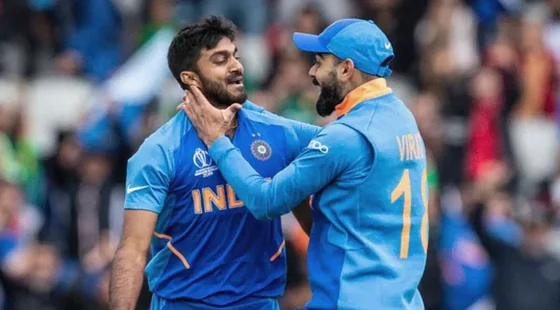
Vijay Shankar’s retirement message caught many people off guard. Not because it was completely unexpected, but because the 35-year-old had slipped out of everyday headlines. The “3D cricketer” — a tag he used with a hint of humour in his own statement — last featured in competitive cricket just five months earlier, in January.
At that stage, Shankar looked anything but finished. Moving from Tamil Nadu to represent Tripura, he made a statement with an unbeaten 151, reminding observers that his talent still carried weight. Yet even that promising domestic burst could not change the reality that his international story had already reached its end.
From promise to public fade-out
Shankar was never the textbook kind of all-rounder for India. He did not fit the “ready-made” mould in terms of athleticism, he lacked genuine pace, and his batting was never viewed as a standout strength. Still, there was a sincerity to the way he approached the game — earnestness rather than flash — and that made his sudden disappearance from the bigger stage feel even more abrupt.
The most unsettled part of his career came in the summer of 2019. On April 16, then chief selector MSK Prasad surprised the cricket world by naming Shankar in India’s 15-man squad for the World Cup. By July 1, both his World Cup campaign and his place in India’s plans had effectively run out.
To understand how that happened in barely 75-plus days, it helps to rewind six years. During the Virat Kohli captaincy era, Indian cricket reached heights, but one recurring criticism was the lack of clear communication around roles. Yuvraj Singh later shared that around 2017 he did not receive clarity on where he stood. He also said MS Dhoni had told him plainly that neither the captain nor the coach saw him as part of India’s future.
Shankar, in many ways, became another victim of that same confusion.
The No. 4 search that kept changing
After Yuvraj’s exit, the No. 4 slot became one of the most debated spots in Indian cricket. Ahead of the World Cup, India experimented with as many as 11 candidates following the 2017 Champions Trophy, with names like Kedar Jadhav, Shreyas Iyer, Manish Pandey and Dinesh Karthik all getting looks.
Yet the longest rope was extended to Ambati Rayudu. Kohli had effectively treated him as the primary bet for the No. 4 position. Rayudu’s ODI standing was reinforced when he was recalled to the national setup after two years during India’s triumphant Asia Cup campaign in 2018.
From that point until India’s final match before the World Cup, Rayudu played 20 innings at No. 4. In those outings, he amassed 464 runs at an average of 42.18 and a strike rate of 85.60, including a century and two fifties.
Then, on selection day, Rayudu was left out and Shankar was brought in instead. Shankar’s recent IPL contribution — 244 runs and only one wicket for Sunrisers Hyderabad — is often cited as part of the reason the call was so shocking. The question of why Prasad chose Shankar over Rayudu remains one of the biggest selection talking points in Indian cricket, and Rayudu’s public outburst only intensified the debate further.
At a glance
- Vijay Shankar announced his retirement after fading from public view, despite last playing competitive cricket in January.
- In that January match for Tripura (after moving from Tamil Nadu), Shankar scored an unbeaten 151.
- On April 16, 2019, MSK Prasad named Shankar in India’s 15-member World Cup squad.
- By July 1, Shankar’s World Cup stint and India career were essentially over.
- Rayudu had been treated as the No. 4 option, playing 20 innings at No. 4 with 464 runs (average 42.18, strike rate 85.60) before the World Cup.
- In the World Cup, Shankar’s first match was against Pakistan at Manchester, where he took Imam ul Haq with his first World Cup ball.
- Shankar was later replaced by Rishabh Pant in the XI against England, with Mayank Agarwal added as cover.
- Shankar never played for India again, and Rayudu also never returned to the India side.
World Cup lift-off, then sudden sidelining
Shankar’s first World Cup appearance came immediately, and it arrived in Manchester against Pakistan — a high-profile clash. During the match, with Bhuvneshwar Kumar forced to stop due to an injury mid-over, Kohli brought Shankar into the proceedings, and the all-rounder quickly became part of World Cup folklore.
The impact was immediate. Shankar’s first ball in the tournament resulted in the wicket of Imam ul Haq. Before that game, Shankar had batted only five times in ODIs for India. After Manchester, he received just two more opportunities to feature.
India’s campaign then took a hit. After conceding 29 crucial runs against Afghanistan in Southampton and another 14 versus the West Indies, the situation tightened further. By then, Shikhar Dhawan had already been ruled out with a thumb fracture, forcing India to rethink their structure and promote KL Rahul to open.
Rahul had originally been considered for the No. 4 role in the World Cup, but Dhawan’s injury pushed the balance out of place. Then, ahead of India’s penultimate league match against England, reports emerged that Shankar had suffered a toe injury that seemed to arrive out of nowhere.
The timing raised eyebrows. Even though hindsight makes it easier to accept, at the time it struck many observers as suspicious, especially because the alleged injury had supposedly happened before the Afghanistan match — yet Shankar played that game and also appeared in the next one. Eventually, Rishabh Pant replaced him in the XI against England. From there, Pant took over the No. 4 role in India’s remaining matches, while Mayank Agarwal entered the squad as cover.
In the end, Shankar never got back into India’s XI. It became a textbook example of short-sightedness from the BCCI selection group. India already had two established high-quality all-rounders in Hardik Pandya and Ravindra Jadeja, and the rush to back Shankar did not just invite criticism — it also disrupted Rayudu’s continuation in the set-up.
Rayudu later announced his retirement in anger, only to reverse that decision afterward, but the damage had already been done. Taking on selectors publicly has rarely ended well in Indian cricket. Karun Nair had already felt that reality a year earlier, and like Shankar, Rayudu too never played for India again.
Within a little more than two months, Shankar went from living the thrill of a World Cup journey to returning to the grind of domestic cricket — a fall that felt abrupt enough to linger in the memory long after the tournament ended.
