
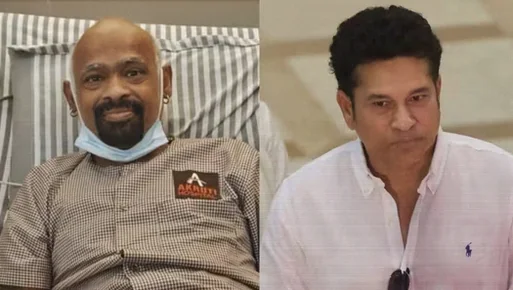
Vinod Kambli is moving around better these days, but his recollection is still unreliable, coming in fragments rather than full sequences. His overall health has not taken a further dive, though his condition remains fragile. The former India batter has also stopped drinking, but occasional lapses—forgetting that he should not smoke—have created fresh danger, with his doctors warning about the risk of a brain stroke.
Health update and the road so far
A little over a year after Kambli recovered from a urinary infection that needed care at a private hospital in Thane, the 54-year-old has shown steady improvement. Still, his well-wishers are hoping that progress can continue without setbacks. The concern is that while some systems appear to be stabilising, the brain issue is continuing to steer the future course of his recovery.
About 18 months ago, Kambli’s first major public appearance set off alarm bells. At the unveiling of the Ramakant Achrekar memorial in Mumbai, he appeared unsteady and struggled to stand and walk, gripping his friend Sachin Tendulkar’s arm. The moment quickly went viral, drawing widespread attention and support online.
Legends Sunil Gavaskar and Kapil Dev also stepped in to help with rehabilitation. Even so, despite the assistance that helped him regain footing, Kambli’s condition was described as still being on shaky ground. The latest updates underline that his recovery has improved his mobility, but memory and neurological stability remain major challenges.
Quick facts
- Vinod Kambli is reportedly walking better, though his memory remains weak.
- He stopped drinking, but sometimes forgets not to smoke.
- He had a urinary infection that required treatment at a private hospital in Thane about a year ago.
- He has a clot in his brain that cannot be removed due to lack of early precautions.
- Doctors have warned the next stage could be a brain stroke.
- Repeated hospital treatment at Breach Candy Hospital was halted due to insufficient funds.
In a WhatsApp group that includes his friends—mostly from the cricket world—financial support has been arranged without naming individuals, a close associate said. The same person noted that over the last six months Kambli’s memory has not worsened further, even though he still cannot recall much most of the time. The improvement, the associate added, is visible when “something clicks,” otherwise daily functioning remains difficult.
That associate, Marcus Couto, also described the neurological problem as a brain clot that cannot be removed because preventive action was not taken early enough. He said the medical advice points to a possible brain stroke as the next stage, while also explaining the harm caused by smoking despite Kambli having stopped alcohol. Couto described how, at times, Kambli asks passers-by for cigarettes and that auto drivers have often helped, believing they are assisting “The Vinod Kambli.” The impact, he said, is now focused on the brain—leading to imbalance.
Life at home and day-to-day routine
Kambli spends most of his time at home with his family. His wife, Andrea, occasionally takes him to Thane, where arrangements have been made for longer-term care, but he prefers staying close to his family. He watches little television because he finds it hard to follow, choosing instead to spend significant time with his two kids.
Regular check-ups are part of his routine. However, because his memory is not fully dependable, he sometimes forgets to take his medicines at the right time. The situation is therefore balanced between medical supervision and the day-to-day reality of living with a weakened recall.
Even with the concerns, Couto stressed that progress is real. He said Kambli recently appeared in a commercial for the first time in decades, and that he is set to be on screen again later this year. While Kambli may not be at his best, the appearances are being seen as signs that his condition is allowing him to engage beyond medical appointments.
Couto added that Kambli received an advertisement offer from Dinshaw’s ice-cream and shot for it in Mahim last week. He said the ad has “come out good,” with the makers understanding what could be taken out from Kambli while keeping the role simple and grounded. Couto also said the opportunity suited Kambli’s current age and capabilities.
Mobility has improved too. According to Couto, six months ago Kambli walked with support from furniture at home, but now he walks on his own using a support stick. He said a friend provided him with a stick used by mountaineers, and Kambli was pleased to have it. Couto also said a physiotherapy plan is still needed because there is little strength in his legs, and they expected to arrange a physio within a week.
Sachin Tendulkar, Couto noted, has also been involved in the background “as and when required,” reinforcing the support network around Kambli’s rehabilitation needs.
Rehab efforts and the funding collapse
Rehabilitation efforts hit a major snag in December 2024. Even though Kambli accepted Kapil’s rehab offer, the plan could not be executed. The 1983 World Cup-winning group came together to offer help, but the conversation between Kapil and Couto did not work out as expected.
Couto explained that Balwinder [Singh Sandhu] was handling the process. He said the 1983 World Cup team had formed a group to decide on support for Vinod, and Ballu reached out to him. At the time, Couto had a contact—Dr. Santosh Jadhav—who runs a hospital in Panvel. Couto said Jadhav had agreed to keep Kambli there for at least 11 months and even built a day-to-day programme for him, estimated at ₹1 lakh per month.
However, Couto said that when he discussed it with the group, they indicated they would not fund the full plan. Kapil then asked Couto to tell Kambli to come to Haryana, where he has a rehab centre, but Couto said he told Kapil that rehab alone was not the solution. He added that the doctor then warned that the next stage could be a brain stroke, which would require hospitalisation—and if that happened, they would need the best possible medical care.
Couto said Dr. Chagla was looking after Kambli at Breach Candy Hospital, but treatment could not continue because of a shortage of funds. After multiple hospital visits, Kambli has reached a stage where Couto does not expect a full recovery and is now mainly hoping the condition does not worsen.
He said that when Dr. Chagla was treating him at Breach Candy, Kambli had recovered nearly 60 per cent. But because the money ran short, they could not keep him there long-term. Couto described how friends sponsored expenses in turns—one day at a time, then three days, then five days—until they could no longer continue the hospital stay. He said they were even advised to take Kambli to a general hospital, but doing so is difficult, with people showing more interest in the “elite” healthcare options.
Couto concluded by saying he does not believe Kambli will make a full comeback, but if he remains stable, the family would be content. The immediate priority, he said, is to prevent deterioration and keep the condition steady as support and medical care continue.
