
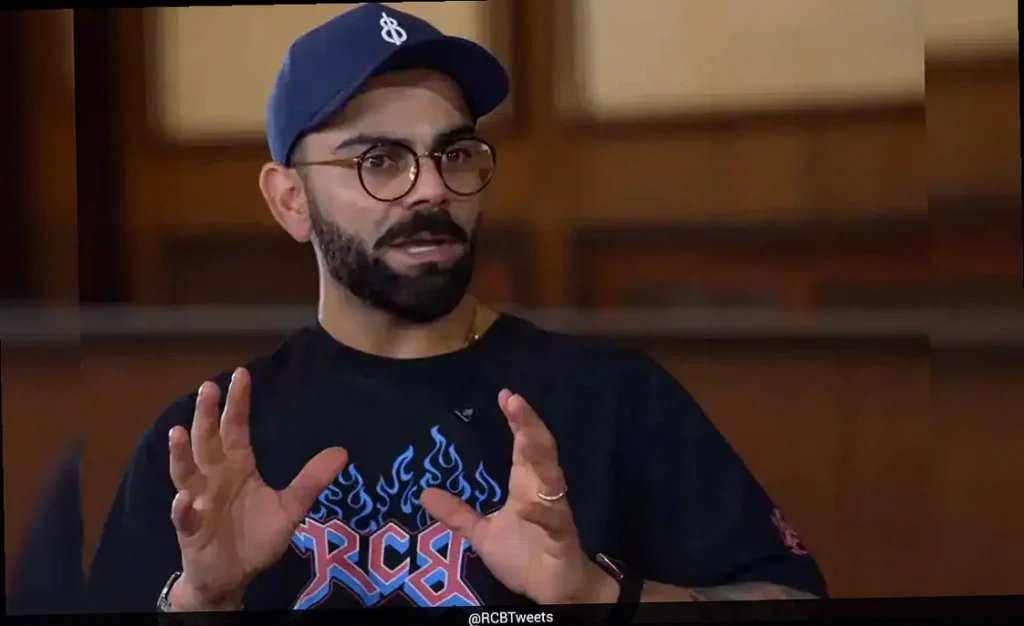
Virat Kohli may be one of the most recognisable faces in world cricket, but the Royal Challengers Bengaluru batter is known for preferring distance from social media and the constant spotlight. In the IPL, however, the routine is different: alongside match-day cameras, teams also capture players’ training progress and moments during practice, creating a far more monitored environment than many athletes would be comfortable with. In a recent podcast discussion, Kohli voiced concerns that players’ privacy is being compromised during the tournament—particularly because the level of filming can affect how freely they work on their craft.
Kohli on why constant filming disrupts practice
Speaking in detail, Kohli said that practice sessions can feel uncomfortable when multiple cameras follow a player around. He argued that athletes need the space to rehearse and refine skills without feeling like every movement is immediately being recorded for public consumption.
He also explained that the presence of filming changes what a batter is willing to attempt in training. Kohli suggested that when players know their nets work could be captured and later discussed online or by others, they may hold back from trying certain ideas—even if those are exactly the adjustments they want to make.
- Kohli said he walks into practice and finds “six cameras” tracking him, which he described as an uncomfortable experience.
- He argued that players should be allowed to work on their game in peace, rather than having everything treated as content to film, display, or dissect.
- He noted that he should be evaluated on match performances, not on what happens during the lead-up or preparation.
- He added that no one should judge how a player prepares, what they test in the nets, or the experiments they attempt before a game.
Calls for tighter limits on when and how players are filmed
Kohli further said that there should be clearer boundaries around filming. To make his point, he referenced how different things used to be when social media was not as dominant in sports coverage. He noted that the IPL’s inaugural season took place in 2008, and implied that the league’s early culture did not revolve around the same level of continuous digital visibility.
In Kohli’s view, the key issue is streamlining: understanding how much filming is necessary, when it should happen, and whether a player is comfortable being recorded at all times. He said the pressure of the actual game is something he enjoys, but the added pressure that comes with being filmed constantly is something he does not relate to in the same way.
- He said there should be “more streamlining” on how much filming takes place and at what times.
- He suggested teams must consider whether the player is okay with being filmed continuously.
- He acknowledged that social media plays a major role in commercial visibility and fan engagement, while still arguing for better boundaries.
- He added that even the rise of official fan clubs and official team fan pages came after the IPL was already underway, suggesting people were not prepared for this level of attention from day one.
Ultimately, Kohli’s message was that while cameras and content are part of modern IPL branding, the process needs to be balanced with players’ need for privacy and freedom—so training remains focused on improvement rather than performance under a constant lens.
