
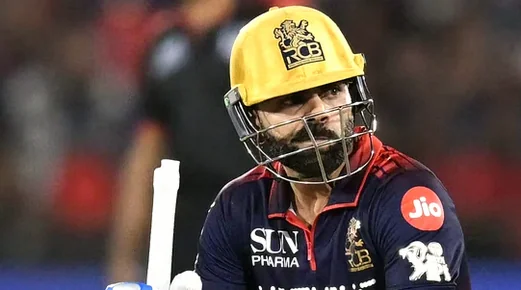
Virat Kohli has once again sparked a familiar debate about performance, pressure and perception, this time through remarks made during an RCB podcast. The former India captain said he wants to feature in the 2027 World Cup, but only if his “value” is not questioned. The message may sound straightforward, yet the reality of Indian cricket is far less forgiving: once a player appears to be in decline, scrutiny intensifies rather than softens—especially across the limited-overs formats leading into major tournaments.
Key takeaways
- Kohli’s stance for the 2027 World Cup is conditional—he wants his worth to be beyond doubt.
- The level of examination will rise in every ODI he plays up to the 2027 event, with matches in South Africa and Zimbabwe in October next year highlighted as the end goal.
- His recent ODI narrative has already shown how quickly public opinion can flip after a couple of poor outings.
- India’s tour of Australia is cited as an example of how quickly responsibility is assigned when Kohli fails to deliver consistently.
- Gautam Gambhir’s role is presented as an additional reason Kohli’s margin for error could be even smaller.
Why Kohli’s “worth” demand may not fit the Indian cricket cycle
Even with the harshness of it, the argument is that Indian cricket rarely offers much patience during difficult phases of a player’s career. Kohli, the remarks note, has already stepped away from both T20 Internationals and Tests, meaning the scrutiny now concentrates on the limited-overs stage—particularly ODIs in the run-up to the 2027 World Cup.
From that perspective, the claim is simple: every ODI Kohli plays between now and the World Cup—through to the tournament in South Africa and Zimbabwe in October next year—will be treated as a referendum on his contribution. If he piles up runs, praise will come quickly. If he struggles, criticism is expected to arrive just as fast.
The pattern: criticism after failures, then praise after impact
The discussion points to the three-match ODI series against Australia from the previous year as a case study in how quickly narrative swings. Kohli recorded ducks in the first two contests, and voices calling for his exit became louder. The reasoning at that stage was that his peak belonged to the past.
However, the tone shifted dramatically after his innings of 70-odd in the final game of the series—a knock described as match-winning. Once that happened, the earlier negativity cooled, the team’s momentum was restored, and Kohli’s follow-up run-scoring was credited as well. The remarks also mention that he later produced big performances against South Africa and New Zealand, leading fans who had criticised him to start celebrating him again.
India’s Australia tour and the blame that followed
The critique then moves to India’s most recent tour of Australia, where Kohli’s returns are described as not heavy enough. He did score a century in the opening Test at Perth, but after that, the follow-through did not match the early promise.
In that stretch, Kohli—alongside Rohit Sharma—was blamed for India’s 3-1 defeat. Not long after, both players announced their retirement from Tests. The article’s conclusion from that episode is that the “value” Kohli is seeking does not exist in Indian cricket in the way he imagines it—especially when results do not align with reputation.
How timing and symbolism shaped the earlier T20 World Cup retirement talk
Another example highlighted is Kohli’s retirement from T20 Internationals minutes after winning the T20 World Cup in 2024. While the tournament-winning moment is remembered, the remarks focus on the fact that there was only one match—the final—where he scored big enough to stand out significantly. It adds that there were calls before the final to drop him, reinforcing the idea that Indian cricket culture can turn quickly, regardless of the larger trophy picture.
Gautam Gambhir and the pressure of a “superstar” culture clash
The analysis then shifts to Gautam Gambhir, arguing that if Kohli is asking for a comfortable runway, that is unlikely to happen with Gambhir involved. While Kohli, in the podcast, did not explicitly name the individuals sending mixed messages, the point is made that Gambhir’s preferences clash with the “superstar” status that Kohli carries.
Because Kohli is viewed as a superstar, the remarks suggest that Gambhir would be among the first to criticise—or even push for a place to be taken by someone else—if Kohli does not contribute. It is also noted that Kohli and Gambhir do not share a strong relationship, despite both spending many years playing together for Delhi and India. In that setting, the claim is that Kohli is asking for too much in terms of how much patience he can expect.
The broader trend: few Indian greats are spared late-career scrutiny
The article argues that Kohli is not alone in facing this kind of pressure, stating that there are not many Indian cricketers who escape scrutiny in the twilight of their careers. It cites how even Sachin Tendulkar was repeatedly questioned near the end, and how Kapil Dev was treated in a similar way. MS Dhoni is also mentioned as part of the list of examples.
Part of the explanation offered is scheduling and career length. The remarks claim that Indian players often continue longer than those from countries such as Australia and England. In those other cricket cultures, the argument goes, players are dropped at the earliest signs of decline. In India, however, the expectation is portrayed as lasting longer—meaning criticism comes when performances do not match the past reputation, even if the player is still in the system.
What Kohli needs next: making ODIs count, especially away from home
The closing section turns practical. It notes that, with one exception—the three ODIs against England in July—the rest of Kohli’s ODI commitments up to January are expected to be in India. That is presented as beneficial because it should give him more opportunities to rack up runs with less travel-related disruption.
The message is that Kohli should score plenty in those home matches. It then stresses that from there, right up to the World Cup, the crucial challenge will be handling situations when India play abroad. If he performs well away from home, the road to the 2027 tournament is described as likely to become smoother.
Finally, the remarks tie back to Kohli’s own words about hard work. The idea is that what works in India will not be enough automatically overseas—he will need to work even harder in those conditions. Next year is flagged as especially important because, with the 2027 World Cup in mind, India are expected to play a significant number of matches overseas as part of their preparation.
