
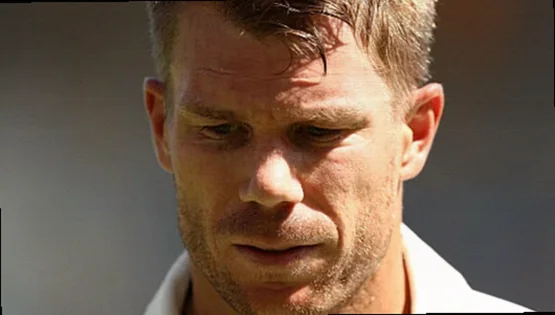
David Warner’s recent drink-driving matter has sparked plenty of debate, but there are also practical reasons why the situation played out the way it did. The Karachi Kings, Warner’s franchise team in the Pakistan Super League (PSL), reportedly granted him a brief window to return to Australia and then come back in time for their next assignment. That stretch between fixtures gave the former Australia captain time to reconnect with family and friends, though such granting of time off is not a routine feature of franchise cricket.
Why Warner was allowed to return
When a player has a short break and is not immediately required to be in action, the question becomes what else can actually fill the gap. In Pakistan, outside match days, options are limited, and the risk environment is heightened—especially after periods of unrest. Following a recent attack on Afghanistan, concerns about further violence rose, and there were reports of retaliatory threats from the Taliban in the aftermath.
There is also the broader cultural angle. Pakistan is an Islamic republic where alcohol consumption is restricted for the local population. That doesn’t mean alcohol consumption doesn’t exist—rather, it tends to happen illegally. Meanwhile, overseas visitors can generally drink, but the experience is not the same as in a society where drinking is socially accepted and legally straightforward. In other words, the freedom around having a drink can feel central to the moment, even more than the drink itself.
With that in mind, Warner’s situation can be viewed through the lens of a short return home and limited time to enjoy it. After all, he didn’t have many days to spend before needing to get back. And it is hard to ignore the fact that he was caught in Sydney after failing a breath-analyser test, following what police later described as drink-driving. The incident quickly turned a personal break into a public embarrassment—one that will linger for a long time.
There is also a blunt reality check: in countries where religious and legal norms tightly govern daily life, the consequences of crossing certain lines can be far more severe. Warner’s case, therefore, became not just a sports story but a wider cultural and regulatory one.
Still, there was a time when Pakistan’s international image looked very different. Former captain and prime minister Imran Khan—who is currently in jail—once remarked that after matches in India in earlier years, the team returning to Pakistan felt like they were going back to a more developed setting. At the time, he suggested, India was struggling more economically.
There is also a widely repeated claim from that earlier era involving foreign photojournalists. The story goes that when photographers ran out of batteries, some crossed into Pakistan specifically to obtain them because equipment was easier to source there than in India. Those batteries, as the anecdote goes, were costly and came from the “first world.”
Internal dissent and a changing cultural landscape
As Pakistan’s social and political landscape evolved, the country’s reputation shifted too. A prominent voice in this discussion has been Pervez Hoodbhoy, the well-known Pakistani nuclear physicist. He has argued that life in Pakistan today lacks the “fun” it once had, claiming that cultural outlets such as movies, theatre, and literature have largely faded from mainstream presence. Hoodbhoy’s view is that, for many people, there is little to do unless someone is committed to routine religious practice such as praying five times a day.
Another writer from Karachi, described as a notable figure, offered a similarly bleak perspective—suggesting that beyond meat-heavy food, Pakistan had little to showcase at present. The claim went further, stating that sections of society were becoming increasingly unsettled.
Against this backdrop, the question returns: can Warner truly be blamed for getting carried away during a brief period away from the cricket bubble? The argument here is not to excuse wrongdoing, but to explain why the circumstances surrounding his break were not as unusual as they might appear at first glance.
Warner’s return to PSL and the crushing defeat
Warner is now back in Pakistan, and his return has come with its own kind of humiliation. Karachi Kings had started their PSL campaign strongly, winning their opening three matches in style. However, in their fourth game—immediately after his return—the team suffered a heavy setback.
In that match, Warner was dismissed for a duck on the very first ball he faced. The impact was immediate, and Karachi Kings went on to lose by a massive margin of 159 runs. For a player already dealing with the fallout from the drink-driving scandal, the combination of personal embarrassment and a brutal team defeat has been especially harsh.
And so, while the drink-driving episode remains the central controversy, the wider sequence—from the brief permission to travel, to the cultural constraints around alcohol, to the challenging environment beyond cricket—helps explain why Warner’s situation unfolded the way it did. After the scandal and then the one-sided loss upon his comeback, it is difficult not to feel some sympathy for the Australian star.
