
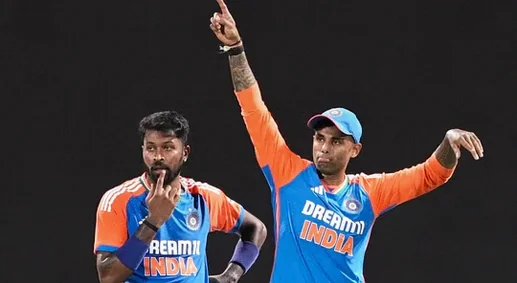
Suryakumar Yadav’s stretch as India’s captain in T20 Internationals is likely to be remembered with real affection. He stepped in to lead after Rohit Sharma had moved on from the captaincy role, and following Virat Kohli’s earlier departure from the job. Keeping the national team’s identity intact while handing over stable leadership is never simple, and it became even more demanding with the next home T20 World Cup looming.
In many ways, Suryakumar also became the blueprint for whoever follows him. There is a solid 30-month window before the next T20 World Cup, giving the next skipper time to build the experience required. The bigger question now is straightforward: who looks most likely to take the reins?
Quick scan: the main contenders
- Sanju Samson: Player of the Tournament in India’s run to the T20 World Cup in 2026; has captaincy experience but may face age-related concerns.
- Ishan Kishan: Returned to the international setup and owns the No. 3 spot; led Jharkhand to strong results in the Syed Mushtaq Ali Trophy; has benefited from captaincy and has leadership credibility.
- Jasprit Bumrah: Has led in a couple of Tests; remains a calm, T20-aware option, though he may be “kept on ice” for red-ball value.
- Hardik Pandya: Long discussed as a future captain; brings a confident presence; has captained in the IPL with consecutive finals and a trophy for Gujarat Titans; has 138 international matches.
- Shreyas Iyer / Rajat Patidar: Both could be considered; Patidar has captained RCB to consecutive IPL trophies and has led Madhya Pradesh; Iyer has IPL captaincy experience since 2018 and worked with Gautam Gambhir at KKR in 2024.
- Shubman Gill: Already leads in the other two formats; was brought into the T20I side in late 2025 as part of a longer-term plan; has a power-game question to answer in T20Is.
Sanju Samson
Sanju Samson arrives with a strong résumé from India’s T20 World Cup campaign in 2026, where he was crowned Player of the Tournament. He is no stranger to the demands of high-stakes cricket now, and he also understands the pressure that comes with leadership. Like Suryakumar, he is not currently a regular captain in the IPL, but he has worn the captain’s armband in the past, which could help him adapt without the constant national-plus-franchise juggling.
The main concern around Samson may be less about ability and more about timing. Opener roles in Indian cricket are increasingly competitive, and with Vaibhav Sooryavanshi pushing hard for a place, the BCCI may hesitate to back a player who would turn 34 by the time the next World Cup arrives.
Ishan Kishan
Ishan Kishan’s path back to international cricket has been convincing, and he has made the number three position his own for India. One major advantage in his favour is the impact he had domestically, where he led Jharkhand to stand-out results in the recent Syed Mushtaq Ali Trophy. Captaincy also seems to bring out the best in his batting, and this season he stepped in for Pat Cummins temporarily, contributing effectively in more than one role.
His leadership credentials are solid and easy to read, but he also does not carry the same “must be present in every format” burden that some all-format stars do. That balance could make him a realistic option if India want a captain who can focus on T20 responsibility without being stretched across everything at once.
Jasprit Bumrah
Jasprit Bumrah has hovered around India’s captaincy conversation for some time, including having captained in a couple of Test matches earlier. In major games, he typically looks composed, and he understands how bowling plans need to evolve in T20 cricket. He also brings experience as an emergency captain from the past, which always counts for something when teams are assessing leadership depth.
Still, his chances could be affected by workload management. India may prefer to keep him fresh on T20 tours and extract the maximum value from him in red-ball cricket, meaning regularity—not competence—could be the factor that sidelines him.
Hardik Pandya
Hardik Pandya’s recent seasons with MI have not been smooth, with reports pointing to discontent and internal tension as the franchise struggled. Yet the idea of Hardik as a future India captain has been present since his earlier years in the setup. He carries a self-assured, charismatic energy that can lift a dressing room, and he is not the type to be intimidated by the job.
On top of that, his IPL captaincy record includes consecutive finals and a title for Gujarat Titans. He is also the most experienced T20 cricketer in the Indian group, with 138 international matches to his name, making him a dependable presence in India’s recent successes. The only real doubt may be whether the MI turbulence has clouded the selection picture—will his leadership “best shot” already be the past, or will his personality still find strong support inside the decision-making panel?
Shreyas Iyer / Rajat Patidar
With Suryakumar moving on, it would be logical for India’s replacement to come from either Shreyas Iyer or Rajat Patidar, especially after a run of standout seasons in domestic cricket and the IPL. Both have been batting from a similar middle-order role, and giving them a fast track into the leadership group is something that cannot be ruled out.
Patidar, for instance, has captained RCB to consecutive IPL trophy wins, and he has also led Madhya Pradesh previously. Even so, the argument for Iyer looks stronger in this moment. Iyer has captained in the IPL since 2018, which means he has had years of practice handling pressure situations in that format.
There is also the detail of his high-profile working relationship with Gautam Gambhir as a mentor for KKR in 2024. On the national side, Iyer is an established Indian international, having cemented his position in the ODI team, alongside a mix of T20 and Test experience. He looks a natural fit for leadership, and he was even in the ODI captaincy discussion last year—so if he comes into the T20I group, it would not be surprising to see him asked to lead as well.
Shubman Gill
Finally, the captaincy option that may be closest to the front of the queue is Shubman Gill, who already leads India in the other two formats. He was brought into the T20I side towards the end of 2025, a move that could be read as an effort to integrate him into the setup ahead of the World Cup cycle and position him to take over once Suryakumar’s tenure ends. Gautam Gambhir has spoken about the value of an all-format captain, and since Gill already shares a longer-format relationship with the team structure, that connection naturally strengthens his case.
Yet Gill’s T20I batting profile does come with questions. He has produced multiple big scoring seasons, but the pace of those run-making bursts has been comparatively less explosive than what some of the six-hitting specialists in the current group can deliver. For Gill, the key point for his captaincy candidacy will be demonstrating that he can bring a genuine power-game advantage in T20Is—enough to justify both his selection and his leadership.
