
The 2026 edition of the Wisden Cricketers’ Almanack, due out on Thursday, argues that cricket’s former image as a neutral “escape” from the harsh realities of politics has been eroded by a steady politicisation of the sport—particularly under India’s influence, which it describes as “Orwellian”. In the “Notes by the Editor” for the 163rd annual publication, editor Lawrence Booth points to the way the game is increasingly being framed through the lens of Indian political strategy, claiming that “Cricket has become an important piece on BJP’s geopolitical chessboard”.
Booth’s critique extends beyond general observation and reaches into specific governance and tournament moments. He questions whether there could have been a sharper indictment in 2025 than the remark by Pakistan Cricket Board chair Mohsin Naqvi, who said that “politics and sport can’t go together”. Booth’s response is pointed: he notes that Naqvi was also serving as his country’s interior minister, implying a contradiction between the principle being stated and the role being held.
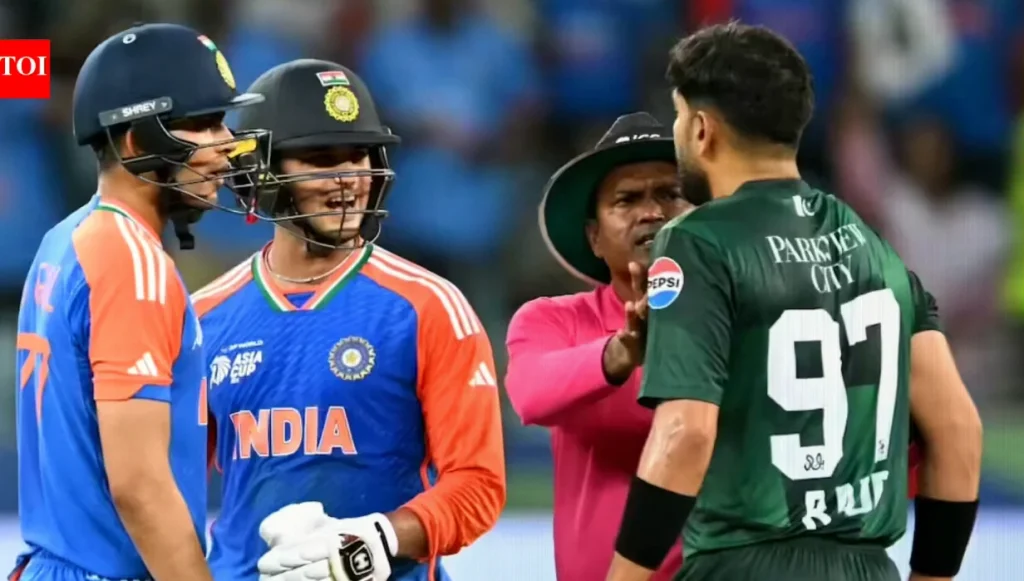
To illustrate the broader theme, the editor recalls the 2025 Men’s Asia Cup staged in the UAE, describing it as a “tit-for-tat farce” in which players from both sides made gestures Booth calls tasteless—this time connected to fighter aircraft. He also highlights the episode in which India did not take the field to accept the trophy from Naqvi. Booth links these actions to the wider political climate between the two nations, explaining that the tournament unfolded amid elevated tensions between India and Pakistan. He points out that it was the first occasion the teams met on the cricket ground after “Operation Sindoor”, following the Pahalgam massacre carried out by terrorists.
Within that same context, Booth notes that India won the tournament and, after the final, declined to shake hands with the Pakistan team—an act he presents as another example of how sporting contests were being treated as extensions of political messaging rather than purely athletic competition. He writes that the pattern had been visible well before this latest show of grandstanding, adding that the BCCI had long appeared to function as a sporting arm of the ruling BJP. In Booth’s telling, the relationship became unmistakable when India captain Suryakumar Yadav dedicated the first of India’s three Asia Cup triumphs over Pakistan to the armed forces.
Booth also draws attention to the way the conversation around cricket has shifted in the digital age, stating that the idea of the sport serving as a stand-in for more lethal real-world activity was “hammered home” on X. He reiterates the gravity of the “real-world Operation Sindoor”, saying it left dozens dead, and argues that the resulting events were then being translated into a T20 narrative—transforming a political and violent reality into something that could be reframed as entertainment.
In his closing remarks, Booth laments that the governing structure is becoming increasingly “Orwellian”, describing a system that, in his view, pretends Indian exceptionalism carries no consequences. He further cites franchise decision-making as a sign of where cricket’s control may be drifting, writing that Kolkata Knight Riders’ decision to release Mustafizur Rahman “confirmed cricket’s descent into the hands of its political masters”.
For fans following the fast-moving IPL season, live match updates and breaking coverage are available through IPL Live Score and IPL news, along with tools to check the IPL schedule, view the IPL points table, and track the race for the Orange Cap and Purple Cap.
