
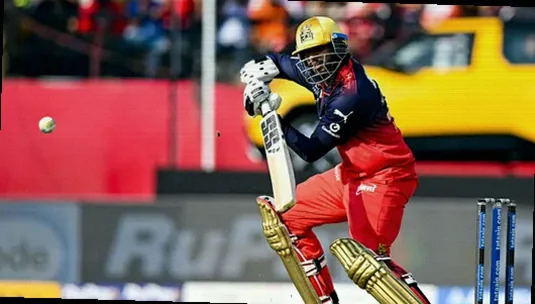
Royal Challengers Bengaluru’s long pursuit of Venkatesh Iyer has finally delivered a night that reads like a financial argument as much as a cricket one. Bengaluru were unable to land him at the peak of his auction hype, but they returned later after the market corrected and got a decisive innings against Punjab Kings in Match 61. Venkatesh’s 73 not out off 40 balls became the cleanest “value defence” RCB could ask for, flipping a heavy investment question into a direct return statement.
Quick facts
- KKR re-acquired Venkatesh Iyer for ₹23.75 crore ahead of IPL 2025 after an extended bidding battle involving RCB.
- RCB signed him one year later for ₹7 crore following a sharp auction correction.
- In Match 61 vs PBKS, Venkatesh made 73* off 40 balls.
- Monetary model valuation for the innings: ₹3.80 crore; match cost allocation: ₹1.75 crore.
- Modeled profit from the game: ₹2.05 crore; recovery rate for the match: 217.14%.
- Innings details: 8 fours and 4 sixes; strike rate 182.50; RCB reached 222/4 with his contribution.
The story begins with timing. RCB couldn’t secure Venkatesh when his price was at its most inflated. Kolkata Knight Riders brought him back for ₹23.75 crore before IPL 2025, with Bengaluru staying active in the bidding well into the premium territory. One season on, the same player became available at a far lower number, and RCB pounced.
After the auction reset, Venkatesh arrived in Bengaluru for ₹7 crore. The payoff arrived quickly, too—against PBKS, where he delivered the kind of innings that justifies a franchise’s patience and also explains why Andy Flower’s group kept believing. RCB’s “defence” of the investment wasn’t based on a narrative; it was built on a ledger-style valuation of the match itself.
The Match 61 innings that balanced the books
Venkatesh’s 73* off 40 in Match 61 was more than a solid batting contribution. It was the first clear example of RCB protecting the value of their pursuit through on-field numbers. The monetary ledger priced his performance at ₹3.80 crore on a rating-adjusted basis, while the match allocation cost was ₹1.75 crore. That gap produced a modeled profit of ₹2.05 crore from a single game.
For anyone tracking the market arc, this was also a reversal of sorts. RCB had pushed KKR into a premium auction fight for Venkatesh and ultimately missed him at ₹23.75 crore. After a difficult IPL 2025 stretch with Kolkata, his valuation dropped sharply. Bengaluru returned, paid ₹7 crore, and then watched him deliver more than half of that auction price in value terms within one night.
The context matters. Venkatesh had been part of KKR’s title-winning group in 2024, but his 2025 season didn’t match the scale of what was paid for him. He managed 142 runs in 11 matches at an average of 20.29, with a strike rate of 139.21. KKR moved on from an asset they once had to “break the bank” for, and RCB took the other side of that same market correction.
Flower had already underlined that RCB’s chase was not a one-off. After Bengaluru finally secured the signing, he said it was “two years running” that RCB had been in a battle with KKR for him, stressing that both franchises rated Venkatesh highly. Flower also highlighted what he saw as the player’s competitive edge, cricketing intelligence, and leadership traits.
Where the ledger placed the performance
Match 61 gave that belief a measurable shape. Venkatesh finished No. 1 in the match by rating-adjusted worth and also No. 1 by profit/loss in the model. His impact score for money was 95.00, with the ledger placing the effort in what it described as a historic/freak band.
Crucially, the value came entirely from batting. The raw batting impact was 96.51, his batting score was 95, and he faced 40 balls. That meant the innings was “clean” from an analysis standpoint: he had one task, and he executed it decisively.
RCB had already built a platform and Venkatesh turned it into a high ceiling — he arrived when the team was well set and helped take the total to 222/4. His 73* included eight fours and four sixes, at a strike rate of 182.50. The innings also followed a clear growth curve, not a flat sprint from the first ball and not a passive preservation either.
He didn’t launch immediately into reckless hitting, nor did he waste the base. Instead, the batting moved from control into acceleration and then into damage, which is why the model treated the performance as more than just a late cameo.
The phase breakdown underlined why the numbers were so strong. He struck for 8 off 8 in his first middle-over block, then produced a sharp burst of 40 off 19 in the next middle phase. At the death, he added 25 off 13. In total, 65 of his 73 runs came from the final 32 balls, turning a good total into a winning one.
That is the conversion innings RCB were looking for. They didn’t merely receive a finishing moment; they got the middle-to-death shift that lifts pressure in the final overs and forces the chasing side into difficult matchups.
KKR’s premium payment vs RCB’s corrected entry
This is where the contrast between the two franchises becomes sharp without needing to frame it as regret. KKR had already seen Venkatesh’s ceiling and paid for it. When the returns collapsed in 2025, they exited the position. RCB bought the same asset after the correction and did not purchase the ₹23.75 crore version. They acquired the ₹7 crore version—keeping the potential for high-end upside while carrying a far lighter recovery burden.
At ₹23.75 crore, the threshold for “quiet games” is unforgiving. At ₹7 crore, a single high-quality innings can swing the season ledger. Against PBKS, Venkatesh’s modeled value of ₹3.80 crore against a match cost of ₹1.75 crore produced a recovery rate of 217.14%. Put plainly, he returned more than double what the game allocated to him.
Still, it wasn’t a full-season redemption story yet. It was proof of concept. RCB’s long chase was grounded in a belief that Venkatesh’s best version could solve a rare set of Indian batting needs: left-handed power, flexibility in the top order, the ability to hit through the middle overs, and leadership presence in the dressing room. The first two appearances hadn’t delivered enough. The third arrival did.
The ledger reading also changes how the ₹7 crore figure should be interpreted. It no longer looks like a passive wait for form. It looks like a corrected market entry into a player whom RCB had valued even when auction prices pushed above ₹20 crore. Bengaluru waited for the discount, then landed the “spike game” when it mattered.
KKR may argue that their release was shaped by squad balance and earlier output. RCB now has something more direct to defend the purchase: a hard return. Venkatesh’s 73* may not erase every question around consistency, but it gave Bengaluru the exact argument they needed—when this player hits, the return isn’t incremental. It becomes explosive.
Method note
The monetary reading is based on a match-wise valuation model that weighs player cost allocation against rating-adjusted performance value. It draws on batting, bowling, fielding, and contextual inputs, along with manual performance grading, to estimate match-level returns. The numbers shown are analytical estimates, not official IPL salary accounting and not franchise financial records.
