
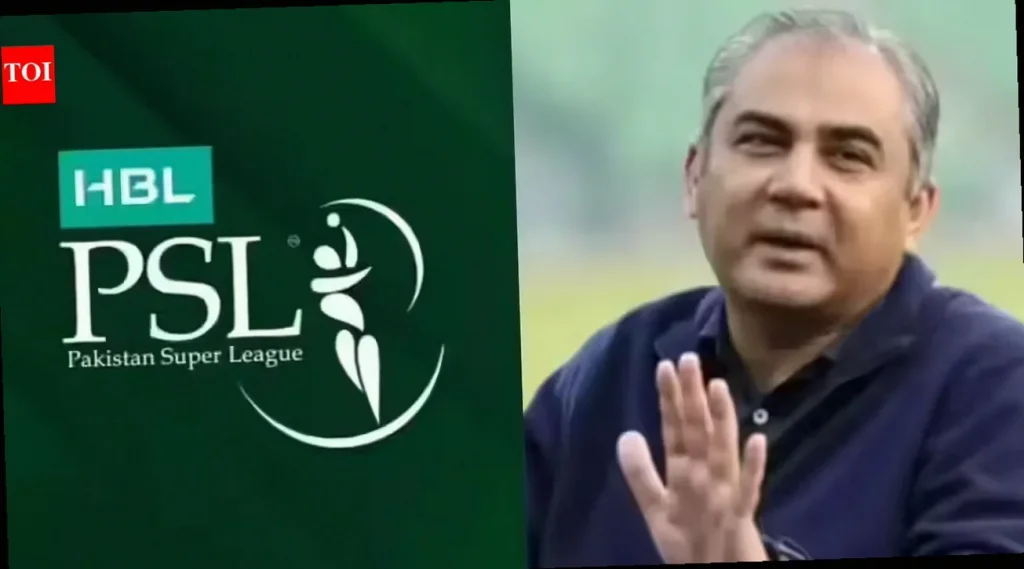
New Delhi: The lack of spectators at Pakistan Super League (PSL) 2026 games has ignited fresh debate after Islamabad United owner Ali Naqvi offered an unexpected rationale, tying the decision to Pakistan’s involvement in international diplomacy. His comments suggested that empty venues were not merely a logistical call, but part of a broader national agenda—an account that stands apart from earlier explanations put forward by Pakistan Cricket Board (PCB) leadership, including PCB chairman Mohsin Naqvi.
Key takeaways
- Islamabad United owner Ali Naqvi said the PSL crowd restrictions were linked to Pakistan’s diplomatic role rather than cricket operations.
- He argued that Islamabad was the preferred location for sensitive ceasefire discussions, requiring maximum flexibility.
- Ali Naqvi claimed security planning had to focus on larger priorities over entertainment.
- He rejected comparisons with other leagues that have permitted fans to attend.
- PCB chairman Mohsin Naqvi previously attributed the no-crowd approach to a fuel shortage that limited public movement.
- Critics say the “global peace” framing stretches the issue beyond what appears to be a practical constraint.
Ali Naqvi’s “diplomacy over entertainment” argument
Speaking in a post on X, Ali Naqvi maintained that Pakistan’s priorities leaned towards peace initiatives more than cricket entertainment, particularly because of its engagement in ceasefire talks. He suggested that scheduling and venue choices had to account for sensitive negotiations that could not be timed or planned like ordinary sporting events.
Naqvi stated that holding matches in Pindi without crowds was logical, explaining that Islamabad had been selected for discussions involving ceasefire efforts. He further argued that the shifting nature of such talks meant that organisers needed complete freedom in logistics and security arrangements, which would be difficult to guarantee under a crowd-heavy format.
He also contended that available security resources were channelled towards “bigger priorities,” adding that the nation would have made the same decision if entertainment and support for global peace were forced to compete for attention. In his view, the trade-off was necessary and would be seen as reasonable by the public.
Additionally, Ali Naqvi dismissed attempts to draw parallels with other franchise leagues that have allowed supporters into stadiums, saying such comparisons do not hold weight in this context.
PCB’s earlier explanation and the backlash
While Ali Naqvi’s comments offer a diplomatic angle, they conflict with the Pakistan Cricket Board’s earlier position. PCB chairman Mohsin Naqvi had said the decision to play without spectators was driven by a fuel shortage that restricted the movement of people.
Mohsin Naqvi had noted that the Pakistan Prime Minister, Shehbaz Sharif, requested limited movement due to the fuel crisis. Based on that directive, the PCB decided that the PSL would continue according to the original timetable but without crowds.
Critics argue that connecting empty stadiums to worldwide peace efforts goes too far. To them, what looks like a practical matter—fuel availability, movement limits, and operational logistics—has been repackaged as a sweeping diplomatic sacrifice.
