
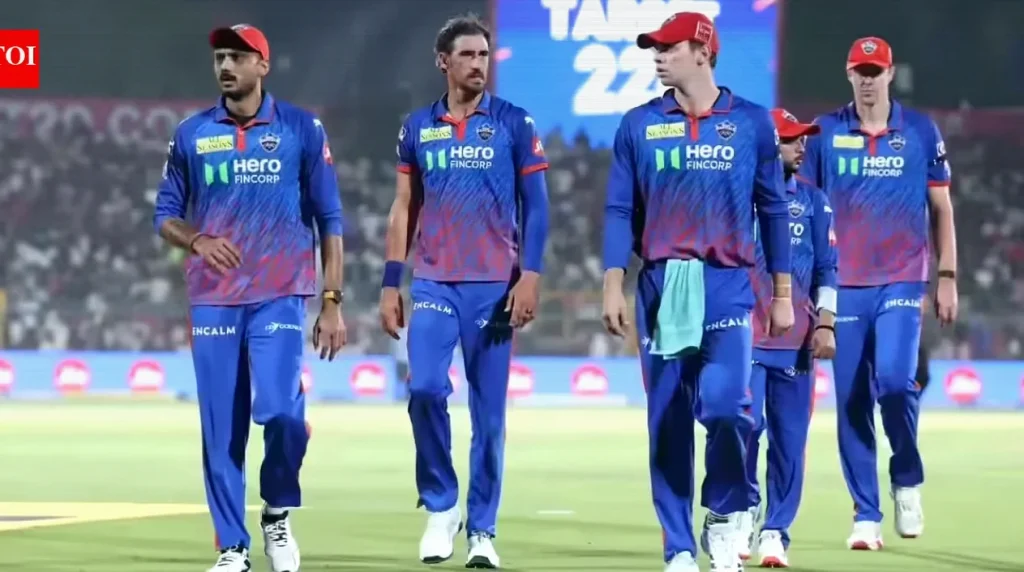
Delhi Capitals may have finished their IPL 2026 league stage on a brighter note, recording a 40-run win over Kolkata Knight Riders in Kolkata on Sunday. Yet the result still wasn’t enough for DC to reach the playoffs, with the franchise ending sixth in the standings after posting seven victories and seven defeats. The setback stretched Delhi’s postseason wait to five consecutive seasons.
For the second year in a row, the DC duo of head coach Hemang Badani and captain Axar Patel failed to get the team into the top four. Delhi did show periods where they looked capable of contending for a playoff spot, but a combination of home struggles, problems with taking wickets, and careless fielding ultimately kept derailing their campaign.
Quick facts
- Delhi Capitals beat Kolkata Knight Riders by 40 runs in Kolkata on Sunday to end IPL 2026.
- DC finished sixth with 7 wins and 7 losses, missing playoffs for the fifth straight season.
- Home record: 2 wins from 7 matches at Arun Jaitley Stadium.
- First home win: vs Mumbai Indians on April 4 (won by 6 wickets).
- Second home win: vs Rajasthan Royals last week (won by 5 wickets).
- Between those, DC lost five straight home games to Gujarat Titans, Punjab Kings, Royal Challengers Bengaluru, Chennai Super Kings, and Kolkata Knight Riders.
- DC wicket tally: 64 wickets in 14 matches, joint-lowest among all teams.
- Bowling output: 254.3 overs, economy 39.92 (second worst), bowling strike rate 23.8 (better only than Punjab Kings).
- Mitchell Starc played 6 matches, taking 11 wickets at 20.36; DC’s joint second-highest wicket tally.
- Batting strike rate: 149.29; overall strike rate ranked fourth from the bottom.
- KL Rahul scored 593 runs in 14 innings at a strike rate of 174.41.
- Kuldeep Yadav won Player of the Match vs KKR with 3/29 in DC’s final league game.
Home disadvantage once again
While Delhi never quite found the level of consistency required across the full tournament, their record at home once more proved decisive. The Capitals played seven games at the Arun Jaitley Stadium and managed only two wins, setting the tone for a season that never truly took off.
DC’s first home success came against Mumbai Indians on April 4, when they chased down the target to win by six wickets. Their second home win arrived much later, against Rajasthan Royals last week, with Delhi winning by five wickets.
Sandwiched between those results, DC endured five consecutive defeats at home: Gujarat Titans, Punjab Kings, Royal Challengers Bengaluru, Chennai Super Kings and Kolkata Knight Riders all walked away with wins from Delhi’s home venue.
Not capitalising, and catching lapses
Delhi also found themselves in situations where victory looked within reach, only for the match to slip away in the final phase. They lost to Gujarat Titans by one run at home, and later struggled to defend a total of 264 against Punjab Kings.
Fielding issues compounded the problem, with dropped catches turning into costly moments. Those lapses were highlighted in defeats to Chennai Super Kings and Sunrisers Hyderabad, where DC couldn’t protect key spells when the game was on a knife-edge.
Looking back at the season, which ended with a sixth-place finish even after starting with two wins, Badani suggested that the outcome could have been different if Delhi had been sharper in crucial passages. Speaking after the win over KKR, he said there were matches that could have gone either way, but DC failed to seize those turning points.
Badani specifically pointed to the narrow defeat against Gujarat Titans by one run, and said the inability to defend 264 against Punjab Kings was another instance where Delhi needed to convert momentum. He added that dropped catches hurt against Chennai, while the same issue appeared again during the crucial phase of the game against Sunrisers.
Wicket-taking problems
Delhi’s inability to take wickets consistently across the season was another major reason their campaign stalled. Even after bowling out Kolkata Knight Riders in their final match, DC ended IPL 2026 with only 64 wickets in 14 games, the joint-lowest total among all teams.
Across the tournament, DC bowlers sent down 254.3 overs and averaged 39.92, which was the second-worst figure among all franchises, ahead of only Punjab Kings. Their bowling strike rate of 23.8 was marginally better than only Punjab Kings, where it stood at 24.5.
Mitchell Starc’s limited availability
Mitchell Starc missing most of the season also weighed on Delhi’s bowling unit. Starc appeared in only six matches, taking 11 wickets at an average of 20.36, and still finished as DC’s joint second-highest wicket-taker alongside Axar Patel. Only Lungi Ngidi, with 13 wickets in 11 games, took more wickets for Delhi.
Badani acknowledged that Starc’s absence affected the team’s progress, especially early on, but argued that DC still had opportunities to qualify. He noted that not having Starc available for the first nine games caused setbacks, while also stressing that Delhi still experienced moments in games and could have turned those small margins into results.
He framed the season as a competition decided by fine differences, saying that with a slightly better conversion of those narrow windows, DC might have been able to push into the top four.
Keeping it slow: strike rates under pressure
In T20 cricket, milestone scores matter far less than how quickly teams score, and Delhi’s batting strike rate became a key concern during the league stage. In overall strike rate terms, DC ranked fourth from the bottom, better than only Chennai Super Kings (147.71), Lucknow Super Giants (145.03) and Kolkata Knight Riders (147.16).
Delhi Capitals finished with an overall batting strike rate of 149.29 in IPL 2026. A deeper look at individual contributions showed the challenge even more clearly: among the seven DC batters who faced at least 100 deliveries, only one managed a strike rate above 170, and that was KL Rahul.
Rahul scored 593 runs across 14 innings, striking at 174.41 through the season.
‘Open chested’ Kuldeep
Kuldeep Yadav was named Player of the Match for his 3/29 against KKR in Delhi’s final league game. However, the left-arm wrist spinner admitted that, despite that performance, his overall IPL 2026 didn’t meet expectations.
Before the match versus KKR, Kuldeep had taken only seven wickets in ten innings, averaging 50.28 with an economy rate of 10.66. Two weeks earlier, following Delhi’s defeat to Chennai Super Kings, Axar Patel had even commented that he missed Kuldeep’s partnership when the team was bowling.
After the KKR game, Kuldeep explained the technical issue he felt influenced his bowling during the season. He said he believed he was bowling with his chest more “open,” and that at times he wasn’t using his full body—something he linked to batters’ ability to hit deep down the ground and play off the back foot. He added that when he used more of his body and tried to spin the ball harder, the result improved, bringing in the dip and drift, and allowing him to vary pace.
Kuldeep called the match “lovely” for him, describing it as a good outing that reflected the adjustments he had been seeking.
IPL 2026 DC report card
Even in a disappointing year, some DC players offered reasons to believe there is a foundation to build on. KL Rahul stood out as the batting anchor of the side, not only finishing with 593 runs in 14 games, but also improving his strike rate to 174.41. He struck one century and five half-centuries and often carried the batting order during difficult phases of the tournament.
Youngsters Sameer Rizvi and Ashutosh Sharma also made an impact. Ashutosh in particular caught attention with bold, fearless strokeplay, finishing with a strike rate of 181.91 in the limited opportunities he received.
With the ball, Lungi Ngidi emerged as Delhi’s most dependable wicket-taker, recording 13 wickets in a season that was challenging for bowlers. In the three matches he played, Madhav Tiwari showed promise as well, taking four wickets while keeping an economy rate of 8.70.
What next for Delhi Capitals?
Off the field, DC will face another shift in ownership structure ahead of the next season. For the coming two years, control moves back from GMR Sports to JSW Sports.
The next question is leadership continuity: will Axar Patel continue as captain for IPL 2027, or will Delhi decide they need a full reset again? The franchise’s internal thinking remains unclear, but one certainty is that IPL 2026 became yet another season of missed opportunities for DC. The team remains one of the two franchises—alongside Punjab Kings—that have been part of the league since 2008 without ever lifting the IPL trophy.
