
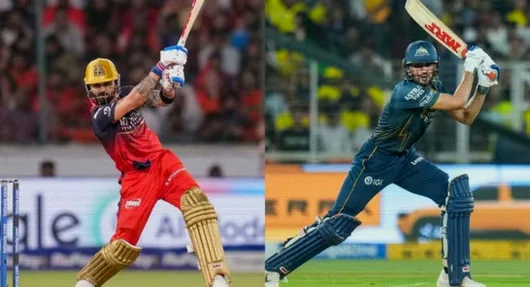
With 70 league games already in the rear-view mirror, IPL 2026 has reached its first major knockout turning point. Royal Challengers Bengaluru and Gujarat Titans will clash in Qualifier 1 at Dharamsala, a fixture that carries a huge reward: the winner books a place in the final. The loser, however, still has a second shot through Qualifier 2—so the stakes are both immediate and survivable. And while the tournament picture is already sharply defined, the human storyline is even bigger: Virat Kohli versus Shubman Gill, not merely as two top batters, but as two captains-in-waiting for different narratives.
Qualifier 1 at Dharamsala: what the result means
Qualifier 1 is the moment when momentum becomes leverage. Bengaluru and Gujarat both know that one win turns the season’s final destination into a near certainty, while one defeat still keeps the door open through the next eliminator-route game. In other words, this is a contest where teams can take risks—but only up to a point, because the margin for error is smaller than it looks.
Kohli vs Gill: the season argument in numbers
The Kohli-Gill debate in IPL 2026 is no longer a simple batting comparison. Gill has evolved into GT’s captaincy-led authority and main run engine, whereas Kohli remains the defining force behind RCB’s batting structure, offering control, tempo and presence. The statistics do not blur that difference—they sharpen it.
The case for Shubman Gill
Start with overall impact, because Gill’s IPL 2026 has been more than output alone. The WPA Impact Index places Gill second in the season ledger with 2048.27 total impact points from 13 matches. Kohli, in contrast, has 1361.53 from 14 matches. Looking at impact per game, Gill’s 157.56 sits well ahead of Kohli’s 97.25.
- Gill’s season impact: 2048.27 across 13 matches (ranked second).
- Kohli’s season impact: 1361.53 across 14 matches.
- Impact per match: Gill 157.56 vs Kohli 97.25.
That gap reflects two key engines behind Gill’s campaign: batting production and the value of captaincy. Gill’s captaincy component alone contributes 470.7 impact points—something Kohli does not add in this season because he is no longer leading RCB. Even when the comparison is narrowed strictly to player performance, Gill still leads: 1577.57 to Kohli’s 1361.53. In batting impact specifically, Gill edges ahead 648.66 to 561.45.
- Captaincy impact: Gill 470.7 (Kohli not included as he is not RCB captain).
- Player-performance impact: Gill 1577.57 vs Kohli 1361.53.
- Batting impact: Gill 648.66 vs Kohli 561.45.
The raw run ledger supports the same conclusion. Gill has scored 616 runs off 381 balls at a strike rate of 161.68. Kohli has 557 runs from 339 balls at 164.31. Kohli’s strike rate is slightly higher, but Gill’s advantage comes from greater volume. Recent form adds extra weight: Gill’s last five innings read 5, 84, 5, 85 and 64. Even though two low scores appear within that run of form, the presence of three major knocks makes the overall pattern steadier than it first appears.
The case for Virat Kohli
Kohli’s counter-argument begins where Gill’s dominance becomes narrower: batting purity. Kohli’s strike rate is higher, his average is stronger, and his dot-ball percentage is lower. Gill may hold the broader season advantage, but Kohli’s batting has often looked cleaner in the moments that swing matches.
The powerplay comparison is extremely tight. Kohli has 291 runs from 176 balls in the first six overs at 165.34. Gill has 289 off 175 balls at 165.14. The scoring rate is almost indistinguishable on the surface. Where the difference shows up is control. Kohli’s powerplay dot-ball percentage is 24.43, while Gill’s is 36.57. Kohli is simply more likely to keep the ball moving and deny bowlers those quiet spells. Gill may release boundaries with good timing, but Kohli gives away fewer deliveries that stall innings momentum.
The direct RCB-GT head-to-head record also leans toward Kohli. In the two league meetings, Kohli struck 81 off 44 and then 28 off 13, compiling 109 runs off 57 balls at 191.23 against Gujarat this season. Gill, meanwhile, made 32 off 24 and 43 off 18, finishing with 75 off 42 at 178.57. Both batters were dismissed twice, but Kohli delivered more damage in those encounters.
That head-to-head weight is the clearest counterbalance to Gill’s wider tournament lead. Gill may have owned more of the season’s narrative, but Kohli has hurt this opponent in a more severe way—at least in the league-stage meetings that matter for psychological carry into knockout cricket.
How the match could swing: plans for both teams
Qualifier 1’s matchup map suggests two straightforward tactical targets. Gujarat will want to avoid feeding Kohli the full ball, because he has punished straight lengths across the field—especially when bowlers miss into his scoring arc. The preferred approach is hard length outside off, forcing Kohli to manufacture pace and find access to square boundaries rather than letting him flow down the ground with ease.
RCB’s plan against Gill is equally defined. His returns against outside-off good length and off-stump good length are far less destructive than his most damaging areas. In the limited head-to-head sample, Bhuvneshwar Kumar has kept him relatively quiet, while Suyash Sharma has dismissed him once. The intent should not be reckless wicket-hunting; instead, RCB should aim to make Gill’s first 15 balls feel heavy, uncomfortable and low-reward—turning early overs into an innings-shaping battle.
Death overs could become a subtle divider. Kohli’s dataset is smaller but sharp: 26 off 11 at 236.36, with no dismissals. Gill has 24 off 15 at 160, but with four dismissals and a high dot-ball rate. Gujarat will likely want Gill’s major impact to arrive before the final four overs, while RCB will prefer a scenario where Gill is pushed into finishing under pressure and compression.
Verdict: Gill’s season edge, Kohli’s contest-specific danger
On balance, Gill has had the better IPL 2026. The impact model, his overall volume, the captaincy layer, and his recent form all point toward him. He has served as GT’s batting spine and strategic centre, making his season feel more complete than a run tally alone can explain.
However, Kohli remains the more dangerous individual batting presence for this particular match-up. His powerplay control, the lower dot-ball rate, and the direct record against Gujarat give Bengaluru a clearer route into the contest. If Gill starts cleanly, Gujarat can control the game. If Kohli survives Gujarat’s hard-length test, RCB’s chase—whether it comes from a new burst or a steady consolidation—can be built around him.
In short, the season belongs to Gill by numbers. Still, Qualifier 1 can tilt toward Kohli if Gujarat fail to execute their first plan.
Method note and disclaimer
This analysis uses the WPA Impact Index produced by a model designed exclusively for this evaluation. The model combines batting output, phase context, ball-level impact and captaincy value where applicable. It is built to estimate performance influence rather than guarantee outcomes. Knockout cricket can also be shaped by variables such as the toss, venue behaviour, small sample sizes, injuries, and any one extraordinary stretch of play.
