
Flat surfaces, huge six-hitting and relentless totals have shaped IPL 2026 so far, and the pattern is even more likely to show up when Gujarat Titans (GT) take on Royal Challengers Bengaluru (RCB) in Qualifier 1 at the Himachal Pradesh Cricket Association (HPCA) Stadium in Dharamsala on Tuesday. With the venue known for rewarding batters, the deciding factor may still come down to who gets the better of the ball during the key phases of the chase and the innings.
Key takeaways
- Qualifier 1 is scheduled for Tuesday at the HPCA Stadium in Dharamsala, with GT facing RCB.
- Dharamsala has produced five 200-plus totals in three IPL matches this year, while the only sub-200 innings ended at 199/8.
- Across those three games, batters struck 74 sixes, averaging close to 25 maximums per match.
- Jos Buttler for GT and Tim David for RCB have already provided a glimpse of the kind of hitting possible at the ground.
- GT assistant coach Vijay Dahiya believes both teams possess similarly strong and consistent bowling units.
- Bhuvneshwar Kumar (24 wickets) and Kagiso Rabada (24 wickets) are the joint leading wicket-takers for the two sides in the season.
Dharamsala’s run-scoring template
The HPCA Stadium has been particularly punishing for bowlers this season, largely due to the short boundaries that make clearing the ropes a realistic proposition. Over the past couple of days, GT’s Jos Buttler and RCB’s Tim David have been sending balls into the stands with authority—an early sign of how the Qualifier 1 contest could unfold. With the venue offering little resistance to hitters, another high-scoring encounter appears likely.
In the three IPL matches staged at Dharamsala this year, teams have crossed the 200-run mark five times. The one innings that did not reach the milestone concluded at 199/8. The six-hitting has also stood out: 74 maximums have been struck across those games, which works out to nearly 25 sixes per match on average.
Batting duel in the spotlight, bowling pressure underneath
The batter-versus-batter storyline is already building ahead of Qualifier 1, with attention also drawn to the ongoing rivalry between Virat Kohli—nicknamed the ‘King’—and Shubman Gill, referred to as the ‘Prince’ by many fans. Both players appeared in sharp form during hour-long net sessions, reinforcing the expectation that the top order could dominate proceedings.
Gill has amassed 616 runs in 13 matches and sits second in the Orange Cap standings, trailing opening batter Sai Sudharsan. Kohli, after a short period of poor form in the middle of the tournament, has returned to top shape with a brilliant century. He has now reached 557 runs for the season.
Even with so much emphasis on batting, the match context suggests bowlers may end up determining the final swing of the contest. GT assistant coach Vijay Dahiya said the tie is finely balanced because both teams have quality bowling resources and, just as importantly, consistent output.
Dahiya highlighted that while putting runs on the board is always central to T20 cricket, the tournament’s decisive moments often belong to sides that maintain control with the ball. He also pointed to the reliability of the bowling groups on both sides, adding that the confidence and self-belief from the captaincy and management has helped them avoid major changes in approach.
Bowling match-up: wickets, economy and key overs
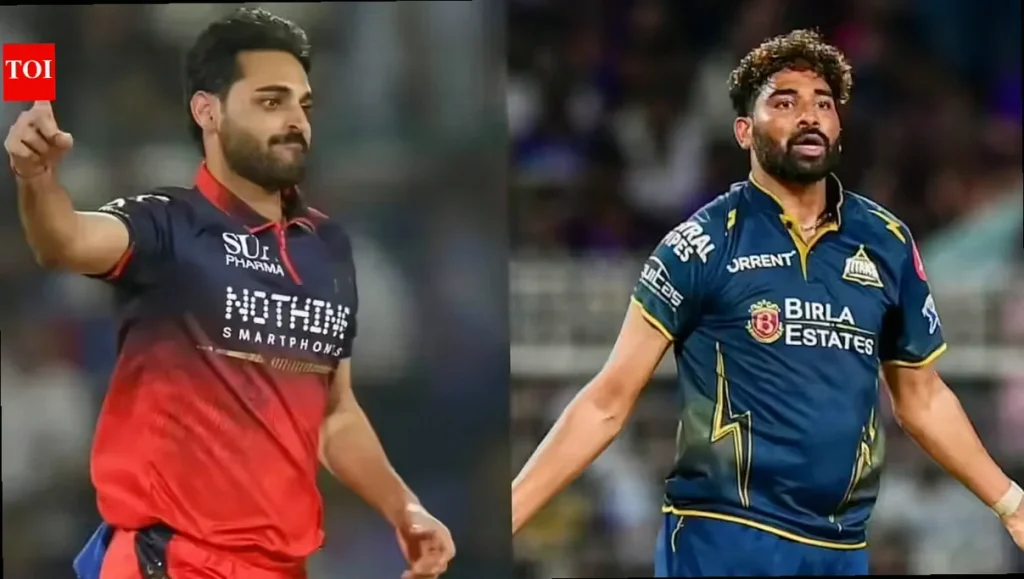
When it comes to wicket-taking, Bhuvneshwar Kumar and Kagiso Rabada lead the combined bowling tally for their sides with 24 wickets each across 14 matches. Bhuvneshwar edges Rabada when their economy rates are compared. Mohammed Siraj is close behind with 17 wickets, and the depth continues with Josh Hazlewood (12), Jason Holder (13), Prasidh Krishna (14) and Rasikh Salam Dar (14).
Spinners add another layer to the equation as Rashid Khan has taken 19 wickets and Krunal Pandya has 11, meaning the pressure is likely to be shared across different bowling styles depending on match-ups and pitch behaviour.
Dahiya also acknowledged that handling Bhuvneshwar Kumar during the powerplay could be crucial, but he warned RCB that GT’s own bowling threats are equally capable—particularly with Siraj and Rabada in the same ranks. In his view, conditions will influence how effective the powerplay plans become, and if the environment assists, it can work for both sides.
RCB captain Rajat Patidar agreed that Bhuvneshwar Kumar’s role could be decisive, especially when he bowls against Sai Sudharsan and Shubman Gill, the two highest run-scorers of the season. Patidar underlined that RCB’s main strength is their bowling and stressed the importance of taking early wickets. He said the team will aim to reproduce the same powerplay pattern they have used throughout the tournament, noting that Bhuvneshwar has done it well and RCB hopes to continue with a similar mindset.
With IPL 2026 continuing to be dominated by batting headlines and rapidly rising totals, Qualifier 1 could ultimately be decided by which bowling attack holds its nerve in a handful of critical overs. On a ground built to favour big hitting, the side whose bowlers can prevent the late damage—and stay composed when it matters most—may well book a direct pathway to the IPL final.
