
For the past two IPL campaigns, Rashid Khan has looked less like the kind of bowler who can torque a T20 contest almost single-handedly. The numbers showed the shift first, then the conversation caught up. In IPL 2024, he picked up 10 wickets across 12 matches, but registered his first IPL season without a single haul of three wickets or more. In IPL 2025, the trend tightened further, with 9 wickets in 15 games, a batting-style average of 57.11 and an economy rate of 9.34. For a spinner whose reputation has been built on unsettling batters during the middle overs and making chases shrink, those returns point to more than just a lean patch—they suggest that opponents were no longer surrendering control to him in the same way.
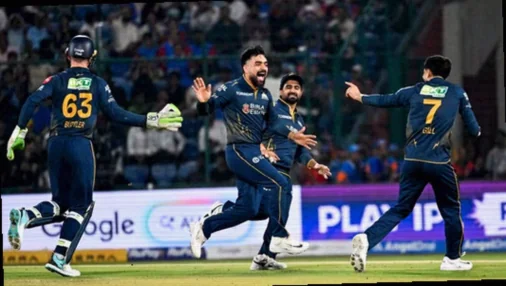
That context is why Gujarat Titans’ one-run win over Delhi Capitals carried extra weight, rather than feeling like a standard early-season result. GT defended 210, and Delhi arrived unbeaten, with a chase that contained enough twists to threaten turning into a straightforward pursuit. Instead, Rashid delivered the sort of spell that once defined his match impact: 4 overs, 17 runs, 3 wickets, and only one boundary conceded. The figures were impressive, but the real “vintage” element was the timing and the way the wickets disturbed the chase at its most important moments.
Why the match mattered before Rashid even bowled
Delhi’s batting storyline going into the fixture had already formed a clear pattern. Their top order had not always produced smooth starts, yet Sameer Rizvi had emerged as their crisis responder. Against Lucknow Super Giants, Delhi were 26/4 when Rizvi stepped in, and his unbeaten 70 carried them through. Against Mumbai Indians, he struck 90 off 51 balls and swung the chase decisively in Delhi’s favour.
That background mattered because Rashid was not simply dismissing a random middle-order batter when he removed Rizvi. He was taking out the one Delhi player who had already demonstrated, twice in the season, the ability to repair an innings and then finish with authority. In a chase of 211, that kind of profile is a serious threat—because once a player like that is set, the required run-rate often starts to look manageable for longer than it should.
Rashid’s spell: economical, then strategically decisive
Rashid’s figures read 4-0-17-3. On their own, they justify the impact of a tight spell. What elevated it was how it contrasted with the rest of Gujarat’s bowling. The other GT bowlers combined for 192 runs in 16 overs, which works out to exactly 12 runs per over. Rashid, by comparison, ran at 4.25. In a game decided by one run, that difference was not a trivia point—it was the core bowling fact of the match.
He also bowled 10 dot balls in 24 deliveries and allowed only a single boundary. While Gujarat’s seamers repeatedly allowed Delhi to break free at times, Rashid was the one constant force that kept the chase from settling into a comfortable rhythm.
- Rashid’s first over arrived after Delhi had already started moving—he entered when they were 36/0 in the fourth over and conceded just 4 runs.
- His second over cost 5 runs. There were no wickets, but he continued to interrupt momentum and ensured the batters could not simply build pace.
- The turning point came in his third over, which was also the 10th over of the chase. Delhi were 97/1 after 9 overs, needing 114 off 66 balls, with KL Rahul set and plenty of batting still to come.
- That over changed the shape of the chase: dot ball, dot ball, dot ball, four, wicket, wicket.
- Nitish Rana was dismissed first, and immediately after that Sameer Rizvi was bowled for a golden duck.
- In just six balls, Delhi moved from 97/1 to 101/3—an abrupt shift that made the chase feel unstable.
This was the Rashid trick at its sharpest: he did not wait for desperation to fully arrive. He attacked when the chase still looked workable, suddenly forcing Delhi to rethink their plan midstream. Rana’s dismissal mattered because he was expected to keep the middle overs moving. Rizvi’s wicket mattered even more because he had become Delhi’s designated repairman during the season. With Rizvi removed, Gujarat did not have to deal with Delhi’s most trusted recovery option during the most delicate stretch of the chase.
So the wicket wasn’t just another line on a scorecard. It was the removal of Delhi’s most reliable “fix and finish” batter in a season where that kind of recovery batting had already shaped two Delhi wins.
Rashid’s final over and the finishing pressure
Rashid’s last over was almost as important as the earlier burst. Delhi were 130/3 after 13 overs, needing 81 off 42 balls—still difficult, but not beyond reach. In his fourth and final over, Rashid conceded only 4 runs and also dismissed Axar Patel, leaving Delhi at 134/4 after 14 overs.
That over did two key things. First, it kept the asking rate elevated, denying Delhi the comfort of settling into a safer chase. Second, it increased the burden on KL Rahul to carry the innings deeper. That kind of pressure transfer matters in T20 cricket: the closer a chase gets to being dependent on one batter doing everything, the more a single mis-hit shot or a missed boundary option can dictate the finish.
Delhi did manage to stay close, largely because Rahul played a superb innings and because Gujarat’s death overs were not completely clean. Yet that does not reduce Rashid’s value. In fact, it magnifies it—he was not simply part of a tidy collective defence. He delivered control almost on his own.
What this means for Gujarat Titans
The biggest takeaway is not only that Rashid took three wickets. It is that he once again altered the geometry of a chase—slowing the start, breaking the middle, and removing the one middle-order batter who had repeatedly rescued Delhi this season.
GT have the batting depth to remain dangerous. What they had been missing recently was the Rashid version that makes 200-plus totals feel defendable even when the rest of the attack lacks consistency. Against Delhi, that version returned. In a game decided by a single run, it was the difference.
