
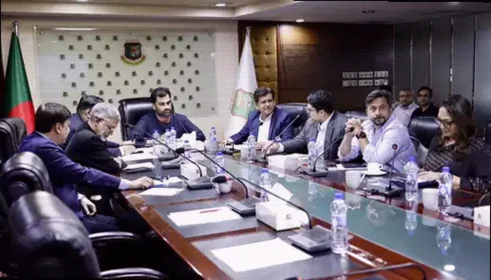
Whether Tamim Iqbal can repair the Bangladesh Cricket Board’s credibility is a debate that has refused to fade since he was appointed to lead an 11-member ad-hoc setup. The National Sports Council dissolved the Aminul Islam-led board after it reviewed a probe committee report, and Tamim was named to steer the transition.
The probe committee pointed to broad allegations of corruption connected to the previous election. Aminul rejected those claims as baseless, while insisting that Tamim’s ad-hoc arrangement is not legal. The issue has quickly moved beyond boardrooms, with the matter taken up in Parliament on Wednesday—where the main opposition alleged the new structure was created through favouritism, and the government maintained the process was conducted fairly.
For Tamim, the spotlight will be intense from the start, especially because the power shift has a political storyline attached to it. Bulbul came in under the Yunus-led government, and Tamim is understood to have taken charge with backing from the current ruling party—something Bulbul and his group are keen to frame in their narrative. In that kind of atmosphere, delivering in a short interim spell may end up deciding not just his immediate standing, but also his future in Bangladesh cricket.
At a glance
- Tamim Iqbal was appointed head of an 11-member ad-hoc Bangladesh Cricket Board after the previous board was dissolved.
- The probe committee report cited corruption allegations around the last election; Aminul dismissed them and questioned the legality of Tamim’s committee.
- Parliament debated the transition on Wednesday, with opposition raising favouritism concerns and the government defending the process.
- Tamim says he expects to contest the next BCB election, which will decide the president for the following four years.
- He is prioritising restoring Bangladesh’s relationships with the ICC and the BCCI, restarting the Dhaka Premier League, and ensuring an inclusive election within three months.
1) Rebuilding ties with the ICC and BCCI
One of Tamim’s biggest tests is likely to be diplomacy. Bangladesh’s relationship with the ICC and the BCCI is described as being at its lowest point after the Aminul Islam-led board chose to boycott the recently completed T20 World Cup.
That decision, as framed in the discussion, was strongly influenced by the Yunus-led government’s stance, with an anti-India tilt that did not hesitate to bring cricket and cricketers into the political fallout. The reaction stunned much of the cricket world, particularly because when Bangladesh’s participation matter was raised at an ICC board meeting, Pakistan was the only country reported to have offered support.
The episode acted as a harsh reality check for Bangladesh: with pressure rising, the country could discover how limited its backing can be among governing bodies. Tamim’s task now is to help Bangladesh restore its standing with the ICC and other member nations at a time when the next Future Tours Programme is approaching finalisation.
There is also a calendar dimension to the job. Tamim has to protect Bangladesh’s position on the international schedule, and the ICC’s posture after Aminul sought intervention adds momentum for Tamim while still leaving work unfinished.
The ICC’s response, as reported when Aminul asked for help again, was to describe Tamim’s interim setup as illegal. Even with that encouraging angle for the new chief, repairing relationships—especially with the BCCI—will require real effort, not just formal statements.
Ties were strained after the World Cup fallout, and the impact has lingered. India’s white-ball tour of Bangladesh in September is reported to be in doubt, and until the visiting side confirms plans officially, uncertainty is likely to hang over Bangladesh’s schedule and preparations.
2) Breaking the Dhaka Premier League deadlock
Tamim has also made it clear he wants the Dhaka Premier League restarted as soon as possible. The tournament—Bangladesh’s traditional List A competition—has now been left in limbo, and it has become one of the most urgent practical headaches for the new administration.
The DPL is viewed as a financial lifeline for a large section of players, including national stars and others who rely on domestic cricket to stay competitive. For cricket to regain confidence among the stakeholders who matter most—players and the people who run the game—the league needs to begin without further delay.
Yet restarting it is easier to call for than to execute. During the previous board’s tenure, multiple clubs reportedly boycotted the second-tier Dhaka club-based competitions, arguing that they were run by an “illegal” administration. That boycott put the domestic ecosystem at risk because the tournaments are linked through promotion and relegation.
With two teams expected to drop from the DPL to the First Division and two sides to climb from the lower tier into the List A competition, incomplete participation has created uncertainty. Neither the First Division League nor the Second Division League was completed with all clubs taking part, leaving unresolved questions over what happens to teams that chose not to play.
It remains unclear whether those clubs will be automatically demoted for non-participation, or whether the current board leadership will choose a different approach. The context is sensitive: Tamim was on the other side of the table earlier, when he and other club officials protested Bulbul’s board.
3) Delivering an inclusive, free and fair election
The third major challenge is political as well as administrative: Tamim has said he wants to create an environment where all stakeholders—players, organisers, administrators, and others—can take part in a free, fair and inclusive election within three months. That timeframe sits at the centre of the ad-hoc committee’s mandate.
There is also a credibility hurdle. Aminul, the previous board’s president, was forced to quit after the probe committee concluded he had misused his power to secure his position. Tamim will therefore need to prevent similar allegations from being directed at him by opposition camps.
Consensus will not be simple in a country where reaching agreement on transparent electoral processes has been difficult. Tamim has already distributed committees among the board directors, but the leadership group is relatively inexperienced—meaning it will have to prove it can move the board forward while avoiding fresh controversy.
At the same time, not everything from the previous administration can be treated as disposable. Some initiatives have long-term value, and a total reset may not be the most sensible route. How the new management handles such matters will be closely watched, especially in light of early signs that have not been viewed positively—particularly if the actions of some cricket officials who entered the BCB office on the opening day are taken into account.
At 37, Tamim becomes the youngest BCB president in the country’s cricket history, and as a former national captain he will be aware that the job is bigger than symbolism. He can draw lessons from predecessors like Faruque Ahmed and Bulbul, both of whom struggled to stabilise the board during their periods at the helm.
In the end, Tamim’s legacy is expected to be shaped less by what his appointment promises and more by what he delivers under pressure. With his interim tenure in front of him—and with an election looming for the next four-year presidency—how well he manages patience, process, and performance will determine whether his first chapter becomes a turning point or another chapter in Bangladesh cricket’s cycle of uncertainty.
