
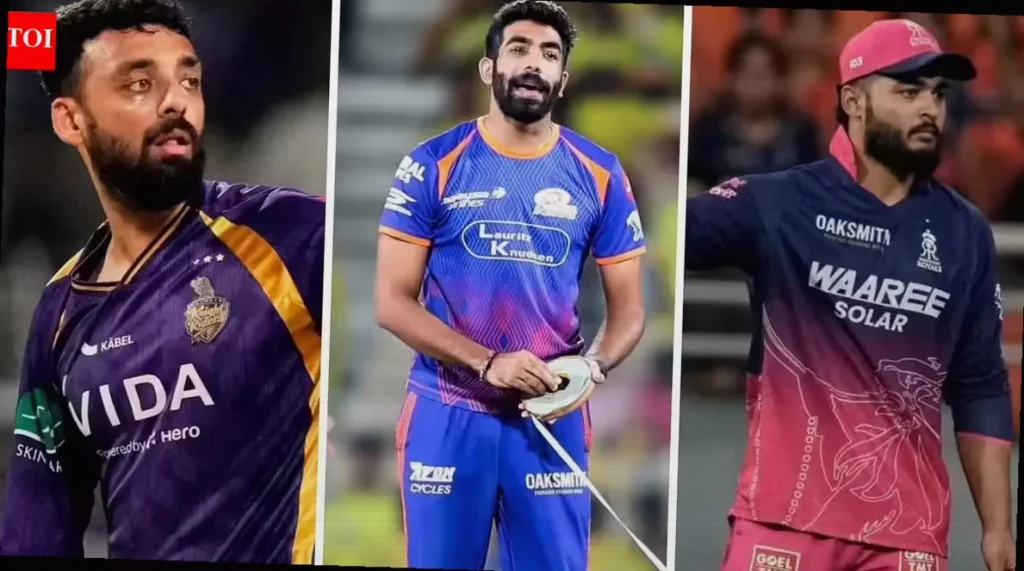
New Delhi: Sunday proved pivotal in the latest IPL season, delivering both a final berth for the playoffs and fresh debate over how effectively workload has been handled for India’s frontline players. With Rajasthan Royals, Mumbai Indians, Delhi Capitals and Kolkata Knight Riders all playing on the double-header day, the closing phase of the league stage underscored a recurring theme: some franchises have, at times, struggled to balance competitiveness with careful management of Indian talent.
Key takeaways
- Mumbai Indians chose to rest Jasprit Bumrah, but that call came after the side had already slipped out of playoff contention on May 10.
- Bumrah had been carrying a knee niggle before the tournament, yet he was included in the XI from the outset.
- KKR captain Ajinkya Rahane said decisions to play injured or restricted players were backed by discussions involving medical teams.
- Riyan Parag admitted he was “definitely not fit” after beating Mumbai Indians, despite taking part in the Eliminator later in the week.
- Punjab Kings’ head of sports science, Andrew Leipus, said Arshdeep Singh also operated with “restrictions” during the season.
Bumrah’s delayed rest raises questions in MI camp
Mumbai Indians eventually decided to hold Jasprit Bumrah out, but the timing drew criticism because the move arrived two weeks after the team had already been eliminated from playoff contention on May 10. The suggestion was that the franchise could have provided its leading fast bowler with a breather earlier rather than waiting until the end of meaningful outcomes.
MI head coach Mahela Jayawardene had earlier indicated Bumrah had a niggle going into the season, yet the pacer was named in the playing group from the start. It was also clarified that his issue was not a back problem; it was instead a knee concern that required attention. Bumrah was reported to have been at the BCCI Centre of Excellence before heading to Bengaluru with support from Nitin Patel, the former BCCI head of sports science who is now associated with the MI setup.
Patel accompanied Bumrah to Bengaluru, where the 32-year-old joined the squad late. He began his run-up after training with the team for a couple of days, and then continued through the tournament.
The bigger concern raised was the apparent lack of urgency once the MI camp was aware of the problem. If everyone around the franchise knew about the niggle and the player’s visit to the CoE, the question naturally became why Bumrah was still drafted into the XI so early and so often.
Rohit Sharma’s usage was cited as a contrast. Rohit missed close to a month of cricket with a hamstring issue and was used primarily as an Impact Player for much of that period. Yet Bumrah, framed as India’s most valuable performer during the season, remained in action for 13 matches, with many of those appearances coming when the results were effectively settled—“dead rubbers,” in the context of qualification.
BCCI stance: franchises must handle workload without board interference
BCCI secretary Devajit Saikia defended the board’s position, stressing that the organisation does not “micro-manage” workload and fitness during the IPL. The rationale was that any direct interference would amount to the BCCI stepping into franchise operations regarding player usage and team functioning.
Saikia’s argument was that the BCCI cannot oversee day-to-day workload and fitness decisions in a way that overrides the franchises’ responsibilities. In that framework, medical and performance judgments were treated as internal franchise matters rather than issues the board would control during matches and training blocks.
Rahane, Parag and others on playing through issues
The workload debate did not stop with Bumrah. Varun Chakravarthy, for instance, also played for KKR while managing a hairline fracture. Captain Ajinkya Rahane pointed to medical processes, saying that the franchise had received the necessary clearance after discussion among the physios and relevant medical staff.
Rahane explained that there was dialogue between the team’s support staff, BCCI NCA and the Indian team medical setup, and that he personally did not interfere with those technical calls. He framed his own role as assessing the player’s mindset—whether the individual wants to play and how significant the risk is—while leaving the medical department to handle the final call.
Rahane’s comments came after KKR’s last league match, which they lost to Delhi Capitals.
Rajasthan Royals captain Riyan Parag added another layer to the workload discussion. After the win over Mumbai Indians, Parag disclosed that he was “definitely not fit.” Despite that admission, he still played the match against MI and then featured in the Eliminator against Sunrisers Hyderabad on Wednesday.
Parag also has a place on the BCCI’s targeted player list. He is set to serve as deputy to India A captain Tilak Varma for the tri-series in Sri Lanka next month.
There were similar indications regarding restrictions on other Indian players. Punjab Kings’ head of sports science, Andrew Leipus, revealed that Arshdeep Singh had been operating with “restrictions” during his spell in the tournament.
The call for better alignment after the season ends
While few players would want to miss IPL games, the central message from this weekend’s scrutiny was that the various stakeholders—BCCI, franchise management, and the broader ecosystem—need stronger alignment. The aim is to keep Indian cricket’s long-term interests ahead of short-term selection convenience.
With the IPL finishing and multiple players moving on to different assignments shortly afterward, the fear is straightforward: a player carrying niggles or pushed beyond safe limits could end up fatigued, effectively mismanaged, and potentially unavailable at crucial moments for the national setup.
The focus, therefore, should be on ensuring that workload decisions are made early, medically sound, and consistent—so India’s players remain fresh rather than burnt out as the calendar moves to the next phase.
