
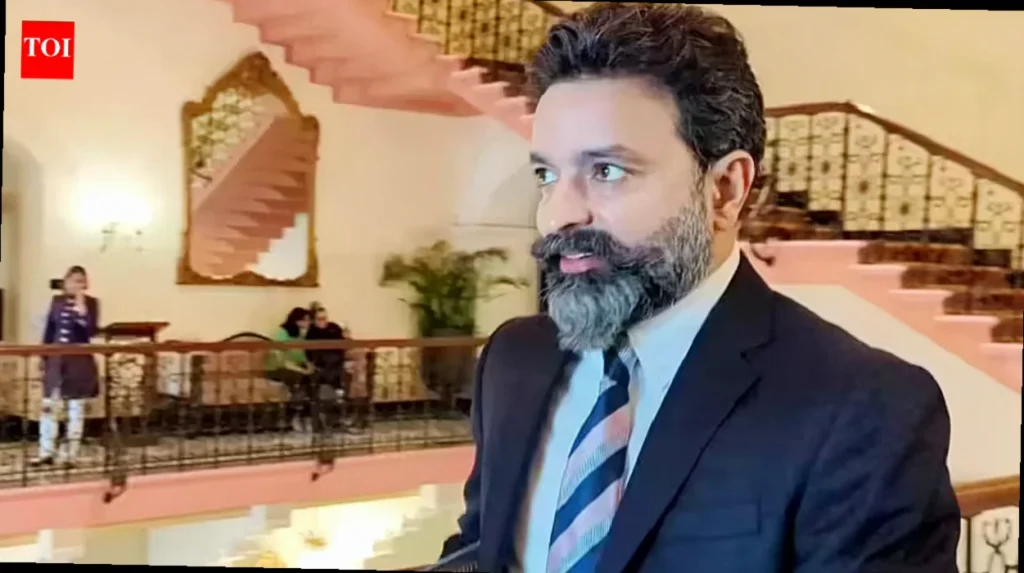
Arun Singh Dhumal, the chairman of the IPL Governing Council and a prominent BCCI administrator, believes the Indian Premier League’s growth curve—especially in the value of its media rights—will keep accelerating. Speaking from Dharamsala, he pointed to how the league has expanded from its early rights cycle into a global entertainment property, while also arguing that the tournament has strengthened India’s depth in cricket talent.
Key takeaways
- Dhumal cited a sharp rise in IPL media-rights figures from the 2008–17 window to the latest 2023–27 deal.
- He expects the current momentum to persist, supported by strong fan engagement and growing tournament pull.
- He said the IPL has become a benchmark for sports monetisation, delivering unusually fast and large returns.
- Dhumal credited the league with creating opportunity pathways for Indian players and improving overall national competitiveness.
- He highlighted ongoing franchise-related media conversations involving Rajasthan Royals and Royal Challengers Bengaluru.
Media rights growth: “phenomenal” in each cycle
Dhumal described the IPL’s media rights journey as “exponential” since the tournament began. He noted that the league initially started with rights valued at roughly Rs 8,200 crore for a 10-year stretch covering 2008 to 2017.
He then explained that the next five-year phase, from 2018 to 2022, saw the rights sold for Rs 16,347 crore. Looking ahead to the present cycle, he said that for 2023 to 2027, the IPL’s media rights were sold for Rs 48,390 crore across five years.
Based on those milestones, Dhumal expressed confidence that the upward trajectory would continue. He linked that expectation to the level of engagement the league has generated among fans and the traction it has already built in the current period. He also referenced two recent franchise deals—those involving Rajasthan Royals and Royal Challengers Bengaluru—suggesting they are still in the process stage.
Why the IPL stands out beyond the numbers
Dhumal argued that the IPL has set a new standard in sports business by achieving a return on investment at a pace he described as difficult to match. He said there is “no other property,” particularly within sports, that has produced that scale of results in such a short timeframe. He compared it with the National Football League (NFL), suggesting the NFL took decades to reach the stature it has today.
In his view, the IPL’s performance over the last 18 years has been “phenomenal,” and he emphasised that no other business would have delivered around a 20-fold return in roughly the same period. He also pointed to India’s unique sporting culture, stating that cricket is the one sport that binds the nation together as a shared passion.
According to Dhumal, another major driver of value is the quality of cricket the IPL produces. He said many matches reach the finish line after intense phases of play, and in a typical 3.5-hour game, each delivery can feel like a decisive moment. That rhythm, he suggested, keeps viewers locked in and strengthens the league’s negotiating position for the next media rights window.
Talent pipeline and India’s cricketing depth
Dhumal also shifted focus to the league’s broader role in strengthening India as a cricketing powerhouse. While he acknowledged that talent has always been present in the country, he argued the real challenge was creating consistent platforms where players get meaningful chances to develop and perform.
He credited the IPL with providing that platform, adding that even if India has to field three separate teams across three concurrent bilateral series, the national side can still remain competitive. He said this kind of depth exists because of the structure and opportunities created through the IPL.
Finally, Dhumal said he wanted to recognise the contribution of franchise partners over the last 18 to 19 years, crediting them for helping sustain and grow the league’s impact.
