
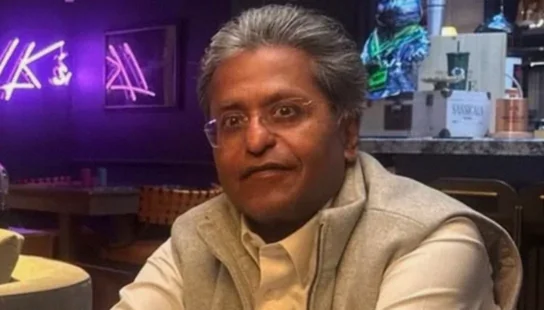
Lalit Modi, widely credited as a key force behind the creation of the Indian Premier League, has revisited the political groundwork that, in his view, made the tournament possible. Looking back to the period around 2005, Modi said he threw his weight behind Sharad Pawar’s bid to become BCCI president, arguing that the outcome of that internal battle would shape what came next for the sport in the years that followed.
Key takeaways
- Modi claims he actively backed Sharad Pawar for the BCCI presidency during the 2005 run-up.
- He describes the mid-2000s BCCI contest as a vicious power struggle marked by shifting allegiances and late reversals.
- Modi recounts a turbulent election day in Kolkata, citing court orders and Supreme Court-appointed observers.
- He alleges that behind-the-scenes attempts to sway delegates included hotel hold-ups and flight diversions.
- Modi says his camp ultimately won the vote and that the decision became a turning point for “modern cricket.”
How the BCCI fight set the stage
Modi remains one of the most divisive personalities in Indian cricket administration, but he believes his role in the league’s early foundation cannot be ignored. He pointed to how the IPL quickly altered the sport’s commercial scale and attracted global attention to Indian cricket. Over time, he argued, the tournament’s rise helped the BCCI consolidate its position as the most powerful governing body in world cricket, with substantial financial influence and a major say in how the contemporary game is run.
In his account of those years, Modi said the BCCI was gripped by intense in-fighting in the mid-2000s. He described a landscape where factions, loyalties and momentum shifted quickly, and where the race for the board’s top job—Pawar’s push—was pitched directly against a rival group led by Jagmohan Dalmiya. Modi also claimed the struggle intensified with each election, describing it as increasingly fierce as the contests continued.
On Ridhima Pathak’s YouTube channel, Modi offered a detailed narrative of how his side tried to secure victory and how the margin of defeat reportedly came down to the final arithmetic. He said his group backed Pawar into the election with confidence, only to lose by a single vote after last-minute developments. Modi then described further campaigning the following year, adding that the opposition’s numbers were strengthened as more well-known administrators aligned themselves against his faction. He also alleged that “buying and trading” expanded in scale as the competition grew, with influence increasingly exerted around the voting process.
Kolkata election day: court orders, observers and “big tamasha”
Continuing his recollection of the BCCI battle for control, Modi said the climax unfolded during the 2005 board elections held in Kolkata. He claimed the election turned chaotic due to a combination of legal interventions, political manoeuvring, and confrontations inside the venue. In his telling, tensions spiked after Supreme Court observers arrived to oversee proceedings.
Modi specifically recalled November 29, 2005—stating it was his birthday—and the setting in Calcutta, which he described as the home ground of Jagmohan Dalmiya. He said he was engaged in legal battles at the time, with Harish Salve appearing for him. Modi claimed his side managed to get the Supreme Court to order that the elections be conducted under the watch of two Supreme Court retired judges, adding that the names of those judges were not publicly known in advance. He further said the order was secured ex parte and that when the meeting began, there was uncertainty about what would happen next.
He described a moment when Dalmiya was seated at the table and, in Modi’s view, was positioned to disqualify multiple candidates. Modi said he presented the Supreme Court order at the right time, which he argued became decisive. He said there was an uproar, with doors being closed and police arrangements needing to be put in place to manage the situation. Modi claimed that two Supreme Court judges then walked in and that Dalmiya had to step back, after which the election proceeded. Modi also alleged that lawyers including Mr Jaitley tried to return to court to seek delays, but that the meeting that should have wrapped up quickly instead continued until around 5 o’clock in the evening, calling it a “big tamasha.”
Allegations of pressure tactics before the vote
Modi also spoke about extraordinary measures that, according to his account, were taken during the fiercely contested 2005 BCCI elections. He described a scramble for votes behind the scenes and alleged that members were being detained in hotel rooms while flights carrying delegates were rerouted as part of an effort to influence the numbers before the meeting.
In his narrative, he said members were arriving from different parts of India for the meeting, and that certain BCCI members were being held up in their hotels. He claimed that some of their flights were diverted, and added that his own side also redirected flights for some members to different locations. Modi framed the overall atmosphere as an election where the goal was to win, saying “the writing was on the wall” and that his side expected to prevail on merit.
The final outcome and Modi’s “revolution” claim
Wrapping up his account of the 2005 BCCI power struggle, Modi said the final result brought Sharad Pawar’s group into control of the board. He claimed that multiple influential figures in Indian cricket administration supported the rival faction, but argued that despite that backing, they still lost. Modi specifically mentioned Anurag Thakur, Arun Jaitley, Srinivasan and others as having voted for Dalmia while still ending up on the losing side, and said he named them because he believed they were clearly aligned with the opposition rather than his camp.
Modi argued that the Dalmia core group—along with the “Roomtas,” whom he said had been thrown out but still considered part of the core—were linked to spreading money, whereas his own group maintained what he described as a cleaner, merit-based approach. He said his side persuaded BCCI members during the election period that they would be good for them, and that this is how they won. Modi concluded that the victory came on November 29, describing it as the beginning of what he called the revolution of modern cricket.
