
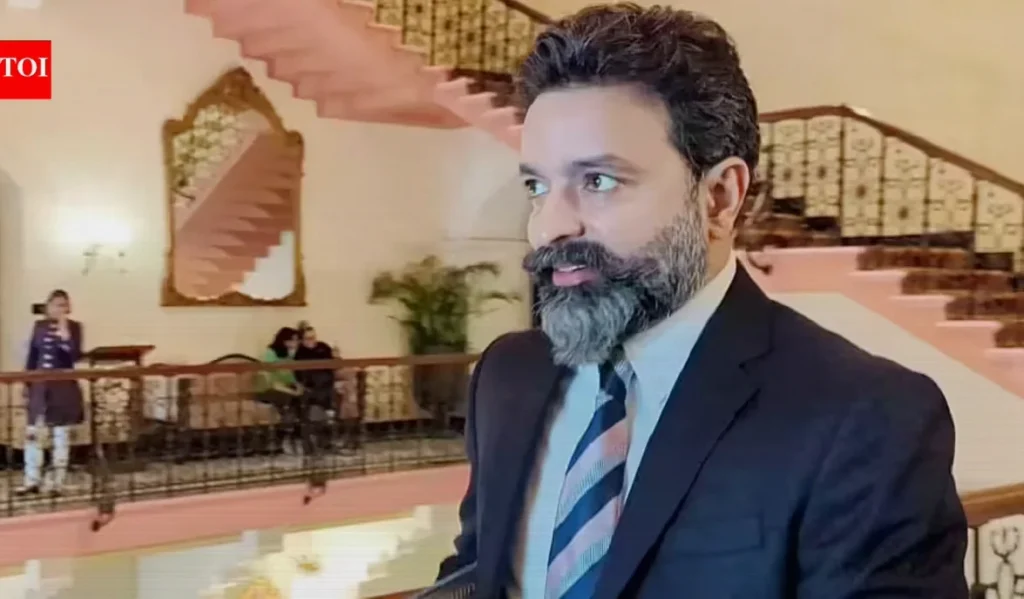
Arun Singh Dhumal, chairman of the IPL Governing Council and a prominent voice within the BCCI setup, has once again underlined how aggressively the Indian Premier League has evolved—especially in the way its media rights have scaled. Speaking from Dharamsala, he pointed to the jump in deal values over successive cycles as the clearest marker of the league’s expanding global footprint.
Quick facts
- IPL media rights started at about Rs 8,200 crore for 10 years (2008–17).
- Next cycle rights (2018–22) were sold for Rs 16,347 crore over five years.
- Current cycle rights (2023–27) were sold for Rs 48,390 crore over five years.
- Dhumal expects the current upward trend to continue, citing fan engagement and recent franchise media-rights activity.
- He credited the IPL with creating opportunities and strengthening India’s cricket depth for the future.
Dhumal said the growth curve since the tournament’s launch has been “exponential” and described the latest pricing as further proof of the model’s strength. He noted that the league began the rights era with roughly Rs 8,200 crore for a 10-year window stretching from 2008 to 2017.
He then highlighted the next step-up: in the period from 2018 to 2022, the media rights were sold for Rs 16,347 crore. Looking forward to the present phase, Dhumal said the current cycle covering 2023 to 2027 has rights valued at Rs 48,390 crore for five years.
The IPL chairman linked the next leg of growth to the traction the competition has already generated with supporters. He added that fan engagement has been a key driver behind the sustained momentum, and suggested the same pattern is likely to keep playing out.
He also referenced “two recent deals” involving Rajasthan Royals and Royal Challengers Bengaluru, stating they are currently in the process stage. Dhumal indicated that such franchise developments further support confidence around the forthcoming media rights negotiations.
Why the IPL is different
Dhumal argued that the IPL has set a benchmark for the sports market, pointing to the scale of returns achieved in a relatively short span. In his view, few other sports properties—particularly in business terms—can match the speed and magnitude of the league’s outcomes.
He said there is “no other property,” especially in sports, that has produced returns of this kind over such a brief time window. To make the comparison, he pointed out that it took decades for the NFL to reach its current level, while the IPL has delivered major results within 18 years.
He further emphasised that the league’s performance equates to a roughly 20-fold return over around 18 years. In a country where cricket is deeply embedded in culture, Dhumal suggested the IPL’s reach is amplified by the sport’s ability to unite the nation.
For him, the league’s unique selling point is the standard of cricket it offers week after week. He said many matches end with late drama, and in a typical 3.5-hour viewing window, nearly every ball becomes a meaningful moment—making the product highly watchable and commercially valuable.
On that basis, Dhumal said he is hopeful the IPL will command significant value in the upcoming media rights cycle. He framed the expectation as a continuation of what the market has already rewarded: consistent entertainment value, strong engagement, and a format built for high-stakes finales.
Beyond business: building Indian depth
Dhumal also placed the IPL’s impact outside the commercial arena, arguing that the tournament has helped India develop into a stronger cricketing powerhouse. While he acknowledged that talent existed in the country, he said the challenge was providing players with the right opportunities.
He credited the IPL with supplying that platform, adding that even if India has to field three different teams for multiple bilateral series at the same time, the side can still remain competitive. The chairman said this depth is a direct consequence of the opportunities created through franchise cricket.
Dhumal concluded by praising the franchise partners for their contribution across the last 18 to 19 years. He described their role as an important part of sustaining the league’s growth and keeping the competition’s ecosystem moving forward.
