
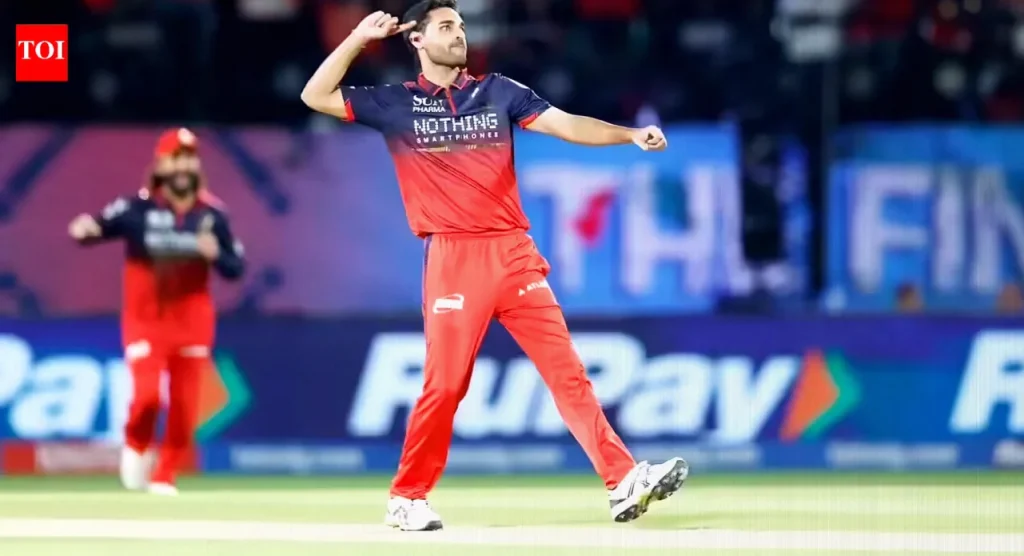
While the IPL has been dazzling fans with the exploits of young prodigies like 15-year-old Vaibhav Sooryavanshi, another story has been building quietly at the other end of the age spectrum. At 36, when many pace bowlers are forced to manage fading speed, recurring injuries, or life after cricket, Bhuvneshwar Kumar is still showing the same trademark discipline and steadiness that have shaped his career for well over a decade. That naturally leads to the biggest question: how has he managed to remain effective—and relevant—in the league for so long?
The answer, in large part, comes from the routines and decisions made far from the spotlight. Surya Pratap Yadav, Bhuvneshwar’s personal Strength and Conditioning Coach who has worked closely with his fitness, points to a long-term transformation rather than quick fixes.
The work behind the overs
Yadav said the central goal has been to improve body composition by shedding fat and building muscle. With age, muscle loss becomes a real concern for athletes, so his plan has leaned heavily on strength development, careful nutrition, and the use of supplements where needed.
As a result, Bhuvneshwar’s body fat percentage has reportedly dropped from 19% to 14%, while his overall playing weight has been kept steady—an indication that he has gained muscle without ballooning size. Yadav also highlighted that improvements in strength have translated into better force generation and quicker running speed, both crucial for a fast bowler’s effectiveness in T20 cricket.
Fitness gains, however, are only one side of longevity. Yadav stressed that staying available across a full IPL season takes more than gym work. Bowlers at the wrong age often struggle with niggles, hamstring problems, and repeated breakdowns. For Bhuvneshwar, durability has been built through proactive management of weak areas and daily commitment to prevention and recovery.
According to the coach, discipline is the biggest driver. He explained that they spend nearly an hour each day on rehab and injury-avoidance exercises, and they also place strong emphasis on recovery habits, hydration, sleep quality, protein intake, and supplements—all designed to keep the fast bowler fresh through the grind of the season.
The numbers of longevity
The statistical picture supports the idea that discipline has turned into sustained performance. Since making his IPL debut in 2011, no fast bowler has taken more wickets than Bhuvneshwar Kumar. Only Yuzvendra Chahal has recorded more wickets overall in that span.
In terms of workload and consistency, Bhuvneshwar has also played more IPL matches than any other pacer, with 205 appearances. The next best among fast bowlers is Jasprit Bumrah, who has 158 matches.
Overs bowled further underline the endurance theme. Bhuvneshwar has delivered 762.4 overs in the competition — the most by any fast bowler. Bumrah is next with 605.1 overs, meaning Bhuvneshwar has bowled more than 160 overs beyond him.
The trend is not just about one long run either. Only Dwayne Bravo and Bhuvneshwar have managed multiple IPL seasons with 25 or more wickets among fast bowlers. And only a compact group—Lasith Malinga, Kagiso Rabada, Bumrah, and Bhuvneshwar—have produced four separate IPL campaigns with at least 20 wickets.
With T20 often rewarding explosive peaks from younger legs, Bhuvneshwar’s profile stands out. He is not built for a single sprint; he resembles an endurance machine, designed to handle punishment over years rather than just one burst.
No shortcuts, no experiments
Yadav also explained that the longevity approach is rooted in avoiding unnecessary change. When Bhuvneshwar entered the IPL in 2011, Dale Steyn was in his prime, Zaheer Khan led India’s pace attack, Munaf Patel carried the experience of a World Cup win, and Morne Morkel, Vinay Kumar, and Umesh Yadav were among the tournament’s leading wicket-takers.
Fifteen seasons later, most of those names belong to a different era. Bhuvneshwar, though, has kept showing up for the work even when his place in the national setup changed. Between 2022 and 2026, he shifted from being an India regular to a domestic mainstay, continuing to lead Uttar Pradesh’s bowling unit in the Syed Mushtaq Ali Trophy and Vijay Hazare Trophy while remaining a key presence in the IPL.
One reason he has sustained heavy workloads is his refusal to experiment during the tournament. Asked whether he alters his diet during the IPL because of the competition’s demands, Yadav said the routine stays largely the same. The coach added that anything new—whether a supplement, training method, or recovery protocol—is tested well before the season begins. During the tournament, the aim is to keep the body fresh and allow the player to focus on cricket rather than constantly tweaking fitness practices.
Production across domestic cricket and the IPL
That structured approach has reportedly backed up his output. Over the last two years, Bhuvneshwar picked up 29 wickets across the Syed Mushtaq Ali Trophy and Vijay Hazare Trophy. He then followed that up with 43 wickets for RCB across the last two IPL seasons.
Yadav insisted none of it happens by chance. He said Bhuvneshwar spends 6–7 hours every day training, covering a wide range of tasks including gym sessions, rehabilitation work, recovery routines, batting practice, bowling practice, and work in different conditions. Even if it does not always appear on social media, the coach said the effort is consistent and significant every day.
One of the last men still running
As fans and pundits increasingly discussed a possible return to the national side, Bhuvneshwar stayed characteristically calm. In a recent explanation about his long journey in Indian cricket, he said he is no longer chasing distant comeback goals.
He stated that he stopped making long-term targets years ago because they never seemed to work out for him. Instead, he expressed happiness about reaching milestones like playing 200 matches and contributing with wickets in key phases such as the powerplay and the death. In his view, those achievements are a reward for years of work rather than a sudden change of fortunes.
Bhuvneshwar also said that while cricket has naturally included both good and tough phases, he does not feel anything “special” right now. He added that once he stops playing, those moments will become memories he can use later, but for the present, he sees his situation as normal.
His remarks were shared in a video posted by RCB.
That perspective helps explain why he has lasted so long. He is not pursuing milestones as a chase, and he is not trying to prove a point. What remains is the daily grind—gym sessions, rehab drills, and the discipline that has quietly supported a career spanning nearly two decades.
Yadav echoed the same mindset, saying every cricketer wants to represent India, but Bhuvneshwar continues to work extremely hard and remains fully committed to his craft. The coach pointed out that his dedication to training and preparation reflects that ambition.
The IPL will always spotlight its newest stars, and it should. But it also occasionally reminds everyone of what endurance looks like. Fifteen years after he began, while generations of fast bowlers have come and gone, Bhuvneshwar Kumar remains one of the last men still running.
