
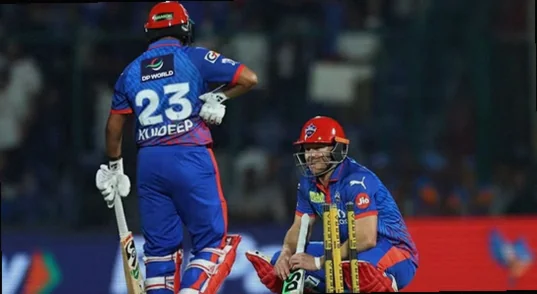
Was David Miller right to steer away from an easy single on the penultimate ball of Delhi’s chase—only to set off a debate that lasted long after the match at Arun Jaitley Stadium? In the immediate aftermath, spectators, TV commentators and social media all revisited the same moment, dissecting whether Miller’s instinctive call was brave or simply costly. The answer is not straightforward, and understanding it requires rewinding to the exact phase when Delhi’s chase swung from steady to suddenly precarious.
How Delhi’s chase turned—and what led to Miller’s decision
- Delhi were in control of the run chase at 130 for 3 in the 13th over, with KL Rahul already established on 69.
- Momentum slipped quickly: two wickets fell for only 30 runs in the following 22 balls, tightening the contest and shifting pressure onto the set batters.
- Miller returned to the crease and immediately changed the tempo, striking Kagiso Rabada’s shorter ball over extra cover for a boundary.
- Two deliveries later, Rahul was dismissed for 92, leaving Delhi needing 45 off 24 and no longer holding the role of favourites.
- Even after the equation worsened, Miller kept attacking—then launched Mohammed Siraj for a sequence of 6, 4, 6 in consecutive balls.
- Later in the same over, Vipraj Nigam also struck a boundary, reducing the target to 13 required off the final over.
- Gujarat’s nerves eased briefly when Prasidh Krishna was relieved to find Nigam, rather than Miller, facing the first ball—an advantage that lasted only momentarily as Nigam hit the first ball for four.
- Gujarat breathed again when Nigam was dismissed on the next ball, bringing Kuldeep Yadav to the crease.
- With Miller still needing to get back on strike and Delhi requiring 9 off 4 at one point, wicketkeeper Jos Buttler kept his glove off, suggesting there was a realistic possibility of a run-out if a single was attempted.
- Kuldeep then steered the third ball of the over toward third man, enabling Miller to return to strike.
- The chase story shifted away from Rahul: Miller became the centrepiece once again, having pulled Delhi back into contention and followed it up with a 106-metre six on the fourth ball of the next phase.
- That strike compressed the equation to 2 of 2, and the dugout’s body language suggested the pressure had eased.
- Yet the turning point arrived soon after—when Miller and Kuldeep were forced into a lengthy conversation before the penultimate ball, likely weighing whether taking a single was the safest route.
- On that penultimate delivery, Krishna bowled a slower, short ball outside off; Miller pulled it toward deep square leg.
- Even though a single appeared available, Miller refused it and denied Kuldeep the run, bringing the debate to a head.
By then, the match had effectively reached its decisive margin, and Miller’s mindset was already clear. Earlier, he had powered the late charge with aggressive finishing, and this was not the first time he trusted himself in a similar high-pressure situation. In Qualifier 1 of IPL 2022, Miller had produced a comparable late-over burst against the same bowler in a chase—smashing three sixes off the first three balls of the final over. Then, Miller wore the Gujarat Titans jersey while Krishna represented the Rajasthan Royals, but the underlying belief behind the choices looked remarkably similar.
With the possibilities fairly stark—either batter could swing the outcome, or force a Super Over if the final ball demanded it—the decision-making came down to picking the better of the two options. Miller’s preference, in that moment, was for the stronger outcome rather than the safer one. This time, though, it did not land in Delhi’s favour.
Where the call unraveled
- After Miller’s refusal of the single, the next ball saw a slower bounce outside off, but Miller failed to connect.
- Kuldeep attempted the risk of taking the single anyway, diving desperately, only to be beaten by Buttler’s underarm throw.
- Delhi then opted for a review, looking to overturn the decision on the hope of a wide call, but it proved unsuccessful.
So, was Miller right to deny the single—or should Delhi have aimed to push the match to a Super Over? That’s the trap of hindsight: it thrives on what-ifs. In the moment, Miller’s call was built on belief over caution, and he acted exactly the way a finisher with his temperament often does—backing the high-reward route. It simply didn’t work out this time. As the season continues, though, there is a lingering possibility that the same decision could return to the spotlight again—particularly if qualification ends up being decided by the narrowest of margins.
