
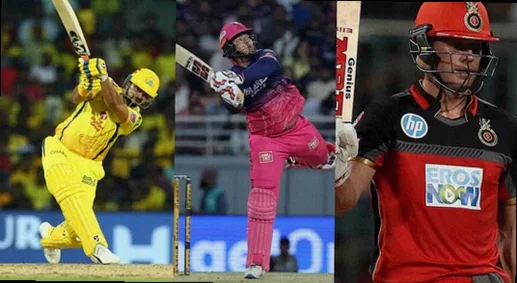
Vaibhav Sooryavanshi’s breakthrough in IPL 2026 did more than add a new name to the league’s talent list—it challenged the long-held idea that young batters must endure time, bruises, and gradual adjustment before they can survive bowling from seasoned internationals. At just 15 years old, he played his first full IPL season and produced a campaign that looks less like development and more like instant dominance. He struck 776 runs in 16 matches, averaging 48.50 with a strike rate of 237.31, blasting 72 sixes. The season rewards followed: the Orange Cap, the MVP honour, the Super Striker award, the Emerging Player award, and the Most Sixes tag. It is difficult to call that a “good” junior year. It stands as one of the most destructive batting undertakings the IPL has seen, regardless of age.
The numbers that set the benchmark
To understand the scale, you have to look at his complete IPL record at the same stage of his career, then compare it with some of the best batters the tournament has produced. Sooryavanshi had already played part of IPL 2025 before finishing his first full campaign in IPL 2026. At this checkpoint, his career reads 1028 runs in 23 matches, with an average of 44.69 and a strike rate of 228.95. His tally included two centuries and six fifties.
- IPL 2026 (first full season): 776 runs in 16 matches (Avg 48.50, SR 237.31), 72 sixes; Orange Cap, MVP, Super Striker, Emerging Player, Most Sixes.
- Career at the checkpoint (after completing first full season): 1028 runs in 23 matches (Avg 44.69, SR 228.95), 2 hundreds and 6 fifties.
From there, the comparison stops feeling flattering and starts sounding like a serious historical argument. The only player who comes close in this early-career volume snapshot is Chris Gayle.
Gayle as the nearest reference point
At the same “first full season” checkpoint, Gayle had already piled up 1071 runs in 28 appearances. His average stood at 44.62 and his strike rate at 162.52, with two centuries and five fifties. Gayle’s numbers carry the aura of a finished T20 destroyer, while Sooryavanshi’s output came with the body of a teenager and the returns of a cheat code. The runs are close enough to matter—Gayle is ahead by 43 runs—but Sooryavanshi reached that stage in five fewer matches.
The striking difference lies in tempo. The averages are nearly identical (44.69 versus 44.62), and the centuries are tied at two apiece. Yet Sooryavanshi’s strike rate of 228.95 is not merely higher than Gayle’s 162.52; it is ahead by the equivalent of 66 additional runs per 100 balls. That gap reframes what his early season actually means: he did not just mirror early Gayle production, he ran through the scoring at a pace Gayle had not reached at that point in his IPL journey.
Where the rest fall away at the same checkpoint
Once the rest of the field is placed beside him at that identical stage, the outlier nature of Sooryavanshi’s start becomes even clearer. Even batters who later became central figures across IPL eras had early records that were still forming, while Sooryavanshi’s already looked complete.
- AB de Villiers: 560 runs in 21 matches (Avg 40.00, SR 122.80), with two hundreds and figures that reflected an early phase still taking shape.
- David Warner: 445 runs in 18 matches (Avg 26.17, SR 137.77), before later evolving into one of the IPL’s most dependable overseas run-scorers.
- Suresh Raina: 421 runs in 16 matches (Avg 38.27, SR 142.22), a consistency-driven legacy-builder whose early stage still did not match Sooryavanshi’s sheer acceleration.
- MS Dhoni: 414 runs in 16 matches (Avg 41.40, SR 133.54), whose greatness is typically tied to finishing, leadership, pressure-handling and tactical nous—yet even on a pure batting comparison, Sooryavanshi’s stage looks different.
- Rohit Sharma: 404 runs in 13 matches (Avg 36.72, SR 147.98).
- Shikhar Dhawan: 340 runs in 14 matches (Avg 37.77, SR 115.25).
- Jos Buttler: 255 runs in 14 matches (Avg 23.18, SR 138.58).
- Virat Kohli: 165 runs in 13 matches (Avg 15.00, SR 105.09).
These names later shaped the IPL in different periods—Kohli becoming the league’s all-time run leader, Buttler delivering one of the most memorable single-season peaks, Dhawan quietly building thousands over time. But at this exact early checkpoint, none of them were close to Sooryavanshi’s figures on the combination of volume and aggression.
Why the strike rate changes what those runs represent
Getting to 1000 IPL runs early is already uncommon. Getting there with a strike rate of 228.95 is close to impossible to explain in ordinary development terms. That rate suggests Sooryavanshi was not merely collecting while others exploded—he was the explosion himself. He did not simply provide Rajasthan with good starts; he altered the shape of matches before the middle overs could settle, before the opposition could breathe, and before the field could spread in a way that usually reduces risk.
This matters because the IPL has evolved. In earlier eras, elite strike rates often hovered around 140 to 150. The modern game asks openers to fully maximise the Powerplay, attack matchups, and keep aggression alive even as conditions flatten and scoring becomes more accessible. Sooryavanshi didn’t just adapt to that demand—he pushed it past what comparable talent had delivered at the same stage.
His 2026 season ran on high-risk dominance without the typical trade-off in consistency. Young power hitters often bring volatility as the cost of their pace. Sooryavanshi offered Rajasthan both violence and ballast in the same package. The awards he collected reflect that balance: the Orange Cap rewards volume, the Super Striker award rewards tempo, and the MVP recognises all-round match impact. He won all three because he did not win just one kind of batting contest—he took control across categories simultaneously.
The age factor—and why it isn’t the only reason to be amazed
There is an obvious temptation to keep pointing back to his age, because the idea of a 15-year-old producing numbers like this in the IPL feels unreal. But the record doesn’t actually require the age story to justify serious attention. Even if he were 25 instead of 15, 1028 runs at 44.69 with a strike rate of 228.95 after a first complete season would still place him in conversations about the IPL’s most explosive starts.
The age makes the achievement astonishing. The strike rate makes it disruptive. The volume makes it undeniable.
Verdict: not the greatest yet, but the strongest first-season launch
The full comparison leads to a specific conclusion. Vaibhav Sooryavanshi is not yet greater than the established greats of IPL history—Kohli, Gayle, AB, Warner, Rohit, Dhoni, Raina, Dhawan, or Buttler. True greatness still requires more than one stage: it needs multiple seasons, setbacks, tactical refinements, playoff scars, the pressure of expectation, experience of failure, and a harder test—how a player responds when circumstances become uncomfortable.
Still, at the first complete season checkpoint, he sits ahead of almost all of them. Only Gayle can stand alongside him on volume, and even Gayle falls away in the strike rate contest by a wide margin. Everyone else trails when you compare runs, tempo, hundreds, fifties—or in many cases, all of them at once.
So the verdict is precise: Sooryavanshi hasn’t built the greatest IPL career yet. Not yet. But he has produced the greatest first full season launch among the batters in this comparison, and in places the gap between him and the rest is simply not close. The IPL has seen prodigies and monsters before. In 2026, it got something stranger: a prodigy who batted like a monster from the very first ball.
