
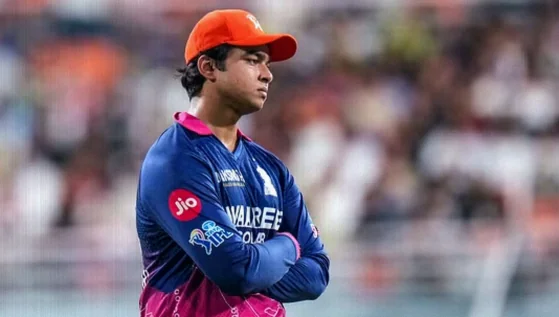
“RCB is the story of this IPL,” Jos Buttler once said, “but Vaibhav Sooryavanshi is the IPL this season.” In IPL 2026, the 15-year-old left-hander didn’t just rack up numbers—he rewrote what was possible, collecting the Orange Cap, most valuable player recognition, the Super Striker title, the most sixes in a campaign, and the Emerging Player award in the same spell. Across 47 matches’ worth of bowling opportunities, he faced 327 balls, piled up 776 runs, struck at 237.3, and launched 72 sixes as opponents watched plans collapse around him.
Key takeaways
- Vaibhav Sooryavanshi won the Orange Cap, MVP, Super Striker, Emerging Player and led the league for maximum sixes in IPL 2026.
- He scored 776 runs off 327 deliveries, striking at 237.3, and hit 72 sixes across the season.
- Rajasthan Royals’ run toward Qualifier 2 was heavily powered by his impact across crucial moments.
- In his tournament matchups, he maintained a strike rate above 180 against 37 of the 47 bowlers he faced.
- Mohsin Khan, in two meetings, dismissed him twice while conceding only two runs from 12 balls, producing a 83.3% dot-ball rate.
- Sooryavanshi reacted differently to other setbacks, including a turnaround against Praful Hinge where he struck four straight sixes in the first over and then made a 36-ball century.
Sooryavanshi’s dominance—and the question of how to stop him
When IPL 2026 is revisited years later, it will likely be remembered as the start of something bigger. The season’s scale was so extreme that it felt like a launchpad for a phenomenon already being discussed as “Vaibhav Sooryavanshi” in real-time. Even though his overall totals tell the headline story, the finer details show how efficiently he attacked top-level bowling throughout the tournament.
Against some of the most respected names in T20 cricket, he didn’t appear to care about reputations, match pressure, or the psychological chess that elite bowlers and captaincy plans usually bring to the table. The tournament’s biggest names—Jasprit Bumrah, Josh Hazlewood, Bhuvneshwar Kumar—were all treated as obstacles rather than threats. And in the Eliminator context, Pat Cummins felt that pressure firsthand as the batters around him struggled to manage what Sooryavanshi was doing.
That naturally raised one central question across IPL 2026: how do you actually stop him? Ian Bishop had put it plainly earlier in the season, pointing to the fact that multiple plans were tried by world-class bowlers, but no single approach seemed to guarantee success. “He has a number of world-class bowlers in this tournament going through… Plan A, Plan B, Plan C, Plan E, F, and G,” Bishop said. “That’s a good sign. I don’t know that there’s any one plan yet that I can put my finger on and say, ‘This is definitely what you do against him.’”
Numbers against the best, and the one bowler who cracked the code
IPL 2026 became a season where bowlers ran out of options while Sooryavanshi ran out of patience. The teenager wasn’t only the most dangerous batter of the campaign; he was the most brutal force the tournament had seen in a long time. The results against headline bowlers underline the point.
Of the 47 bowlers he faced, Sooryavanshi struck at more than 180 against 37 of them. His record versus key figures included: against Pat Cummins, he struck at 316; versus Josh Hazlewood, he took 18 runs from four balls, a strike rate of 450; against Kagiso Rabada (who won the Purple Cap), he made 43 from 23 balls; against Mohammed Siraj (the tournament’s most economical bowler and the winner of the most dot-ball award), he hammered 60 from 29 balls; and against Jasprit Bumrah—arguably the best T20 bowler active—he scored 13 from five balls at a strike rate of 260.
Looking at bowlers who delivered at least eight balls to him, there were 17 such matchups. While the sample size remained limited, Sunil Narine and Prasidh Krishna stood out because they held him to a strike rate of 100 or less. He managed a run-a-ball against the pacer and just under that against the spinner, showing that even in his worst stretches, he still threatened.
Yet amid the chaos, one name truly separated itself: Mohsin Khan. Across two encounters, the left-arm seamer from Lucknow Super Giants bowled 12 deliveries to Sooryavanshi, conceded only two runs, took two wickets, and produced an 83.3% dot-ball rate. The strike rate against him was 16.6—numbers that looked impossible in a season where 180 felt routine for the teenager.
In fact, among the 34 bowlers he faced who bowled at least four balls, Mohsin was the only one against whom Sooryavanshi failed to hit a boundary. It was the clearest signal that someone had finally figured out a way through the madness.
The Mohsin blueprint: precision, pressure, and two wickets
The first meeting came at Lucknow’s Ekana Stadium, and it played out like a lesson in execution. Mohsin targeted hard lengths aimed at Sooryavanshi’s body, trying to remove the space that the batter typically thrives on. The approach was built around subtle variation—deliveries that straightened, others that gripped and then drifted away late—so that timing became increasingly difficult as the over progressed.
Five dot balls created the trap. Then on the sixth ball, Mohsin angled one toward the leg side, baiting a cross-batted heave. Sooryavanshi went for the shot but found no timing, slicing the ball toward cover. Digvesh Rathi moved in quickly and completed the catch. The wicket came as a wicket-maiden, and it was also the first time all season Sooryavanshi recorded a strike rate below 100, getting out for 8 off 11 deliveries.
Sooryavanshi is a player who responds with vengeance, and the contrast with Mohsin becomes even clearer when you look at how he reacted to another pacer: Praful Hinge of Sunrisers Hyderabad. Hinge had dismissed him for a duck in Hyderabad. But in the reverse fixture, Sooryavanshi punished him immediately, smashing four consecutive sixes in the very first over. He then went on to reach a 36-ball century. It was a statement reply—one that showed he could turn pain into power.
That same “never forget” story did not quite play out against Mohsin. While he returned and punished Hinge, he didn’t manage to fully recover the dominance against Mohsin.
The second contest arrived in Jaipur. There, Sooryavanshi produced a 93 off 38 that was so impactful even Lucknow owner Sanjiv Goenka and head coach Justin Langer ended up applauding. Still, Mohsin remained the only bowler able to survive that wave. His response was to repeat the blueprint without hesitation.
Early in the powerplay, Mohsin sent four balls at the stumps, using the left-arm angle to keep the batter pinned. Sooryavanshi managed only one run. Then, when Mohsin returned in the 14th over, he conceded a single off the first ball—but the duel finished with a slower delivery that Sooryavanshi could only spoon to the field.
In the end, the numbers were again stark: 12 balls, two runs, and two wickets. The plan never changed, and it didn’t need to. In a season defined by nonstop, breathless, record-breaking insanity, that quiet repeatable control—delivered by Mohsin Khan—became one of the most remarkable stories of IPL 2026.
