
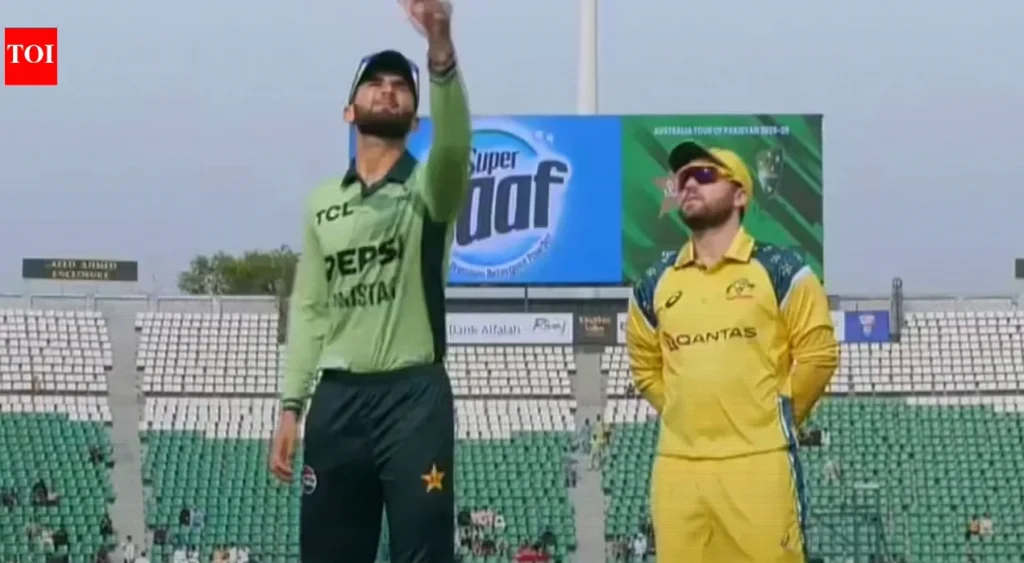
Pakistan and Australia meet for the decisive third ODI at the Gaddafi Stadium in Lahore, with the series locked at 1-1 after two contrasting games. The contest is set up for a tense finish, as neither side has managed to build clear, lasting control so far. Both teams now have one chance to swing the momentum decisively in their favour.
Quick facts
- Venue: Gaddafi Stadium, Lahore
- Series situation: Pakistan vs Australia tied at 1-1 after the first two ODIs
- Toss result: Australia won the toss and chose to bat first
- Pakistan approach: Shaheen Afridi expects the wicket to be similar and wants to restrict Australia to under 200
- Australia approach: Josh Inglis believes batting first worked in the previous game and expects a similar track
- Team changes: Australia include Cooper Connolly in place of Tanveer Sangha; Pakistan XI is unchanged
- Pakistan key names to watch: Babar Azam, Shaheen Afridi, Haris Rauf, Arafat Minhas
- Australia key names to watch: Josh Inglis, Cameron Green, Adam Zampa
Before the match even begins, Babar Azam’s form has become a focal point for Pakistan. He has faced criticism at various points in recent months for inconsistency, but his recent innings in the second ODI—where he struck a half-century—helped steady the batting and reinforced his value at the top. As the series is on the line, Pakistan will be counting on him to provide the kind of stability that changes the complexion of an innings.
Pakistan’s most seasoned batter, Babar often shapes the tempo when he gets in and looks comfortable. That is exactly why Australia are expected to treat him as a top priority from the outset, aiming to make his early overs difficult. Still, if Babar carries confidence into his timing and shot selection, he can be hard to contain—particularly when conditions feel familiar. With Lahore hosting the decider, Pakistan will hope another match-defining performance from their star batter becomes the turning point.
Arafat Minhas’ breakout continues
Alongside Babar, another major talking point for Pakistan is the rise of young all-rounder Arafat Minhas. The newcomer grabbed attention by taking five wickets on debut, immediately placing him among the standout performers of the series. His impact has given Pakistan an extra dimension in the ODI setup, and the spotlight naturally follows him into the deciding game.
For the third ODI, Minhas is again under the microscope, with Pakistan backing him by keeping the same playing XI. That faith appears to have boosted his confidence, and his calm approach under pressure has been evident beyond his bowling contributions as well. Pakistan’s management have been looking for reliable young talent who can deliver when it matters, and Minhas has already shown the capability to do so.
A strong showing in the series-decider could further lock in his role in the national team and push him toward becoming one of Pakistan’s key figures going forward. In a match where margins will likely be thin, his ability to contribute in more than one department could prove priceless.
The third ODI itself begins with Australia calling heads in the toss room, choosing to bat first at the Gaddafi Stadium. Australia’s decision was driven by confidence that the surface would behave in a similar manner to the wicket used in the earlier match. Pakistan captain Shaheen Afridi, however, did not sound overly concerned about bowling first, suggesting the pitch had not changed significantly.
Shaheen said Pakistan would concentrate on hitting the right lengths and areas, rather than worrying about the decision to defend later. He also noted that the wicket had been under cover for only about an hour, which may allow for some assistance for spin, giving the Pakistan bowlers an extra angle to work with. With the series at stake, the hosts have kept the same XI, while Australia have made one alteration.
Pakistan’s batting and bowling unit features familiar names and game-changers, including Babar Azam, Shaheen Afridi, Haris Rauf, Cameron Green, and Josh Inglis among the broader set of players involved. The match promises a competitive contest where the outcome could hinge on who executes better under pressure, especially with the series on the line.
Pakistan (Unchanged Playing XI): Sahibzada Farhan, Maaz Sadaqat, Babar Azam, Ghazi Ghori (WK), Salman Agha, Abdul Samad, Shadab Khan, Arafat Minhas, Shaheen Afridi (C), Haris Rauf, Abrar Ahmed.
Australia (Playing XI): Matthew Short, Josh Inglis (C/WK), Marnus Labuschagne, Alex Carey, Cameron Green, Matt Renshaw, Cooper Connolly (in place of Tanveer Sangha), Oliver Peake, Matthew Kuhnemann, Nathan Ellis, Adam Zampa.
Shaheen Afridi’s message to Pakistan is clear: they want to keep Australia’s score under control and aim to hold them below 200. He believes the wicket conditions could offer some turn, and the plan is to bowl accurately enough to force the opposition into mistakes. Pakistan’s confidence in their settled XI reflects their desire to avoid disruption in the final match of the series.
Australia’s captain Josh Inglis, meanwhile, explained the rationale behind batting first. He said the strategy worked strongly in the previous game, making it the preferred option again. When asked about the kind of total they want, Inglis pointed out that the pitch looks similar at both ends and that Australia will aim to execute the same plan as they did earlier.
Inglis also highlighted how well the side adjusted after the first day in the last outing, and he wants that same adaptability to continue in Lahore. The Australian change is straightforward: Cooper Connolly comes into the XI for Tanveer Sangha, and Australia will look to maintain the momentum they need to take the series.
With both teams entering level on points and one match separating glory from disappointment, the third ODI in Lahore is poised to be a high-stakes, tightly fought encounter. Whoever handles the early phase best—especially against Babar Azam’s threat—will take a major step toward not only winning the game but also securing the ODI series.
