
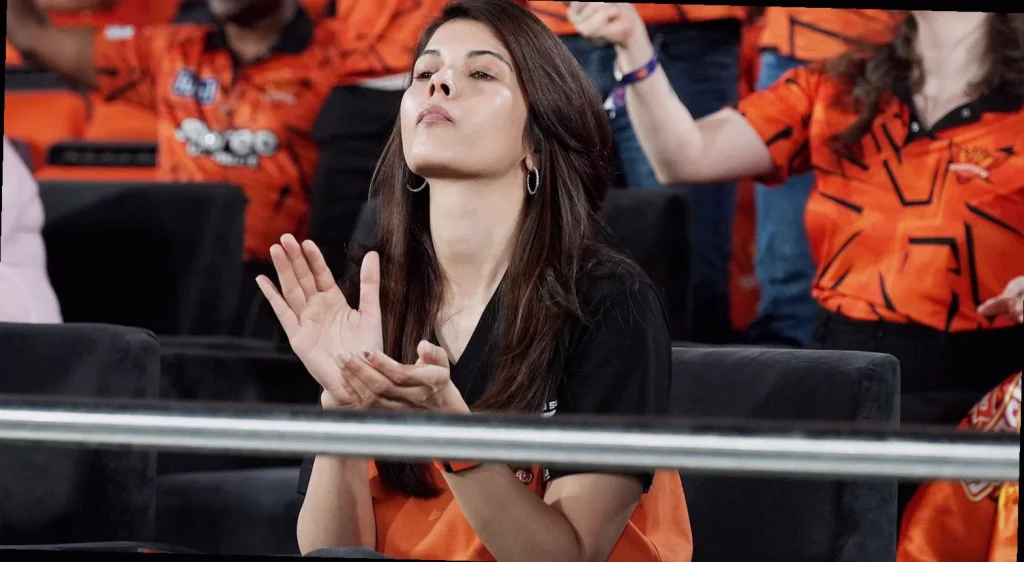
Do IPL franchise owners truly influence who gets picked, or is it simply fandom and finance from the stands? The debate has lingered for years, largely without hard evidence, even as owners continue to pour in vast sums each season and are often seen cheering from the ground. Sunrisers Hyderabad’s Liam Livingstone has now offered a pointed example from IPL 2026 that suggests the balance of power may tilt beyond the dressing room.
Quick facts
- Liam Livingstone believes IPL owners can have an impact on team selection.
- His illustration comes from IPL 2026, when he played only two matches—making scores of 1 and 14.
- Livingstone said a player was favoured because “the owners loved him,” leading to him being kept in the XI.
- He referenced SRH using three overseas players and said Salil Arora was acquired in the auction despite Mumbai Indians’ interest.
- Livingstone also said he knew he would likely not play unless someone was injured.
- David Lloyd questioned what expertise owners have; Alastair Cook replied “a lot of money.”
- Livingstone said Dan Vettori told him what the plan was.
- SRH is co-owned by Kavya Maran.
- SRH reached the IPL 2026 playoffs but were eliminated by Rajasthan Royals in the Eliminator.
Livingstone’s IPL 2026 claim
Livingstone, the England spin-bowling allrounder, argued that franchise decision-making can shape the playing XI in subtle ways. In his view, there are different “levels” to availability and selection—regular roles where you are essentially set, plus a fringe zone where your chances depend on circumstances and timing. He framed his own IPL 2026 as an example of being in that second bracket.
He said that during the season he arrived at SRH to find that a particular player—Salil Arora—had been targeted in the auction. Livingstone noted that Mumbai Indians also wanted Arora, but SRH ultimately secured him because they had more money. The key detail, as Livingstone described it, was that the owners “loved” the player, which translated into a clear path for him to be “locked in” to play.
Livingstone then connected this to SRH’s overseas usage at the time. He explained that when they were without Pat Cummins, the team was operating with only three overseas players, and he questioned the logic behind that approach with head coach Dan Vettori. He recalled Vettori’s response as essentially indicating that the owners’ preference would not be altered when Cummins returned.
According to Livingstone’s recounting, the message was that once Cummins came back, SRH would not change their selection “thing.” He added that this helped him understand his own position: he believed he would not feature unless injuries opened the door. Livingstone said that knowing you are unlikely to play creates a completely different mindset compared to when your role is uncertain but actively in motion.
Debate on owner influence
The comments triggered a wider discussion in the same podcast environment. David Lloyd challenged the premise by asking what sort of expertise franchise owners actually bring to such calls. Alastair Cook’s reply was blunt—money—while the conversation continued to explore whether owners can fully control decisions or merely exert a meaningful say.
Livingstone responded by suggesting that owners may not be making every call directly, yet they clearly have influence. He emphasized that one factor that stood out to him from Vettori was communication—specifically that Vettori informed him about what was likely to happen. Livingstone said he therefore went into the season with a clearer understanding of where he stood.
Where SRH finished in IPL 2026
SRH, co-owned by Kavya Maran, carried those internal dynamics into IPL 2026’s business end. The franchise advanced into the playoffs, but their run ended when they lost to Rajasthan Royals in the Eliminator.
