
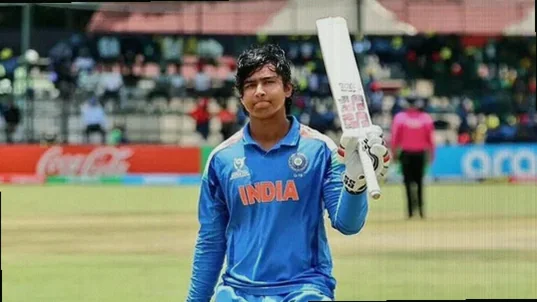
Former England captain Nasser Hussain believes Vaibhav Sooryavanshi should be fast-tracked into India’s international set-up, arguing that the 15-year-old has already built a compelling argument for selection even with India’s batting order packed with established options.
Key takeaways
- Nasser Hussain wants Vaibhav Sooryavanshi fast-tracked into the Indian team despite stiff competition in the top order.
- He highlighted Sooryavanshi’s IPL 2026 output for Rajasthan Royals: 776 runs in 16 matches at a strike rate of 237.30, including 72 sixes.
- Hussain said the talent has impressed big names such as Sachin Tendulkar and Virat Kohli.
- He argued India may eventually have to make a selection space for Sooryavanshi, even if it means dropping a proven batter.
- Hussain stressed Sooryavanshi still needs to clear tougher tests like movement, dips in form, and technical challenges before a major world event.
- Sooryavanshi featured in India’s Under-19 World Cup-winning campaign earlier this year and has been named in India A for a tri-series starting June 9.
Hussain’s case for making room in the line-up
Speaking on The ICC Review with Sanjana Ganesan, Hussain said Sooryavanshi’s rise has advanced to the stage where India may need to create space for him. In his view, the decision might ultimately require leaving out someone who is already established in the batting unit, simply because the case for the youngster’s selection has become too strong to ignore.
Hussain described Sooryavanshi’s IPL 2026 campaign as an “incredible” showcase of ability, noting that the Rajasthan Royals opener amassed 776 runs across 16 matches while striking at 237.30. He also pointed out that Sooryavanshi struck 72 sixes during the season, underlining the kind of impact that makes selection arguments easier to support.
“Such an easy answer to give to that is that yes, he has to play,” Hussain said. He added that although he had not watched a great deal of IPL action in full, he had seen clips of Sooryavanshi and was struck by the natural talent on display.
Comparisons with Tendulkar and the influence of elite praise
To explain why the buzz around Sooryavanshi feels so justified, Hussain drew a comparison to his early memories of seeing Sachin Tendulkar. He recalled that one of his first appearances for England came in the Nehru Cup long ago, when a young player walked out wearing pads that Hussain had not seen before—an image he still associates with Tendulkar’s early arrival to elite cricket.
Hussain then said Sooryavanshi has already caught the attention of some of India’s biggest cricket figures, including Tendulkar and Virat Kohli. He referenced Tendulkar’s observations about Sooryavanshi’s bat swing, arguing that if a player can impress Tendulkar and also capture Kohli’s attention, then the youngster has done something rare. In Hussain’s words, that level of recognition across different eras and minds is a sign of “unbelievable” potential.
Selection dilemmas, and why pressure could force the decision
While Hussain insisted the issue is not about whether India can identify Sooryavanshi’s talent, he argued that the real challenge is finding a place in a batting card already crowded with options. He pointed to India’s recent use of players such as Abhishek Sharma, Sanju Samson, and Ishan Kishan at the top of the order, which makes the selection call more complicated than it would be in many other situations.
Hussain acknowledged the practical reality of international cricket: teams can’t simply add a new player without dropping someone else. “So anywhere else in the world you would say get him in,” he said, contrasting that with the constraint that international sides must name a fixed number of players at the toss.
However, Hussain also suggested that the pressure created by Sooryavanshi’s performances may eventually make the dilemma less important. He maintained that India have a pool of batters they could select, but when a player makes such a consistent, convincing case over time, the decision becomes straightforward. “In the end, you have to say, I don't care who we're leaving out, this lad has to play,” he added.
Preparing for world tournaments: exposure first, tests later
Hussain further argued that India should expose Sooryavanshi to international cricket before a major world tournament, rather than waiting until the stakes and pressure become heavier. He suggested that there are challenges involved in preparing away from home, and that Sooryavanshi should be brought through the international environment while the window allows for learning.
At the same time, Hussain warned that Sooryavanshi still has to handle tougher examinations at the highest level. He mentioned the need to deal with movement, the possibility of form dips, and the chance of technical scrutiny. In particular, he pointed to the short ball as one area that could be tested, noting that the youngster has not yet experienced the kind of downturn that often changes how batters are assessed.
Still, Hussain believes those hurdles can be overcome if the youngster is given the right path. “But he needs to get through all of that before you get to a world event, and he's going to be a star,” he said. He cited the Under-19 World Cup as evidence of what Sooryavanshi can do, adding that the tournament showed his ability to deliver at major moments—especially noting his impact against England in the final.
Under-19 heroics and the India A call-up
Sooryavanshi was part of India’s Under-19 World Cup-winning squad earlier this year and played a decisive role in the final against England. He smashed 175 off 80 balls, which Hussain highlighted as the highest score ever in an Under-19 World Cup final.
Since that success, Sooryavanshi has been selected for India A ahead of the tri-series versus Sri Lanka and Afghanistan, with the tour beginning on June 9.
