
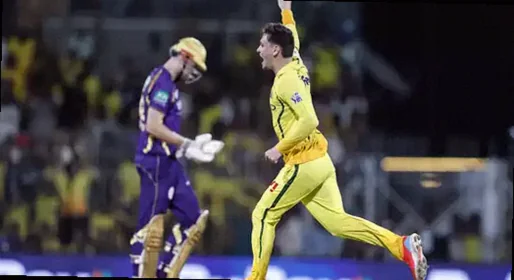
CSK’s third home match of the IPL 2026 season carried a familiar feel—pace against spin, and the kind of confidence that comes when a boundary-driven contest finally tilts the right way. Chepauk had been flagged earlier in the year during the T20 World Cup as the tournament’s most batting-friendly setting, with an average of 35 runs per wicket and a run-rate of 9.41, far clear of the overall competition figures of 25.04 and 8.74. The same venue also posted a spin-bowling average of 31.41, only bettered by Ahmedabad’s 32.88.
Quick facts
- CSK’s third home game highlighted a contrast between “batting-friendly” numbers and a match that was heavily spin-shaped.
- In IPL 2026, for the first time, a side defended a sub-200 total across a full 20-over innings after seven earlier failed attempts.
- Spin delivered 6/115 in 18 overs (economy rate 6.38) versus seam bowling 6/231 in 22 overs (economy rate 10.5).
- Boundary dimensions: square-leg boundary for right-handers measured 70m from the Anna Pavilion End and 63m from the V. Pattabhiraman Gate End.
- CSK’s innings: 192/5 overall, including 121/3 at 12.1 RPO from the V. Pattabhiraman Gate End and 71/2 at 7.1 RPO from the Anna Pavilion End.
- Ajinkya Rahane spun from the Anna Pavilion End for 8 overs, taking 2/45 (economy 5.12); the other end saw 0/23 from 2 overs.
- KKR’s chase: they finished on 160/7, scoring 80 from each end.
That backdrop created a real contradiction: despite expectations of a true batting track, this contest followed a different script. Spin took control outright, with figures reading 6/115 in 18 overs at 6.38 per over, while seam work went for 6/231 across 22 overs at 10.5. Yet nothing in the batting looked like a surface that should have punished strokeplay—whether it was Sanju Samson and Ayush Mhatre starting the innings or the late surge from Rovman Powell and Ramandeep Singh.
KKR’s role was crucial as well. They made the most of the uneven boundary sizes, but CSK still managed the match-ups in a way that suited the conditions. The square-leg limit for right-hand batters stood at 70 metres from the Anna Pavilion End, compared with 63 metres from the V. Pattabhiraman Gate End when CSK began their innings. With Shivam Dube arriving as late as the 17th over, right-hand batters faced 90% of the deliveries in CSK’s innings—108 out of 120.
The scoreboard mirrored that imbalance. CSK posted 192/5 in total, but the run flow split sharply by end: 121/3 at 12.1 runs per over from the V. Pattabhiraman Gate End, versus 71/2 at 7.1 runs per over from the Anna Pavilion end. Rahane’s planning also fed into the picture—he used eight overs of spin from the V. Pattabhiraman Gate End, returning 2/45 with an economy of 5.12, while the opposite end saw two overs of spin go for 23 without a breakthrough.
Several broader trends sat behind the tactical choices. Akeal Hosein is known for pushing nearly half of his T20 overs (48%) into the powerplay phase, and Noor Ahmad has been the leading wicket-taker in the middle overs across the IPL since 2025. In a perfect scenario for CSK, they would have liked to play the match out in the same rhythm. But KKR, likely aiming to reduce the threat from Akeal and account for the boundary irregularities, altered their approach by promoting Sunil Narine to open.
It also mattered that KKR’s first-half batting had already been a rare bright spot in an otherwise uneven run. The day’s two openers were the only KKR pair to show a meaningful strike-rate against left-arm spin in T20s, dating back to 2023. Narine’s record carried the double edge: he produced 11 dismissals in 53 balls while striking at 177.35, which suggests both danger and vulnerability depending on the matchup.
Before Tuesday, Finn Allen had already been undone by Anshul Kamboj’s swing. Narine, who had been dropped earlier by the same bowler, was then trapped by Khaleel Ahmed using an around-the-wicket angle. Despite how often Narine’s reputation looms over a batting plan, the numbers were strangely limited—he had previously faced only 10 deliveries from left-arm quicks from that angle in the IPL, and half of those were from Khaleel.
CSK made sure those threats didn’t grow. They introduced Akeal in the sixth over, and once the early danger was blunted, they gained the advantage of deploying their two left-arm spinners against a right-heavy batting order. Rinku Singh, the only left-hander to follow, was removed by Noor Ahmad for the third time in 25 balls in the IPL, while he managed just 16 runs at a strike rate of 60.
The spin pairing itself created another talking point. The overseas left-arm duo—only the second such combination in an IPL innings after Shakib Al Hasan and Brad Hogg for KKR—worked together for 4/47 across eight overs. The impact could have looked even sharper with clean execution in the field, as reflected by dropped chances, including one that was parried over the ropes.
In the end, CSK’s bowlers made the boundary-and-dimensions angle seem almost irrelevant. KKR managed to score 80 runs from either end in their chase, finishing at 160/7—an outcome that underlined how successfully CSK turned the “batting-friendly” reputation of Chepauk into something far less predictable.
