
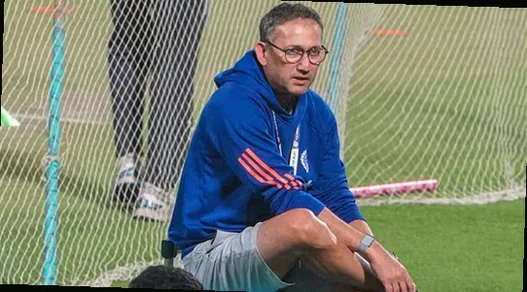
Ajit Agarkar is expected to remain Chairman of India’s senior men’s selection committee for an extended term, with the BCCI reportedly inclined towards keeping him in place through June 2027. His current tenure is set to finish in June 2026, but a report suggests the board may push his contract ahead by one more year, positioning the decision as both a recognition of on-field outcomes and an endorsement of how the team has been managed through transition.
Continuity ahead of the next World Cup cycle
The BCCI’s thinking appears rooted in stability. Agarkar’s leadership has overlapped with a period in which India ended a long wait for major ICC trophies and then continued to add to the haul. During his time, India won the 2024 and 2026 T20 World Cups, alongside the 2025 Champions Trophy. The team also reached the 2023 ODI World Cup final at home, reinforcing the wider narrative that the current selection structure has been able to deliver both results and a smoother handover process.
As part of the justification being circulated, board officials are said to view the extension not as a simple administrative renewal, but as a vote of confidence in a selector who has navigated changes without making the process cautious or overly driven by outside pressure. One official was quoted describing the appeal of Agarkar’s approach: that the transition under his tenure has been “seamless,” and that he has shown willingness to take bold decisions. The same statement added that BCCI office-bearers are expected to speak with him during the course of IPL events to provide updates and keep him in the loop.
Why the board wants experience on the panel
There is also a practical element behind the expected extension. The BCCI wants continuity and seasoned oversight in the selection group, particularly because two selectors—RP Singh and Pragyan Ojha—have not yet completed a full year in their roles. With the 50-over World Cup scheduled for 2027, retaining an experienced chairman is being treated as the safer administrative option.
Agarkar’s period has coincided with a more sensitive phase of evolution in Indian cricket. The team has had to steer through the post-era management of long-standing Test figures, with decisions required after senior names such as Virat Kohli, Rohit Sharma and Ravichandran Ashwin. Across formats, leadership changes have also been part of the planning, including Shubman Gill taking charge in Tests and Suryakumar Yadav being trusted in T20Is.
“Bold decisions” and the selection logic
The description of “bold decisions” is being linked to examples from Agarkar’s own public explanations. Speaking on a selection ahead of the T20 World Cup in 2026, he outlined the thinking behind keeping two wicketkeeper-batsmen high in the batting order—citing Sanju Samson and Ishan Kishan as the intended pair—while noting that the final combination would be determined by the team management. He also referenced Rinku Singh’s entry as a way to add depth in the lower middle order. Agarkar’s point was that roles and combinations have to be balanced, meaning someone inevitably misses out, and in that particular moment, it was Gill.
On captaincy strategy and team leadership fit, Agarkar had also stressed a key theme: India would prefer a captain who is likely to be available for all matches. He added that Suryakumar Yadav was viewed as a deserving candidate, again underlining the same idea now being used to support his extension—selection with clarity, and ownership of difficult calls rather than avoiding tough choices.
For the BCCI, the expected move to extend Agarkar’s contract therefore appears to be less about chasing change and more about locking in a steady hand before another major World Cup build-up begins.
