
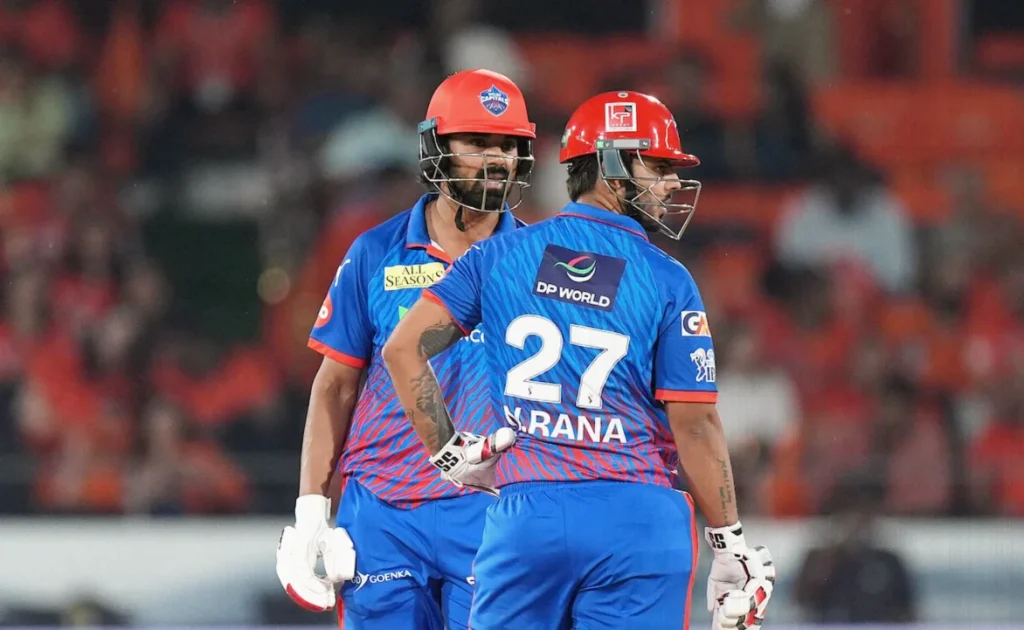
Chasing a target of 243, the Delhi Capitals fell short of the mark against Sunrisers Hyderabad in an IPL 2026 fixture on Tuesday, unable to build the kind of momentum typically required in high-scoring chases. After an early jolt in the Powerplay, the batting never quite gathered speed, leaving Delhi to rue both timing and missed chances as they ultimately surrendered the chase.
Delhi’s chase stalls after a shaky Powerplay
Delhi began their run chase with KL Rahul and Pathum Nissanka at the top of the order, aiming for an aggressive start that could set up a chase of 240-plus. However, Nissanka departed early, dismissed for 8 off 6 balls, and the opening burst never became the platform Delhi needed.
- Sunrisers Hyderabad set Delhi a target of 243.
- Pathum Nissanka was dismissed for 8 from 6 deliveries.
- KL Rahul finished with 37 from 23 balls.
- Nitish Rana returned at No. 3 and struck 57 off 30 balls.
- Delhi managed only 59 runs in the first six overs.
What Venugopal Rao said: Delhi fell 15 to 20 short in the first phase
After the defeat, Delhi Capitals Director of Cricket Venugopal Rao pinpointed the Powerplay as the decisive stretch. He suggested that the team should have posted a much more competitive score in the first six overs—something closer to what a chase of 240-plus demands—before expecting their batting depth to take over.
Rao’s assessment in the post-match press conference was blunt: a strong start is non-negotiable when chasing totals in the 240 range, and Delhi’s Powerplay left them short of the runs required to stay on track.
- Rao said Delhi “fell about 15 to 20 runs short” during the first six overs.
- He believed the chase required around 80 to 90 runs by the end of the Powerplay.
- He added that, given Delhi’s batting depth, reaching that Powerplay mark could have made the target achievable.
- He said finishing the Powerplay on 59 was not enough and that a crucial chance was missed.
Rahul’s strike-rate issue after Nissanka’s dismissal
Rao also addressed the impact of how deliveries were distributed after Nissanka’s departure. Rahul, despite being in good form this season, struggled to get enough of the strike during the Powerplay period. With Nitish Rana facing the bulk of the balls, Rahul’s ability to find rhythm was limited.
Rao explained that Rahul was not in a position to build momentum because he faced too few deliveries right after the early wicket. He acknowledged that Rahul did hit a six and a boundary, but the overall flow of the innings shifted once Rana became the dominant batter in terms of ball-facing.
- After Nissanka’s dismissal, Rahul faced only 6 balls in the first six overs.
- Nitish Rana faced 17 deliveries in that same Powerplay phase.
- Rao said Rahul needed a meaningful number of balls to make an impact in the Powerplay.
- He noted Rahul hit a six and a boundary, but momentum swung because Rana faced more balls.
Bowling call and missed chances: Rana’s overs and Abhishek Sharma’s reprieves
Another point of discussion centered on bowling usage, with questions raised about why part-time spinner Nitish Rana was given four overs while Kuldeep Yadav, the team’s specialist spinner, bowled only two. Rao responded by framing it as a captain’s on-field decision-making process in T20 cricket.
He suggested that these are instant calls and that, in the shortest format, gambles can either land well or fail—often determining how a tactical move is judged afterward.
- Questions were asked about Nitish Rana bowling four overs while Kuldeep Yadav bowled two.
- Rao said such decisions come down to what the captain feels on the field.
- He added that it is easy to question decisions later, but they are made instantly.
- He stated that if a gamble works, it is celebrated—and this is part of T20 cricket.
Rao also expressed disappointment over Delhi’s failure to remove Abhishek Sharma. The left-handed batter was offered two lifelines during his innings and went on to score 135 off 68 balls, turning those reprieves into a major damage spell.
Rao said the side did not take the opportunities when they appeared, including at key moments after Abhishek had built momentum.
- Abhishek Sharma was given two chances before reaching 135 off 68 balls.
- Rao said Delhi missed a run-out opportunity after Abhishek passed 50.
- He added that Delhi dropped Abhishek again when he was on 84 or 86.
- Rao concluded that Delhi paid the price for those lapses.
Delhi’s position after the loss
With the defeat, Delhi Capitals slipped to fifth place in the points table. They now have three wins from six matches as the tournament continues.
