
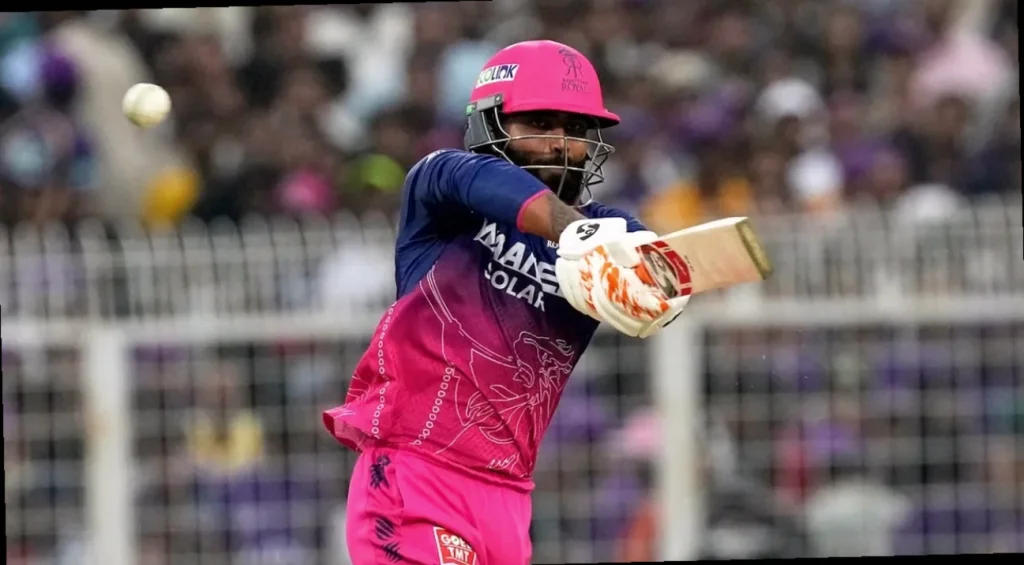
Ravindra Jadeja’s batting reputation is built on the ability to turn T20s into demolition acts when the conditions suit. Yet on a surface that offered a touch more grip and movement, he leaned into patience and precision—then backed it up with a bowling spell that helped Rajasthan Royals secure a comfortable win.
Key takeaways
- Jadeja guided RR from 62/4 after nine overs to a steadier end total, taking 24 balls to reach his first boundary.
- His 20th-over burst proved crucial, with 20 runs coming in that over as RR finished on 159/6.
- Against LSG, Jadeja dismissed Nicholas Pooran with a length delivery that was mistimed to long-on.
- Jadeja’s batting approach in IPL 2026 shows the lowest strike rate among players facing 100+ balls, highlighting his pressure-handling role.
- Overall, RR won the match by 40 runs after Jadeja’s combined impact with bat and ball.
How Jadeja rebuilt the innings for RR
Against Lucknow Super Giants on Wednesday, Rajasthan Royals found themselves wobbling at 62 for 4 in nine overs. The pitch was helping the quick bowlers, with the ball moving through both seam and swing, which made big hitting a risky option rather than a reliable one. Jadeja understood that RR needed time at the crease to post a score worth defending.
He explained that mindset on broadcast: the wicket was not straightforward because the ball was seaming and swinging, so he decided to bat longer “as much as I can.” He also said he discussed the plan with Shimron Hetmyer and the incoming batters, emphasising the idea of playing time and staying calm through the difficult overs.
At the other end, Hetmyer made a brief counterattack before getting out. Jadeja, however, played his own innings—avoiding the urge to premeditate, working for singles and twos, and hovering around a run-a-ball pace. It took him 24 deliveries to find his opening boundary, which was the slowest first-boundary arrival by any batter since the start of the 2024 season. From there, he built partnerships with Donovan Ferreira and Shubham Dubey, pulling RR away from immediate danger.
That willingness to recalibrate is a signature of Jadeja’s batting. In IPL 2026, among batters who have faced 100-plus balls, he has the lowest strike rate—128—reflecting how he absorbs pressure through low-risk accumulation and waits for the right bowler or the right over to accelerate. The template will feel familiar to fans who have followed his long spell with Chennai Super Kings, where his ability to adjust has often decided matches.
His past match-shaping performances show the same balance of patience and impact. In 2021, he made 26 off 21 balls against Royal Challengers Bengaluru at the end of the 19th over, before striking 37 off Harshal Patel in a single over—playing a match-winning role with both bat and ball. In 2024, against Punjab Kings, he struck 12 off the final over to help CSK reach 167, a total he then helped defend; that was also his last Player-of-the-Match showing before the current game.
The late-over surge and RR’s competitive end total
In this match, Jadeja waited until the last over of RR’s innings, which had begun at 139 for 6. Mayank Yadav, playing his first match of the season, was tasked with bowling to him. Jadeja pulled a slower back-of-a-length delivery for four on the first ball—his innings’ first boundary—and kept the pressure on from there.
He struck three twos through pulls and heaves, then added another four by flat-batting past mid-off. The over also produced a top-edged six over deep backward square, which was his first maximum in five innings so far this season. By the end of that over, RR had scored 20 runs and finished on 159 for 6.
It matched the Jadeja pattern seen across seasons. In IPL matches, he has a strike rate of 214.4 in the 20th over, with 33 sixes and 24 boundaries across 84 innings.
Afterward, he said the aim was to capitalise on that phase: “We were able to cash in and we got 20 runs.” He added that he trusted his strength in the 20th over and spoke with his partner Dubey about backing each other and playing the right attacking shots. He also noted that on this wicket the ball was seaming and there was bounce, so it was not easy to play every shot at will.
Jadeja’s situational awareness—so central to his batting—carried straight into his bowling plans.
Turning Pooran’s threat with a left-arm plan
While T20 cricket often rewards match-ups and can lead to cautious selection decisions, Jadeja chose to take on danger directly. He came on to bowl to Nicholas Pooran, one of LSG’s most destructive left-hand hitters. Bowling from around the wicket, Jadeja kept the ball away from Pooran’s preferred scoring arc. He also said he was subtly “mixing up his pace,” while resisting the temptation to pitch it too close.
He followed up with another over on the trot and struck in the second spell. He dismissed Pooran with a length ball on off that was mistimed to long-on. Jadeja had used a similar style earlier in the season, when he helped remove Shivam Dube in RR’s match against CSK.
At the press conference, Jadeja linked his time as a batter to why the bowling plan worked. He said it is not easy to bowl to a left-hander as a left-arm spinner, but conditions can help—there can be extra spin from the wicket, and the ball may grip or stop slightly. He explained that from a batter’s perspective, if a spinner is bowling and the ball is getting stuck or gripping, the batter may not chase every scoring chance. In his view, the reverse happens as well: when he bowls, a left-hander remembers that the ball is gripping and spinning, which affects their decision-making.
He also stressed that a plan is not guaranteed in T20s. “You can’t bowl [to a plan] every time,” he said, because sometimes the best call needs to be made in the moment, and sometimes it works and sometimes it doesn’t.
Pooran’s wicket tilted the contest further toward RR, and Jadeja celebrated in a new, playful way—one he described as spontaneous. When asked about it, he laughed and said, “Yeah, he’s in my pocket,” adding that the celebration “just randomly came into my mind.”
Middle-order assurance and context from earlier RR matches
Earlier in the season, in an SRH chase of 217 where RR were down to 9 for 5, Jadeja helped soften the blow of a heavy defeat by scoring 45 off 32 balls in a 118-run stand with Donovan Ferreira. That partnership mattered not only for his own tally, but for RR too, as top-order contributions had come from Vaibhav Sooryavanshi, Yashasvi Jaiswal, and Dhruv Jurel in the early portion of the campaign. Still, doubts had lingered about how far RR’s batting depth could go beyond the top five, especially after their batting began to break down in back-to-back losses following a strong start.
Jadeja addressed that broader theme when he spoke about the role of the middle order. He said he believes the middle phase got its chance at the right time and “in a pressure situation.” He added that when RR face important matches at important stages, everyone needs the experience and opportunity to make runs. He also pointed out a recurring danger in T20 tournaments: sometimes the top three deliver while the rest get fewer overs to bat and then get exposed in crucial games. In his view, it was a positive sign that during the middle phase, all players were batting, and doing so under pressure.
Batting patience and bowling execution decide the outcome
Jadeja’s display served as a reminder of how valuable he is in T20 cricket. On a tricky pitch, he used awareness, stayed committed to his method, and eventually shaped the result. In the end, Rajasthan Royals won by 40 runs—an outcome built on his two-way impact with bat and ball.
