
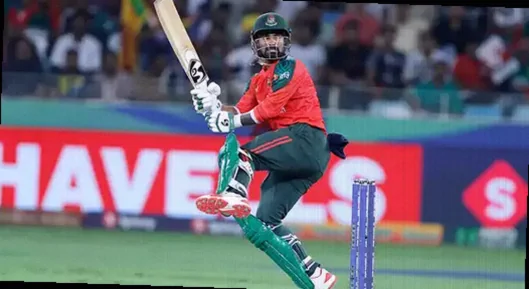
Bangladesh captains rarely get a completely free hand, but Litton Das sounds like he’s enjoying a wider scope than usual. The wicketkeeper-batter was candid about his frustration with the national selection process after Shamim Patowary was left out without what he felt was adequate discussion with him beforehand. Litton, who has been entrusted with leading the T20I group and will continue in that role through the next cycle, says the difference now is that he feels empowered to shape the team’s direction in his own way.
Bangladesh’s current captaincy confidence isn’t just about authority in theory—it’s also built on results. Litton has guided the side in 29 T20 Internationals, the third-highest captaincy tally for Bangladesh behind Mahmudullah and Shakib al Hasan. Across those matches, Bangladesh have recorded 15 wins and suffered 12 defeats, translating to a win rate of 51.72. That leadership run has included five consecutive series triumphs over Sri Lanka, Pakistan, the Netherlands, Afghanistan and Ireland, giving him a platform to experiment, plan and manage roles with greater certainty.
Speaking on his approach, Litton said, “First of all, I have a lot of freedom as a captain and I’m organizing the team in my own way.” He added that the selectors remain involved alongside the head coach, and that decisions are being shaped through shared inputs aimed at moving the team forward. Litton also explained that the conversation around steering the side toward the next World Cup wasn’t as extensive as it might have been, because the selectors viewed him as the deserving candidate. He said he will continue with the preparation work that was already in place ahead of the 2026 T20 World Cup.
For Litton, the immediate focus is the next T20 World Cup in 2028, and he says planning has begun with the bigger picture in mind, including the tournament’s location outside Asia. He also pointed to the preparation and togetherness Bangladesh developed before the last World Cup, saying the team intends to preserve that same rhythm and bonding as they move into the next chapter.
On the bowling front, Bangladesh have been adjusting their group ahead of the New Zealand series by bringing in a relatively fresh bowling mix and managing workload by resting players such as Mustafizur Rahman. Litton stressed that Mustafizur is a major asset, but the team has to prepare for scenarios where he can’t play, particularly due to injury. He said it’s hard to replace the impact of a bowler like Mustafizur, yet the responsibility then shifts to others to step up if he’s unavailable. With that in mind, Bangladesh are trying to get enough match time into their bowlers so they can develop, even if reaching Mustafizur’s level may take time.
Litton also underlined the need to rotate fast bowlers rather than push them continuously, especially in a format that demands intensity. He described the absence of Taskin and Mustafizur as significant assets for Bangladesh cricket, but insisted the team doesn’t want them to be overworked and risk losing them to injuries. He framed it as a balancing act—using the XI strategically while ensuring the players are protected physically.
With Bangladesh set to play T20 cricket after a break, Litton said the side doesn’t want to pile additional pressure early. He suggested that once players get through one or two matches, they will settle into the demands of the format and the overall team setup. Bangladesh’s upcoming schedule includes nine T20 matches in total, across three consecutive series against strong opponents, which he described as a positive stretch because momentum from one series will make the next one easier.
Litton noted that the squad has moved on from the disappointment of missing out on the T20 World Cup. He linked that recovery to how the players managed to stay focused during the tournament period, where they still tried to produce good cricket. In his view, international cricket is unforgiving—every game matters—so players are expected to think accordingly and approach each match with a winning mindset while representing Bangladesh.
On his own form, Litton said he feels more confident behind the stumps because he has been keeping regularly. While he hasn’t piled up large scores recently, he believes he has spent long enough at the wicket to feel comfortable as a batter. He also said he doesn’t want to label his keeping as being at a peak, but since he keeps across all three formats, he has built a clearer understanding of his role. He explained that his perspective has evolved—from earlier days when he fielded in one-dayers and T20s and then stood behind the wicket in Tests—to a more complete routine where he now knows what is expected and tries to give maximum effort.
He added that in the last two series, even without big runs, he managed to stay at the crease for extended spells, and that staying time is valuable in T20 cricket. Litton argued that because the format is different, batting success can come when a batter remains at the wicket long enough, even as the approach must remain attacking. He accepted that in T20s, it’s normal to experience both success and failure, and players must be ready for that rhythm.
Litton’s campaign as captain is set to begin after the board’s formal mandate to lead the side until the next T20 World Cup. His first assignment will come through an upcoming three-match T20 series scheduled to start in Chattogram on April 27.
