
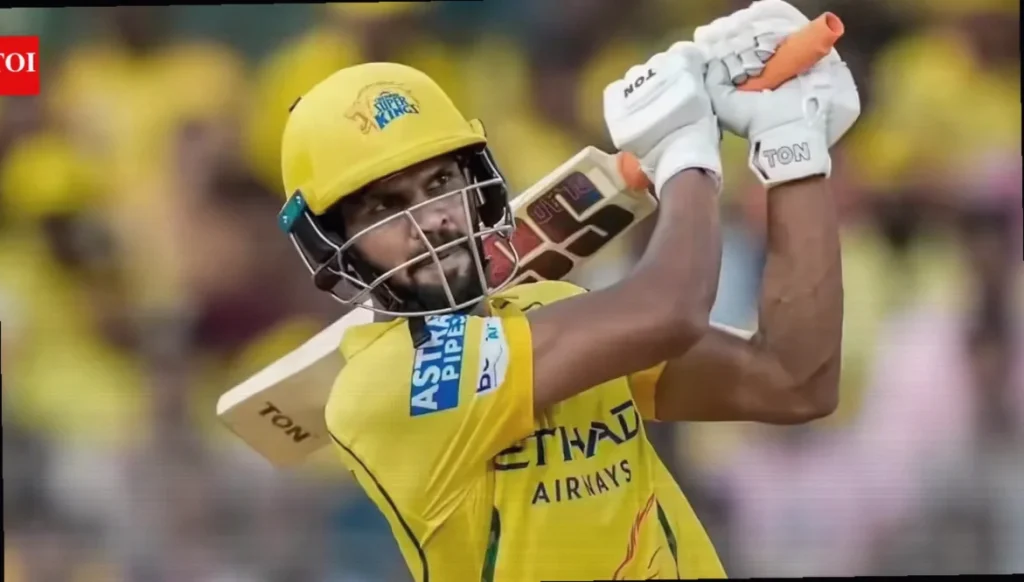
With scores around the 200 mark becoming routine in the IPL and openers regularly punishing new-ball bowlers at strike rates of 180, 190 and beyond, Chennai Super Kings’ recent innings at Chepauk stood out for the wrong reason. Ruturaj Gaikwad needed 49 deliveries to get to his fifty against Gujarat Titans on Sunday in IPL 2026. It turned into one of the slowest fifties by a CSK batter in IPL history and, crucially, the slowest fifty in the Impact Player era since 2023.
Gaikwad finished unbeaten on 74 off 60 balls. In isolation, a not-out fifty can be a match-saver, but in T20 cricket it can also become the reason the scoreboard ends up short by a margin you can’t afford. On Sunday, the pattern of Gaikwad’s innings—steady rather than assertive—placed him firmly in the latter category.
Quick facts
- Ruturaj Gaikwad scored 74* off 60 balls versus Gujarat Titans at Chepauk in IPL 2026.
- His fifty took 49 balls, one of CSK’s slowest IPL fifties.
- It was the slowest fifty in the Impact Player era since 2023.
- Gaikwad’s IPL strike rate: 136.24; this season: 121.08.
- CSK reached 50 runs only in the 12th over.
- Sanju Samson: 11; Urvil Patel: 4; Sarfaraz Khan: 0; Dewald Brevis: 2.
Gaikwad’s career strike rate in the IPL is 136.24, but this season it has dipped to 121.08. Wickets continued to fall around him, yet in T20 cricket “surviving” is not the same as setting up a winning total. Teams are not simply expected to bat through the innings; they are expected to take control of the game by attacking the bowling when the match opens up.
That’s where the innings becomes the talking point. When so many sides are posting 200-plus and top-order batters are going at blistering rates, a 49-ball fifty from an opener is difficult to justify. It isn’t about dismissing difficult conditions—Chepauk did offer assistance to the bowlers, with Mohammed Siraj and Kagiso Rabada making effective use of the new ball. The surface also demanded adjustment, and the batting wasn’t straightforward.
But there’s a difference between adjusting to the pitch and shutting the innings down. CSK lost wickets in the powerplay, with the following dismissals recorded in the chase/innings narrative: Sanju Samson for 11, Urvil Patel for 4, Sarfaraz Khan for 0, and Dewald Brevis for 2. After that kind of start, the usual “anchor” discussion often comes up—someone must steady the innings.
Still, stabilisation in T20 cannot be measured the way it is in longer formats. There is no 50-over cushion here to recover slowly, and if your method after early wickets is to reduce risk so much that run-making effectively stops, the opposition is already halfway to victory. In this match, Gaikwad slipped into a surrender-like rhythm, and as the innings slowed, CSK struggled to accelerate at the right moments.
CSK ultimately got to 50 only in the 12th over. That timing matters in a competition where totals are increasingly being pushed beyond what once looked par. The point is underscored by what happened earlier: on Saturday, PBKS demonstrated a similar blueprint of attacking intent by reaching the type of momentum that leaves teams chasing a deficit they can’t close.
Why the tempo matters in 2026 IPL cricket
T20 cricket has changed, and the opener’s job is no longer only to stay in and bat deep. The modern expectation is to steer the tempo, force bowling changes, and make sure each over produces meaningful progress. Around the IPL, victories have increasingly been driven by top-order batters who attack, not merely by those who absorb pressure.
If an opener still plays as though preservation is the primary objective, the team is often already playing catch-up—whether it’s chasing a target or trying to post one under pressure. In that context, Gaikwad’s 49-ball route to his fifty at Chepauk didn’t just look slow; it highlighted a mismatch between the innings style and the demands of the format right now.
Slowest IPL 50s for CSK
53 P Patel vs PBKS (Chennai 2010)
51 M Hayden vs MI (Gqeberha 2009)
50 M Vijay vs PBKS (Mohali 2013)
49 M Vijay vs RR (Jaipur 2013)
49 D Smith vs MI (Wankhede 2014)
49 R Gaikwad vs GT (Chennai 2026) – 49 balls makes it the slowest 50 in the Impact Sub era (since 2023).
