
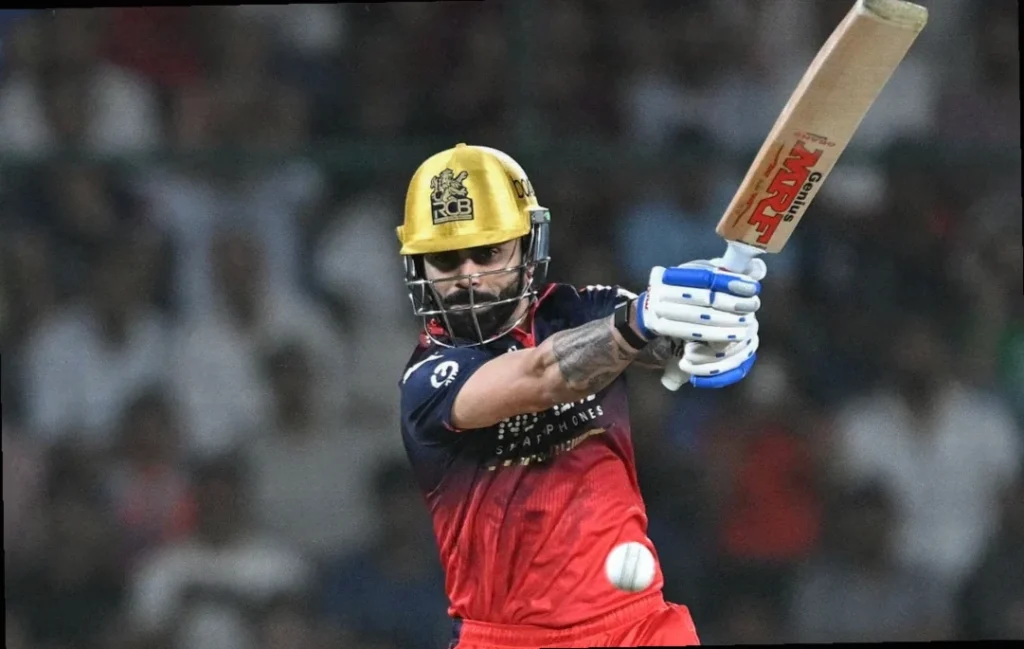
Mitchell McClenaghan, the former New Zealand quick and a JioStar analyst, has heaped praise on Virat Kohli, calling him the most steady batter in IPL history. In his view, Kohli’s standout trait is not just run-scoring, but his ability to adjust his batting role and approach from one phase of the league to the next.
Quick facts
- Mitchell McClenaghan labelled Virat Kohli the IPL’s most consistent performer.
- Kohli became the first batter to reach 9,000 IPL runs.
- The milestone came in RCB’s match vs Delhi Capitals at Arun Jaitley Stadium on Monday.
- Kohli finished the chase with 23* off 15 balls, striking at 153.33, including one four and two sixes.
- RCB sealed the 76-run chase in 6.3 overs.
- RCB won to register their sixth victory in eight matches and moved to second in the points table with 12 points.
- Delhi Capitals suffered their fifth loss, remaining seventh with three wins.
Kohli’s 9,000th run arrived when Royal Challengers Bengaluru played Delhi Capitals at his home ground, Arun Jaitley Stadium, where his cricket journey began. He delivered in a pressure chase, closing out the innings with two consecutive maximums as the chase turned from target into routine.
The chase required 76 runs, and Kohli’s finishing touch matched the pace of the moment. He ended unbeaten on 23 off 15 deliveries, including a four and two sixes, at a strike rate of 153.33, while RCB ultimately completed the job with 6.3 overs to spare.
McClenaghan, speaking on Star Sports as a JioStar expert, said Kohli’s consistency is built on more than talent. He pointed to the difficulty of scoring 9,000 runs against top-quality bowling week after week, and stressed the roles of hunger, discipline, and year-on-year adaptation.
He also underlined how Kohli’s IPL journey has evolved since the competition’s start in 2008. Over the years, the former India captain has successfully switched between multiple batting responsibilities, reshaping his game to suit the team’s needs and the demands of different match situations.
From middle order to mastery
McClenaghan noted that Kohli did not begin as an opener. He started out batting in the lower middle order, worked his way into the XI, then moved up to number three before later opening alongside Chris Gayle—an adjustment he said transformed Kohli’s game completely.
Looking ahead, McClenaghan predicted another major landmark, stating that Kohli is on course to reach 10,000 IPL runs. He framed Kohli’s claim to greatness as both statistical and stylistic, emphasising how the batter has dominated and evolved across different IPL eras.
At the time of the milestone, Kohli had 9,012 runs in 275 matches. His overall IPL record includes an average of 40.05 and a strike rate of 133.05, with eight centuries and 66 fifties, and a best score of 113*.
In the Orange Cap race, Kohli was placed fourth, accumulating 351 runs in eight innings. His numbers there read as an average of 58.50 with a strike rate of 162.50, containing three fifties and a best score of 81.
On the match itself, RCB’s success was their sixth win in eight outings, taking them to 12 points and second place in the points table. For Delhi Capitals, it was their fifth defeat; they have won three matches and stayed seventh in the standings.
RCB chose to bowl first, and their strike was immediate. Hazlewood produced a spell of 4/12 and Bhuvneshwar struck for figures of 3/5, restricting Delhi Capitals to 75 in 16.3 overs. Abishek Porel made 30 while David Miller contributed 19 as the chase never truly gathered momentum.
When RCB came out to bat, their top order set the tone quickly. Jacob Bethell struck 20 off 10 balls with a four and two sixes, Devdutt Padikkal finished on 34* from 13 deliveries with three fours and three sixes, and Kohli added 25* off 13 balls with a four and two sixes to steer the chase home in 6.3 overs.
