
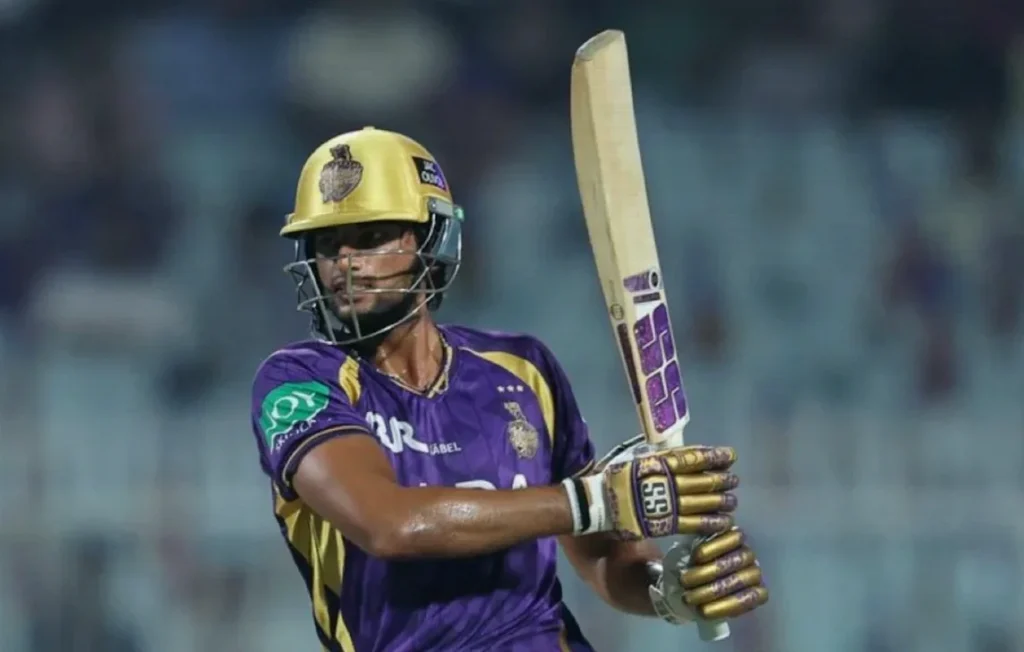
The Marylebone Cricket Club (MCC) has issued a clarification on the “Obstructing the Field” law after a controversial decision involving Kolkata Knight Riders batter Angkrish Raghuvanshi in the team’s recent IPL 2026 match against Lucknow Super Giants. The incident drew intense discussion when Raghuvanshi was ruled out by the third umpire, despite the appeal being triggered by what happened as he attempted to take a U-turn and head back toward the striker’s end. According to the sequence of play, the batter initially set off for a quick single, only to be sent back by his partner. As he turned and dived to reach his ground, the throw from the field struck him, leading to an appeal and ultimately dismissal under Law 37.
In its explanation, the MCC stressed that a batter can be given out for obstructing the field only when there is a deliberate effort to interfere with or distract the fielding side. The ruling hinges on intention, and that can be difficult to judge in live situations. MCC’s guidance points to the principle set out in Law 37.1.1, which states that a batter is out obstructing the field if they willfully attempt to obstruct or distract the fielding side through either word or action. The emphasis, therefore, is on whether the act was intentional rather than accidental.
The MCC also brought attention to a long-standing interpretation included in its official guidance, specifically addressing cases where a batter alters direction while running between the wickets. The governing body said that its material explains the typical scenario in which a batsman changes course in a way that indicates willfulness—particularly if the change in direction involves moving onto the pitch or taking a route that is not the quickest line to complete the run to the other end. In that context, the MCC reiterated that such movement is treated as a wilful act.
Applying that interpretation to Raghuvanshi’s dismissal, the MCC said the batter’s positioning across the pitch was central to the conclusion. It stated that Raghuvanshi met the criteria: when he began his run he was on the off side of the wicket. As the ball came toward the fielder, the MCC noted, he crossed into the middle of the pitch—a place, the MCC argued, that he would not normally be running to in order to complete the run—before turning and moving back on the leg side. In doing so, he placed himself between the ball and the wicket, which the MCC described as, by definition, a willful act.
The MCC further expanded on why the outcome was not judged by alternative possibilities. It said that had Raghuvanshi remained off the pitch and stayed on the off side, the ball would not have struck him, and there would have been no question of obstruction. It added that if he had instead started running down the leg side, then turned and returned to his ground on that same side before being hit, the dismissal would have been different—he would still have been in the way, but not in a willful manner.
Finally, the MCC addressed arguments that the batter might have completed the run safely even if the throw had not hit him. The MCC made clear that such considerations do not form part of the law’s test for obstructing the field. It explained that whether a dismissal was likely is not a relevant factor under the obstruction law, including when obstruction does not relate to preventing a catch. In its view, it was the deliberate crossing of the pitch that led to Raghuvanshi’s downfall, not the hypothetical outcome if the throw had missed.
