
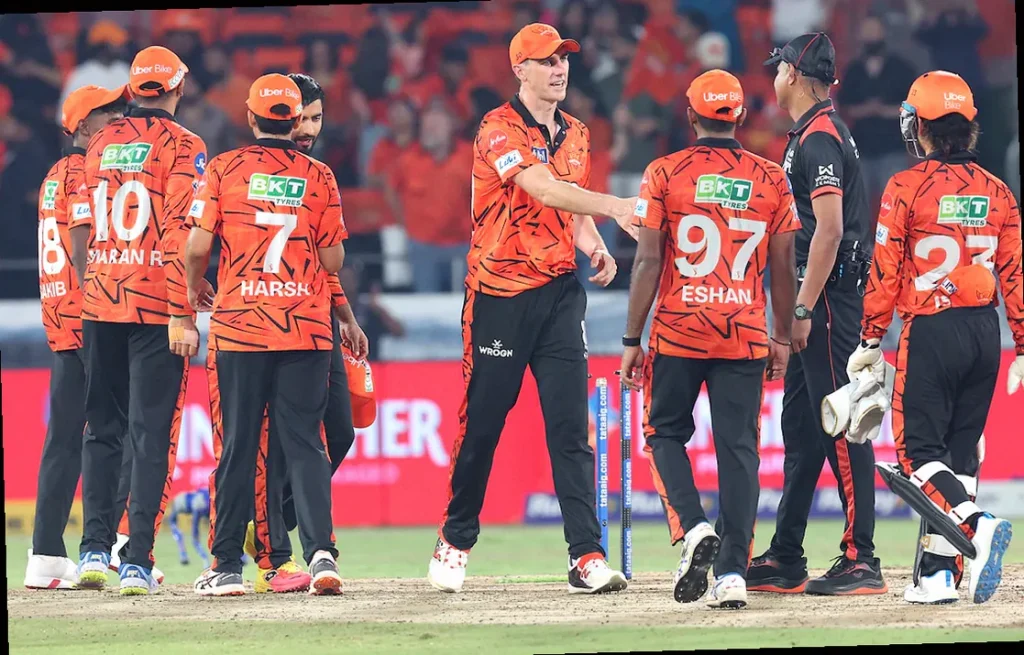
With the IPL moving into its most consequential stretch, Sunrisers Hyderabad and Gujarat Titans will lock horns in Ahmedabad on Tuesday in a match that could significantly tilt the playoff picture. Sunrisers, currently second, head into the contest knowing that every result matters as the top end of the points table remains tightly packed. Gujarat Titans, placed third, have looked slightly more composed after shaking off a sluggish start, stringing together key wins to keep themselves firmly in the top-three mix.
Race for the playoffs: where SRH and GT stand
The stakes are heightened by the fact that the top three teams—RCB, SRH and GT—are all tied on 14 points. In such a scenario, net run rate can quickly become the separator, turning run-scoring margins and bowling discipline into decisive factors. For SRH, playing at home adds another layer of pressure and opportunity, as they will be expected to improve their current net run rate rather than rely on outcomes elsewhere.
Gujarat’s recent form has helped them move into third, highlighted by a dominant 77-run win over Rajasthan Royals. That victory was a key turnaround moment, arriving after an initially slow campaign and helping the Titans climb into the vital zone of the points table.
Gujarat Titans’ blueprint: top-order stability and strike bowling
Gujarat’s biggest strength has been balance across departments, particularly their batting, which is anchored by captain Shubman Gill and Sai Sudharsan. Both have provided steady starts and have navigated the powerplay phase with intent, allowing the innings to build rather than swing wildly early.
Jos Buttler and Washington Sundar add experienced weight to the lineup, giving Gujarat the flexibility to keep the momentum controlled before stepping up in the middle overs and then accelerating again at the death. That measured approach has worked whether the Titans are setting a total or chasing one.
Key contributors for GT
- Shubman Gill and Sai Sudharsan form the batting core, offering solidity at the top while managing the powerplay effectively.
- Jos Buttler and Washington Sundar provide depth, supporting the plan of building gradually and then speeding up later.
- Mohammed Siraj and Kagiso Rabada bring pace and wicket-taking threat, complementing each other in the bowling unit.
- Rashid Khan adds control in the middle overs, delivering match-changing spells when games begin to tilt.
In the bowling department, Gujarat have also shown notable evolution. Their attack has looked far more disciplined and effective in recent matches compared to the earlier phase of the season. The shift suggests the overseas pacers are settling into Indian conditions and finding greater consistency in their roles.
Still, Gujarat will need to address one tactical vulnerability: an over-reliance on the finishers when the top order fails to set a foundation. That tendency was exposed earlier in the tournament during a run of heavy defeats, leaving them with a clear area to improve if they want to control pressure moments on big nights.
Sunrisers Hyderabad’s firepower: batting rhythm and bowling bite
Sunrisers have once again reinforced their status as one of the league’s most destructive batting units. Their top-order quartet—Abhishek Sharma, Travis Head, Ishan Kishan and Heinrich Klaasen—has consistently generated momentum with relentless aggression, making them a constant threat once they get going.
The team’s explosive approach has translated into frequent high totals this season, with SRH crossing the 200-run mark eight times. A standout example was their 249 against Mumbai Indians, underscoring how quickly they can turn innings into match-winning statements.
SRH’s recent boost and batting profile
- SRH recorded a 33-run win over Punjab Kings, reinforcing their batting strength after compiling a huge 235 for 4.
- The side has breached 200 runs on eight occasions this season, including a 249 score versus Mumbai Indians.
- The top-order impact is driven by Abhishek Sharma, Travis Head, Ishan Kishan and Heinrich Klaasen.
SRH’s bowling identity is closely tied to the aggression of captain Pat Cummins. Since returning after missing the first half of the season due to injury, Cummins has injected more bite and intent into the unit. During his absence, Ishan Kishan led the side, and the team has maintained a clear edge in how they look to attack batters rather than simply defend.
The most eye-catching element has been the form of Sri Lankan pacer Eshan Malinga. He has been a revelation this season, regularly influencing matches either through crucial wickets or by keeping scoring under control with disciplined spells. With 16 wickets so far, he is currently positioned among the top five wicket-takers in the competition.
Yet SRH will also have to manage the risks that come with their style. Their ultra-aggressive batting has occasionally backfired—early wickets can expose a vulnerable middle order and invite collapses. Alongside that, their fielding has remained a slight concern, adding another dimension that could matter in a tight contest where every phase swings momentum.
