
A few years ago, Najafgarh Railway Protection Force ASI Ram Niwas found himself unusually tense about his youngest son, Prince. The boy wasn’t chasing the usual targets in his free time—he was fixated on bowling yorkers at tennis-ball meet-ups. Yet Prince’s reply to his father’s worries was immediate and calm: “Papa, aap mera chinta karna chhod dijiye. Main apne se kuch kar loonga.”
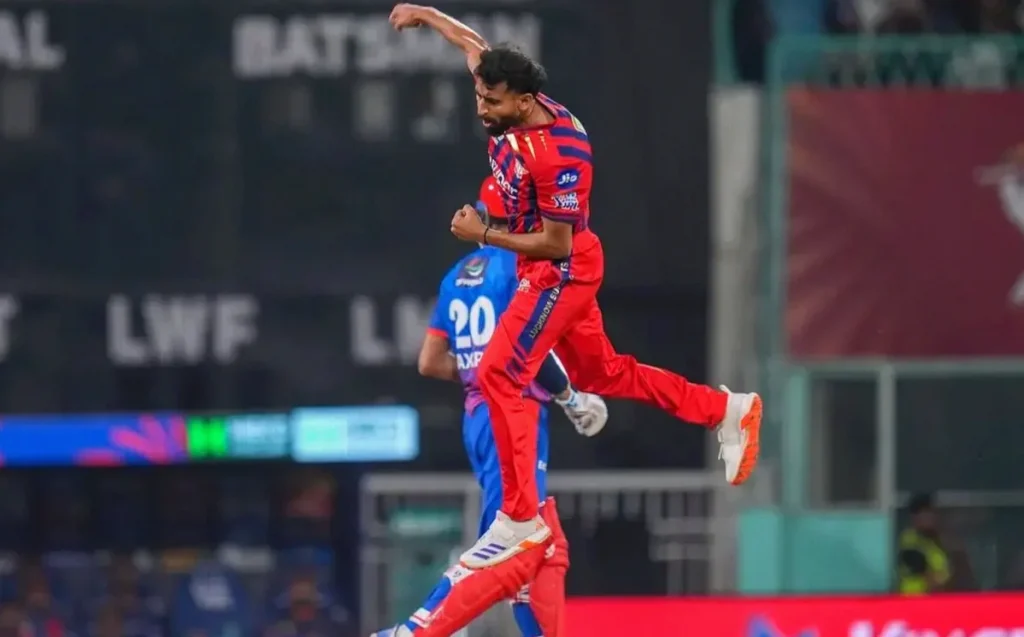
Fast-forward to 2026, and that unhurried confidence has turned into something far more tangible. Prince is now a swing-bowling sensation for Lucknow Super Giants, having already breached the setups of seasoned India internationals in consecutive IPL matches, with Axar Patel and Ishan Kishan named among the victims. The father, who once had to coax him into structured pathways, says he always had to believe in the passion—even when it looked like an uncertain bet.
Quick facts
- Prince is a Lucknow Super Giants swing-bowling prospect in IPL 2026.
- Ram Niwas feared for Prince’s future because, until he was 18, he had not bowled with a leather ball.
- Ram Niwas said he pushed Prince to take the Delhi Police Constables’ Exam, where he cleared the physical test.
- Prince’s progression is linked to coaching support from Amit Vashistha and Pradeep Sangwan, among others.
- Vashistha ran the Sporting Cricket Club in Najafgarh for years.
- Prince was reportedly unavailable for a T20 World Cup warm-up game for India A due to a knee injury.
- During the COVID-19 period, Prince was among Delhi cricketers banned for two years because of age-related discrepancies.
- Prince has a goal of being coached toward a future as an India Test (whites) option, with swing as the key skill.
Ram Niwas, still sounding protective even in reflection, explained that his son hadn’t even touched the leather ball properly until the age of 18. He said he had to force the issue with the Delhi Police Constables’ Exam so that Prince would at least step into a disciplined routine. The written part didn’t land as well because, in Ram Niwas’s words, Prince’s mind was elsewhere—on cricket.
But like many fathers backing an unusual dream, he had little choice other than to stand by him. “Bete ki zid hai aur humein poori karni thi,” Ram Niwas said, adding that an ASI’s salary comes with obvious limits. Still, he is now seeing the payoff, with people from nearby Kheda Dabar village in Najafgarh’s Dariyapur area visiting his home thanks to Prince’s IPL rise.
After Prince dismissed Ishan Kishan in the LSG vs SRH match, neighbours reportedly came in with pride rather than sympathy. Ram Niwas recalled them telling him that the youngster had “brought fame” to their rural surroundings. For a community that once relied on other kinds of recognition, the cricket spotlight has now become the talking point.
He also traced how the area’s identity shifted over time. Previously, people knew the locality due to a visit by former President Pratibha Patil Chaudhary Brahm Prakash Ayurvedic Sansthan’s inauguration in 2012. In Ram Niwas’s telling, it eventually “became famous for cricket,” and Prince has become the latest proof of that change.
From academy nets to IPL wickets
Ram Niwas credits the heavy lifting in Prince’s development to two figures: his first and only coach to date, Amit Vashistha, and former India U-19 World Cup-winning pacer Pradeep Sangwan. He insists that without their involvement, the leap from tennis-ball cricket to professional standards would have been much slower.
“I can’t thank Amit sir enough,” Ram Niwas said. He described how he first saw Vashistha’s method after witnessing Prince play tennis-ball cricket, then hearing that the coach had asked Prince to join his Najafgarh academy. Ram Niwas also noted that Sangwan, who was a student of Vashistha, contributed fitness support alongside technique.
He remembers a period when Prince’s training looked almost unrecognisable to outsiders—tying a sandbag on his back and running through paddy fields to build strength in the upper body. Ram Niwas said Pradeep leaned into the guidance, while Amit Vashistha focused on technical work. He added that exposure through the Delhi Premier League and even Delhi’s New Delhi team setup helped accelerate Prince’s path, while also expressing gratitude toward the DDCA and Vijay Dahiya.
When PTI contacted Vashistha, the Najafgarh coach—who has long run the Sporting Cricket Club—chose to emphasise Prince’s natural ability and his work ethic rather than luck. Vashistha said Prince could bowl yorkers and also swing the tennis ball at a decent pace, pointing to skill that existed long before IPL attention.
Vashistha recalled seeing Prince and then urging his friends to bring him to his attention. He said Prince was already 18 at the time, which, in his view, made the timing tight for rapid advancement compared to players who arrive at 13 or 14. Still, the coach stressed that the fundamentals were strong and that Prince’s bowling mechanics included traits that support swing—backspin and good arm speed.
Vashistha also highlighted that Prince’s dedication is the differentiator. He framed it in practical terms, suggesting that even in Delhi’s summer, you can keep him bowling for hours and he will not quit or stop listening to instructions. The coach said Prince’s fitness improved after working with Pradeep, and added that modern facilities in competitions like the Ranji Trophy or with LSG can only push a player forward further.
He further credited mentorship beyond the local setup, mentioning that Prince worked with Zaheer Khan and later with Bharat Arun. Vashistha described the learning environment as something that leaves “the sky is the limit,” underlining his belief that the player’s ceiling could rise quickly with consistent guidance.
There was also a near-miss at the national level. Vashistha said national selectors wanted Prince to take part in a T20 World Cup warm-up match for India A, but a knee injury meant he could not take the field. This opportunity had followed a strong Vijay Hazare Trophy run for Delhi, where Prince took 18 wickets across eight games and produced three-wicket hauls in four of those matches.
Vashistha then addressed another difficult chapter: a two-year stretch during the COVID-19 lockdown. He said Prince was among multiple Delhi cricketers who were banned for two years due to age-related discrepancies. Ram Niwas described that period as the toughest phase, saying he was anxious about how his son would respond to a long stoppage.
Ram Niwas said Prince calmed him by instructing him to relax, then set up training at home by getting gym equipment and working every day through the two years. The coach, however, viewed it differently, arguing that because much of the ban overlapped with the COVID lockdown, Prince did not lose as much competitive cricket as it might have seemed. Vashistha acknowledged that Prince did miss Delhi U-23, but maintained that once the DPL returned, he got back on track.
Even now, Vashistha’s dream remains clear. He wants to see Prince in India Whites, because swing is his main weapon. “If someone can swing the white ball with ease, he can work wonders with the red ball,” the coach said, pointing to the natural transition he believes Prince can make from one format to the longer test arena.
