
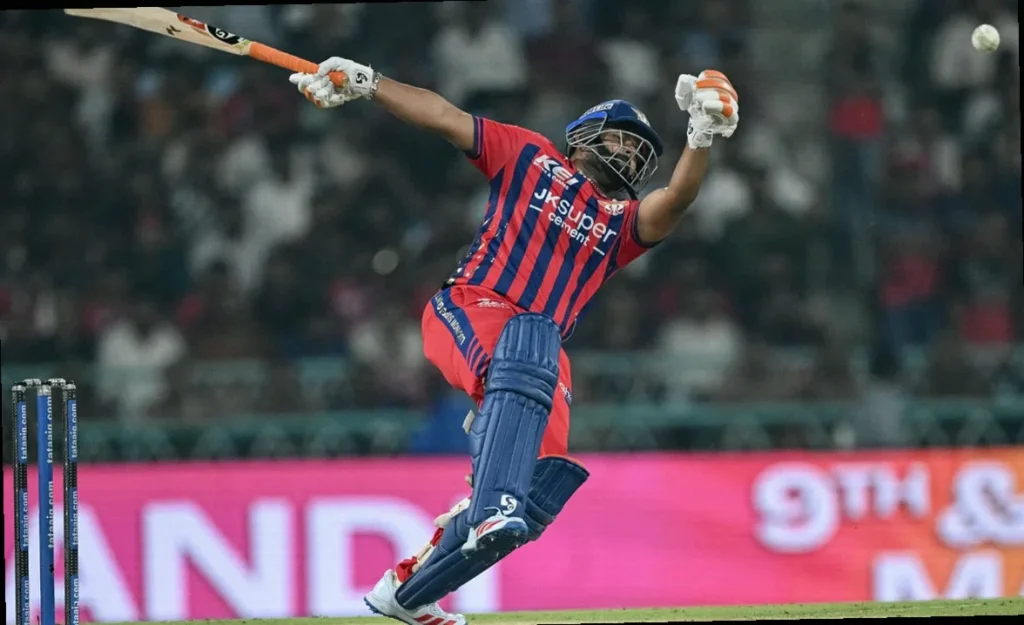
Three IPL captains face growing pressure after seasons that have failed to deliver the one outcome franchises crave most: a place in the playoffs. With the tournament expected to end later this month, insiders monitoring developments across multiple teams say the job security of Axar Patel, Ajinkya Rahane and Rishabh Pant could be questioned if results do not improve further. Axar, Rahane and Pant have all led their sides for two consecutive campaigns and, in both instances, have fallen short of postseason qualification. Only Lucknow Super Giants are officially out of the running, which puts Pant under the sharpest spotlight for a second straight tournament. Still, Kolkata Knight Riders under Rahane and Delhi Capitals under Axar are also widely viewed as unlikely to survive the scrutiny of the “business end” of the season.
Axar Patel: underwhelming captaincy and limited impact
For Axar, the criticism is anchored in both his batting output as captain and his overall influence with the ball. The numbers paint a bleak picture: he has amassed just 100 runs across nine innings, striking at 112.50. One innings yielded 56, while the remaining 44 came across eight other knocks, despite him often being used in the top five.
- Axar’s batting as captain: 100 runs in nine innings at a strike rate of 112.50; 56 in one innings, with the other 44 spread over eight knocks.
- Axar’s bowling usage: in 12 matches he has bowled only 36 overs—an average of exactly three overs per game.
- Wickets and economy: 10 wickets at an economy rate of 8.08.
While an economy rate of 8.08 can appear acceptable in a format that punishes slow bowling, the concern is that Axar has not always been used to his full potential. The situation is made more complicated by the fact that fellow spinner Kuldeep Yadav has been forced to endure more punishment, making Axar’s figures look comparatively better than they might otherwise.
Delhi Capitals are also entering a structural transition. The franchise’s ownership model is split between JSW and GMR, with responsibilities alternating in cycles. Next season, Parth Jindal and JSW are set to take over cricket operations. In that environment, an IPL source said Axar’s leadership case is weak and that it would take something extraordinary for him to remain captain.
As per the same account, Axar has not managed to establish leadership authority and has often leaned on Hemang Badani and Venugopal Rao for decision-making. The source also suggested that the coaching staff may not be retained either.
Selection and team-balance decisions have added to the unease. The choice to overlook Abhishek Porel, the lack of consistent use of all-rounder Madhav Tiwari, and the decision to toss Sahil Parakh into the deep end—expecting him to play the role that Vaibhav Suryavanshi has done—have all drawn attention. Parakh, the source noted, has clear talent but is still a work in progress. With mega auctions scheduled for 2027, Axar could still be retained as a player, but the evidence of “dynamic leadership” has not been there.
As the shift in decision-making authority moves from GMR to JSW, Axar’s future as captain is described as far from guaranteed.
Rishabh Pant: captaincy pressure grows as LSG miss playoffs again
In Pant’s case, the concerns are not limited to performance alone. Franchise cricket circles have long treated it as common knowledge that captaincy does not suit him. Even when he has tried adjusting his batting position, it often looks as though he is carrying an enormous burden on his shoulders—particularly in a league that demands quick impact.
That burden is magnified by the expectation that comes with failing to qualify for two consecutive seasons. LSG owner Sanjiv Goenka is described as someone willing to spend at the top end—nearly USD three million in Pant’s case—but also as a person who expects returns that justify the investment.
- Pant’s overall run tally: 251 runs at a strike rate of 138.
- Six-hitting rate: nine sixes in 11 games.
By modern T20 standards, Pant’s strike rate is considered under par, and the form that once defined his batting appears to have gone missing. Even some team-composition calls have left longtime LSG supporters confused.
Among the questions raised: why Arshin Kulkarni, whose Syed Mushtaq Ali Trophy strike rate as an opener hovers around 134, was pushed to open in the IPL. His score of 17 off 24 balls in that opener’s role is framed as hard to understand in the current era of aggressive top-order batting.
More doubts remain over how decisions were made—whether Pant himself took the call or whether coach Justin Langer and the support staff drove it. Beyond Kulkarni, the repeated chances given to Himmat Singh are also questioned, especially since Himmat’s domestic T20 strike rate barely moves past 130.
There are similar concerns about Ayush Badoni being repeatedly selected for the upper-middle order despite not having the kind of power game commonly expected in contemporary T20 batting. Injuries and form dips from Nicholas Pooran and Aiden Markram are acknowledged as damaging to the campaign, but the broader critique is that Pant never appeared to be a captain carrying the tactical command needed for the format.
With Lucknow already officially eliminated, Pant’s fall-from-grace narrative is only reinforced by back-to-back failures to reach the playoffs.
Ajinkya Rahane at KKR: leadership options limited, but the pairing problem hurt
Rahane’s appointment at KKR is described as a classic “There Is No Alternative” situation, with the franchise portrayed as lacking credible leadership alternatives at the time. It also helped that Abhishek Nayar, a former Mumbai teammate of Rahane’s, was in charge as head coach.
However, KKR’s campaign was also hindered by a top-order mismatch. Rahane and Nayar’s protege, Angkrish Raghuvanshi, was seen as unable to deal with the pace demanded from modern T20 batters at the highest level of competition. Raghuvanshi scored 340 runs at a strike rate above 139, while Rahane managed 237 runs at a strike rate of 133. Both batters were used in the top three, which—according to the critique—often resulted in a loss of momentum across matches.
- Raghuvanshi’s output: 340 runs at a strike rate of 139+.
- Rahane’s output: 237 runs at a strike rate of 133.
- Six-hitting from the pair: in 11 matches, they combined for only 25 maximums—barely two per game on average.
Rahane and Raghuvanshi, it is argued, ideally should not have been deployed together in the same XI. The management’s persistence with that structure is portrayed as costly.
Earlier in the season, Rahane had responded to criticism about his strike rate by suggesting that people were jealous. At 37, the argument goes, he may need to reflect on whether he can still keep pace with how T20 cricket demands constant acceleration and tempo changes.
Looking ahead, Axar and Pant may still attract attention as players, but Rahane is said to be unlikely to generate interest from other franchises at the next mini-auction unless KKR—despite the concerns—choose to keep him for another season. That possibility is also framed as potentially counterproductive.
