
April 30, 2025, in Jaipur, had the feel of a closing act as the sun slid toward the horizon. Trent Boult slipped into a black-draped tent used as a makeshift media room, wearing Mumbai Indians colours again after spending three seasons with Rajasthan Royals in pink. Questions came in fast—especially the ones built around familiarity with conditions—and Boult answered with a calm, slightly amused edge.
Homecoming banter and a new kind of threat
- Trent Boult returned to Mumbai Indians after three seasons with Rajasthan Royals.
- Boult was asked what it felt like to plan the dismissal of 14-year-old Vaibhav Sooryavanshi.
- Boult said the question was “actually funny” and framed Sooryavanshi as a fearless batter in hot form.
- Sooryavanshi had already been labelled the IPL’s fastest-century record-breaker by then.
When asked how it felt to be “plotting the dismissal” of a 14-year-old, Boult caught the humour immediately, laughing at the premise. He then shifted to the practical side of the challenge, stressing that while he’d faced outstanding hitters worldwide—including Chris Gayle and AB de Villiers—this tournament demands a particular kind of preparation. The tone was clear: it wasn’t about worry, it was about an exciting, demanding matchup with a youngster who looked fearless and was arriving with momentum.
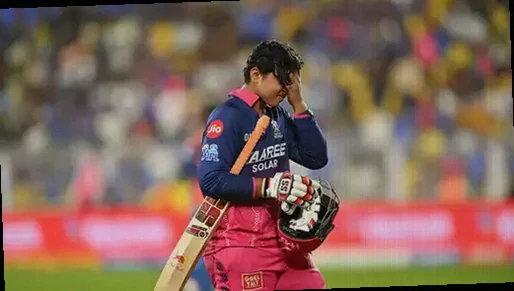
The very next day, though, the script briefly swung. Two balls into the game, Sooryavanshi went for a big swing through mid-on, mistimed it, and was caught for a second-ball duck. The established bowlers didn’t get a longer look at him, and the day’s spotlight cooled quickly—leaving Boult and the rest to focus on the broader contest.
What Boult and Bumrah couldn’t fully demonstrate in Jaipur is what appeared less than a year later, after the “romance and frustration” of rain had washed over proceedings and the business of T20 cricket resumed properly. By then, Sooryavanshi had turned 15 and had become someone opponents clearly felt they needed to contain, not just watch.
Planned matchups: Sooryavanshi vs the new ball’s toughest
He hadn’t simply flared for a moment; his early returns had convinced teams he was ready for the biggest stages. The conversation in MI’s setup had moved from “how do we stop him?” to “how do we control him?”—and that meant direct, deliberate bowling plans. Bumrah, after Deepak Chahar was struck for 22 runs in the opening over, received the first real crack at Sooryavanshi, and the Royals also ensured Sooryavanshi faced the world’s most difficult tests rather than drifting into a safer rhythm.
The plan for the Royals’ openers was explicit: Jaiswal would handle Chahar, while Sooryavanshi would take on Bumrah. The outcome arrived immediately. On the first ball, Sooryavanshi flicked it over long-on and cleared the boundary to get off the mark. Three balls later, he swivel-pulled the pacer deep into the stands at backward square leg—an early statement that wasn’t just timing, but confidence under pressure.
Boult’s task looked just as daunting in his own over. He missed a yorker and was punished with a six over backward square leg off the kind of contact that turns “good bowling” into “unlucky bowling” in the blink of an eye. Respect for the craft of Bumrah and Boult could wait; the priority was simple—Sooryavanshi had to stamp authority, and his opening partner’s pace was already setting the baseline.
There was also a larger context to the batting freedom. Rain had delayed the start and reduced the encounter to an 11-over-per-side contest. Mumbai had the toss advantage, and the Royals needed a big total to make sure the chase stayed out of reach. Sooryavanshi didn’t need an invitation to hunt—his hitting looked almost automatic, with few, if any, deliveries that could be labelled a “wrong choice”.
For stretches, he attacked as if the match were a free-range hitting session. Rohit Sharma showed frustration, while Bumrah and Hardik were forced to return with altered plans after watching Sooryavanshi keep taking the ball on his terms. Even so, Mumbai’s pace options were international-grade and experienced, yet they still struggled to land the ball on the stumps line often enough to disrupt him.
Across the innings, only three times did Mumbai manage to hit the stumps line directly at Sooryavanshi, leaving them uncertain they could make him truly pay. Instead, their approach leaned defensive—trying to cramp him for space, or forcing shots on the offside. That tactic was designed to neutralise his powerful hip rotation and his wide, swinging bat, but Sooryavanshi kept refusing to be dragged into a lesser version of his game.
Jayawardene’s critique and the dismissal that ended the run
Mahela Jayawardene, Mumbai’s head coach, criticised the team’s ball-by-ball execution, pointing to how Sooryavanshi and Jaiswal had escaped early momentum. That early surge included 80 runs within five overs, and it set the tone for a Royals result. The irony, Jayawardene’s logic suggested, was that Sooryavanshi’s eventual dismissal came from a plan that sounded straightforward on paper—move the ball away from his preferred arc, make him manufacture an offside shot, and place a fielder there.
Sooryavanshi still didn’t get stuck in the trap. Eventually, though, he holed out to Tilak Varma in the battle of egos—ending an innings that had carried entertainment through a rain-shortened wait. Before the end, he struck 17 runs off Shardul Thakur in just four deliveries. In one of those moments, he went after the deep extra cover area and was caught, bringing the spectacle to a stop.
His batting has been so forceful that it has threatened to push Jaiswal further into the background, even as Jaiswal’s destructive streak and consistency remain central to Rajasthan’s success. The numbers underline that point: Jaiswal has compiled 1619 runs across the last three seasons, striking at more than 160. In the current season, he has already made 170 runs across three innings at a strike rate of 163.46.
Against Mumbai on Tuesday, Jaiswal again shaped the innings. While Sooryavanshi responded to Bumrah, Boult and Shardul with his own brand of aggression, Jaiswal smashed 37 off his first 11 balls, highlighted by a 22-run over against Deepak Chahar that set the pace. Even though his scoring accelerated less after that surge, his 32-ball 77 not out remained decisive in helping the Royals notch their third successive win of the season.
At 24, Jaiswal is still a young Indian opener, but there’s a difference in maturity when compared to a teenager like Sooryavanshi. Nearly a decade separates them, and that gap shows up in how Jaiswal has started managing the opening setup—more responsibility, more control, and a more settled command. Yet Sooryavanshi’s standards of attacking bowlers have also pushed Jaiswal to raise his own level.
After the match versus Mumbai Indians, Jaiswal summed it up plainly: “The way he has been playing, it’s tremendous. He’s working so hard. So I also get motivated—okay, I also need to develop some different shots.”
MI’s attack, even at its most intense, could not fully contain the duo’s momentum. Hardik Pandya, the skipper, and head coach Jayawardene both suggested that it came down to a margin of five balls—specifically, five sixes that could have swung the contest by clearing a 27-run gap and taking the chase over the line. Simple as that sounds, the reality in T20 cricket is harsher: five sixes in a rain-reduced, 66-ball-per-side situation can be the difference between control and collapse.
The contest’s direction was set while Sooryavanshi was at the centre of it, and after that, Mumbai never looked truly capable of overturning the target. The Royals delivered a comprehensive performance, anchored by Jaiswal’s batting, but once again Sooryavanshi stole the show—even if his impact came in only 14 balls. He is no longer merely the promise of what might happen in the future; he is proof of what is happening right now, and his abilities are no longer being underestimated.
