
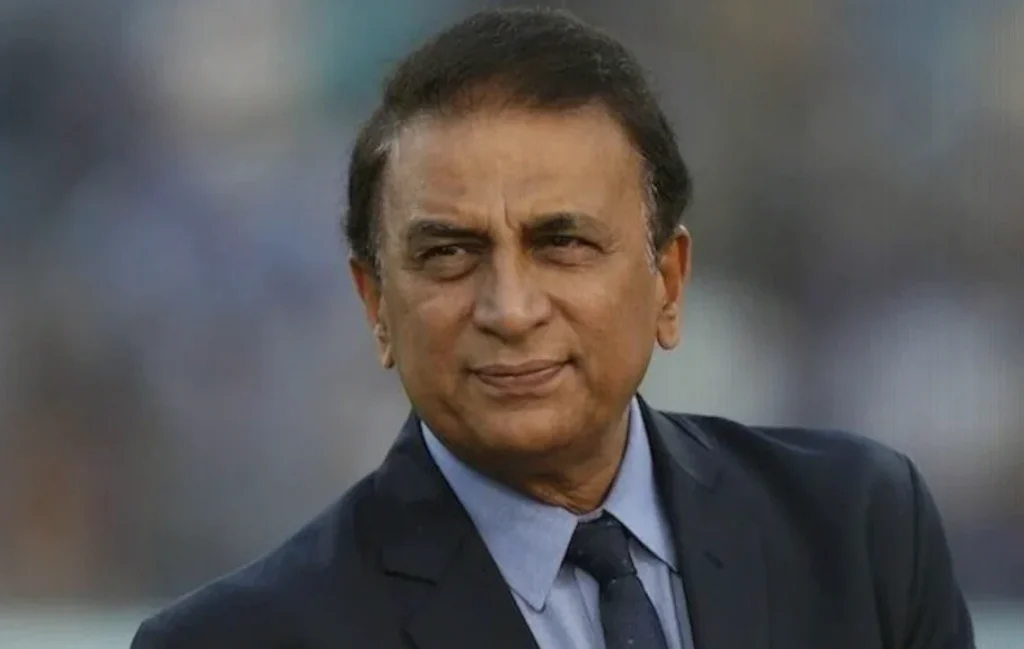
Legendary India opener Sunil Gavaskar has taken a hard line on the way overseas players manage their Indian Premier League commitments, questioning both their willingness to fully embrace their allotted roles and the fitness logic used to justify delayed or cautious starts. In a pointed column, the former captain argued that franchise cricket still requires full engagement, even as international duties remain the top priority.
Gavaskar targets overseas player workload and readiness
Gavaskar’s criticism was sparked by ongoing debates around availability and workload management for foreign stars in the IPL. He referenced cases where players such as Mitchell Starc and Matheesha Pathirana have reportedly faced late involvement due to injury-related concerns. He also pointed to the scrutiny faced by IPL high-profile signings, including Kolkata Knight Riders’ acquisition of Starc and RCB’s Cameron Green, suggesting that workload considerations should not automatically be used as a blanket explanation.
- Gavaskar questioned whether teams and player availability plans are being handled with enough clarity and accountability.
- He challenged the fitness rationale by arguing that the demands being described do not match the actual match requirement for bowlers.
- He urged the BCCI to step in and tighten the framework for players who do not fully commit to their designated roles.
“Bowling four overs” not a heavy burden, he argues
Central to Gavaskar’s argument was the belief that the physical load of T20 bowling is being overstated. He wrote that insisting a bowler cannot handle IPL match overs does not hold up when the role itself is limited by the format. In his view, if a player can bowl a comparable volume in training without issues, there is little preventing them from executing the same in a match environment.
He also laid out what he called the expected workload across an IPL season: a bowler is typically required to deliver 56 overs over 14 league matches within a two-month window. Should the team progress to the final, he added, the total could rise further by another two or three matches and an additional 12 overs.
- He said a bowler can bowl only four overs in a single match.
- He argued that similar practice deliveries, if handled comfortably, should translate into match overs.
- He estimated the league-stage workload at 56 overs across 14 matches over roughly two months.
- He suggested that a title run may add two or three more games and about 12 extra overs.
Gavaskar went further, saying that if the body cannot handle even this amount of T20 bowling, then the better approach would be to rest for a longer period rather than selectively participate. He framed his remarks around a generation that frequently talks about fitness, implying that the stated concerns should not be at odds with the actual match demands.
He also questioned the timing of communication around availability, saying that being “informed before” is not a strong explanation unless it is clarified exactly how far in advance the information was shared—particularly in relation to the tournament’s opening day. He stressed that representing the country must come first, but he argued that franchises—who invest both financially and emotionally, often extending support that can include players’ families—should still receive genuine, full commitment.
Workload rules, board benefits, and the BCCI’s role
Gavaskar acknowledged that Cricket Australia has previously advised players to manage workloads, but he said he remains unconvinced that the same logic should automatically excuse overseas players from fully engaging in the IPL. His argument expanded beyond on-field fitness into the business structure behind overseas contracts.
He contended that overseas boards profit from IPL deals and therefore players should be held to higher standards of responsibility. Gavaskar stated that the IPL functions as a “cash cow” not only for overseas players but also for their boards, and he raised a financial question about whether boards receive a commission—claiming that boards get 10% of the fee paid for a player from their country. He also said it is not clear whether the BCCI or the franchise pays this commission when issuing the No Objection Certificate.
- He said Cricket Australia has previously instructed players to manage workloads, but he believes the IPL demands still require accountability.
- He argued overseas boards benefit financially from IPL contracts.
- He claimed boards receive 10% of the fee paid for a player from their country and questioned who pays this commission for the No Objection Certificate.
- He argued that no other T20 league pays overseas boards a direct payment, citing The Hundred as an example.
Gavaskar added that with Indian ownership present in four out of six teams in other global leagues, the leverage of the “cash cow” effect should be recognized. He concluded by pushing for a stricter approach, implying that if overseas players and their boards treat the IPL as a major revenue source, then the commitments expected from players should match the returns they enable.
