
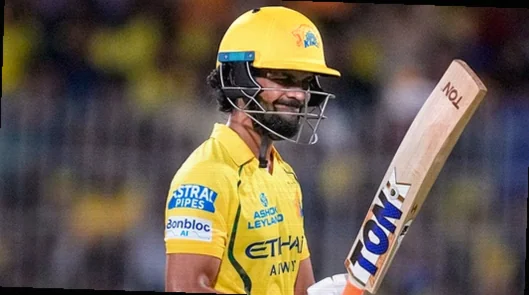
Chennai Super Kings have endured a roller-coaster start to the Indian Premier League season, yet they’ve kept their qualification hopes firmly in play after recording two strong wins over Delhi and Kolkata Knight Riders. Still, captain Ruturaj Gaikwad is back under the microscope, with questions growing around the way he’s choosing to bat as an opener this year.
Key takeaways
- CSK’s recent turnaround includes wins against Delhi and Kolkata Knight Riders, keeping their playoff chances alive.
- Gaikwad’s opening mindset has drawn scrutiny again despite the team’s improved results.
- Sanju Samson’s 115 off 56 balls was pivotal in CSK’s 212 total versus Delhi.
- In the KKR match, Gaikwad was dismissed early after striking aggressively on his first attempt.
- Irfan Pathan urged Gaikwad to consider batting at No. 3 if he wants to retain a cautious style.
- Sadagoppan Ramesh stressed that Gaikwad must separate captaincy thinking from his batting when he walks in.
Why Gaikwad’s opening approach is under focus
Even with Gaikwad’s limited contribution, CSK managed a comfortable score of 212 against Delhi. A major share of the momentum came from the opening partner, Sanju Samson, who struck a brilliant 115 off just 56 deliveries, setting the platform for the innings.
Against Kolkata Knight Riders, however, Gaikwad couldn’t get going. He was sent back cheaply after connecting with a more forceful shot as soon as he started, and Ayush Mhatre looked sharper in terms of intent once he came to the crease.
Pathan’s view: “Attack or bat at 3”
Irfan Pathan, speaking on his YouTube channel, pointed to the risk-versus-reward problem that comes with a more guarded style in a competition that heavily favours high strike rates and bold execution. He argued that Gaikwad’s current approach is not aligning with the demands of the format, and that this is filtering into CSK’s batting rhythm.
Pathan said Gaikwad’s approach needs attention and highlighted the contrast between caution and control. He referenced a recent Delhi outing where Gaikwad faced 17 balls and maintained excellent control percentage, framing it as evidence of a low-risk plan rather than a proactive one.
“It means he did not take much risk and was not looking to play too aggressively. He did not want to lose his wicket,” Pathan explained, tying the dismissal patterns and tempo to the skipper’s decision-making.
As a remedy, Pathan suggested a role adjustment for Gaikwad. In his view, the cautious method suits a different spot in the batting order, and he laid out two options depending on what Gaikwad wants to prioritise.
“Then just play at number three. If he wants to continue with this approach, he should bat at No. 3. But if he wants to open, then as Ruturaj Gaikwad, his approach will have to change,” Pathan said.
Pathan also noted that while Gaikwad has enjoyed success at the top since 2020—including a standout Orange Cap-winning campaign in 2021—shifting to No. 3 could reduce the mental weight of opening and captaincy simultaneously. The idea is that it may allow him to anchor more effectively in the middle overs while giving the team a clearer structure.
Ramesh adds: keep captaincy and batting separate
Echoing a similar theme, former Indian opener Sadagoppan Ramesh underlined that Gaikwad needs mental clarity after a difficult start to the season. Ramesh’s key point was that the captaincy responsibilities should be kept distinct from his identity as a batter, so that his instincts at the crease aren’t crowded by leadership thoughts.
Ramesh said that too many factors appear to be running through Gaikwad’s mind right now. On his YouTube channel, he argued that the best version of a batter is the one who focuses only on batting once the ball is handed to him, even if captaincy is already part of his role.
“Right now, too many things are running in his mind. It’s important he comes in as only a batter when he walks out to bat. Most captains can’t do that, though. When you bring the captain tag along while batting, too many things run through your head,” Ramesh said.
He also suggested a self-directed routine: Gaikwad should “talk to himself as a captain” but then switch into a free-flowing batting mode. Ramesh added that if Gaikwad can combine effectively with Sanju, it would form one of the most effective opening partnerships in the IPL.
“He should talk to himself as a captain and ask himself to bat freely. If he also combines with Sanju, it’s one of the best pairs of the IPL,” Ramesh said.
The balancing act for CSK’s skipper
Leading a side while batting at the top of the order brings unique pressure points. When both roles line up, a batter can capitalise on momentum and keep the innings moving. But if either part dips—whether it’s decision-making at the crease or leadership clarity—the effect can spread across the team’s performance.
At this stage, the central challenge for Gaikwad is to back his batting approach without drifting too far from what has worked for him naturally. The debate around his role—whether it’s a change in batting position or a shift in mindset—will likely remain a key talking point as CSK try to convert their early wins into a sustained push for the playoffs.
