
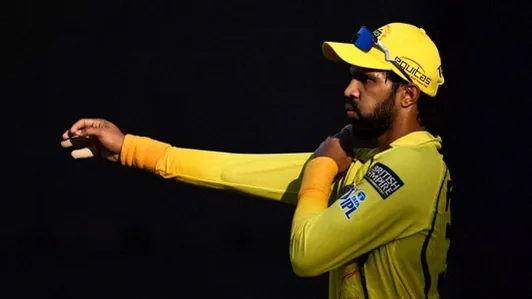
Chennai Super Kings wrapped up IPL 2026 with 12 points and six victories from 14 matches, finishing outside the playoff bracket. Their campaign ended with an 89-run loss to the Gujarat Titans, a defeat that felt less like misfortune and more like a season reaching the finish line it had been slowly building toward.
Key takeaways
- CSK’s league record was six wins from 14 matches, producing 12 points and no playoff qualification.
- The season finale brought an 89-run defeat at the hands of Gujarat Titans.
- CSK’s rating-adjusted value (₹122.84 crore) exceeded their total auction spend (₹114.65 crore), resulting in a reported profit of ₹8.19 crore.
- Three must-win qualification games all ended in losses: against LSG (188 chase in 16.4 overs), SRH (181 chase at Chepauk), and GT (229/4 win).
- Several high-cost players struggled, while the biggest financial lift came from lower-cost buys such as Jamie Overton and Anshul Kamboj.
A profitable franchise, but a hard-to-defend season
What makes CSK’s 2026 story uncomfortable is that it doesn’t resemble a team that squandered money or lacked resources. Their rating-adjusted worth surpassed their auction outlay, their books stayed in the green, and enough individual contributions came from players to keep the overall ledger looking reasonable. On paper, the business looked sensible.
That is precisely why the cricket feels so difficult to interpret. CSK were not defeated because everything went to waste. They slipped because the value largely arrived from the wrong corners, the expensive core did not deliver when it mattered, and the final three matches removed every possible excuse.
A franchise can still have a broken season even when the financial outcome is positive—and CSK’s campaign proved that point. They managed to revive their prospects, but they stopped exactly when the tournament demanded a real push.
The season’s shape: repair work, then collapse at the end
The narrative of CSK’s season followed a brutal pattern. They began with three consecutive defeats—against Rajasthan, Punjab, and Bengaluru—leaving the impression of a familiar name carrying old baggage into a new set of problems they hadn’t solved. Their batting lacked rhythm, their bowling did not look settled, and the campaign effectively began with repairs already overdue.
Then, for a period of roughly a month, CSK corrected enough to climb back into range. They won six matches across the middle stretch, moving from six wins in 11 games to a position where they were still alive in the race. It wasn’t dominance, but it was survival—and that distinction mattered because this was not a team drifting toward elimination without a fight.
However, the revival was not converted into a finish. In the final run of qualification games, CSK lost three times. LSG chased 188 in 16.4 overs, SRH chased 181 at Chepauk, and Gujarat Titans posted 229/4 and won by 89 runs. Those results were not simply bad luck; they pointed to execution failing at the moment the season asked for something concrete.
How CSK’s numbers looked better than their cricket
CSK generated ₹122.84 crore in rating-adjusted worth against a full auction cost of ₹114.65 crore. The headline result was an eight-crore-plus profit, which translates to a 7.14% return on outlay. On paper, it doesn’t read like a shattered campaign.
The problem sits in where that profit originated. CSK bought Jamie Overton, Anshul Kamboj, Ayush Mhatre, Urvil Patel, and Akeal Hosein to strengthen their structure. In practice, those additions ended up keeping the structure standing. Overton turned a ₹1.50 crore purchase into ₹11 crore of value, while Kamboj contributed returns of ₹8 crore-plus. Mhatre and Urvil—both low-cost acquisitions—also produced figures that made the costly underperformance of other players harder to ignore.
That success was real, but it was also a warning sign: CSK’s finances were being propped up by players who were not meant to carry the weight of an entire campaign.
At the other end, the price tags were harder to justify. Prashant Veer and Kartik Sharma cost ₹28.40 crore in total and returned nowhere near that amount. Shivam Dube, Noor Ahmad, Rahul Chahar, and Khaleel Ahmed all ended the season in the red. When expensive underperformance piles up in one squad, the cricket suffers — and CSK’s profile showed that concentration clearly.
So while there is a ₹8.19 crore profit and a 7.14% return headline, it should not be treated as a verdict on the season. The gap is partly explained by bargain hits, not by a premium block delivering. Over 14 matches, the difference between outlay and value ran like a straight line from the auction table to an 89-run exit.
In any discussion of the model, injuries at crucial times also have to be considered, since they affect both the financial projections and the on-field output.
Ruturaj’s captaincy paid the bill, but the batting did not
For Ruturaj Gaikwad, the model points to nearly ₹5 crore in profit. But the figure needs careful reading. It does not translate into a simple batting endorsement. Instead, it reflects captaincy delivering while the batting contributed a separate deficit.
Captaincy held the campaign together. CSK lost early ground, recovered their form during the middle phase, and remained in qualification contention until the final week. Ruturaj delivered that stability—and it mattered.
Yet an ₹18 crore top-order player is not acquired for survival management. The expectation is that the innings gets controlled, starts get turned into momentum, and the match feels increasingly inevitable while it is still technically alive. CSK’s batting contribution, particularly in high-pressure stretches, was largely missing that kind of inevitability.
The SRH defeat underlined the split. In a must-win phase, CSK were left with 15 runs from 21 balls, and the innings collapsed around the shape set by the batting plan. It wasn’t only a poor knock—it was a confirmation that captaincy kept the campaign moving while the batter’s job of pushing it forward did not happen consistently.
The ledger, therefore, does not label the season worthless. It suggests something sharper: CSK got the captain they needed, but did not get the ₹18 crore batting season they were paying for.
Sanju gave peaks; CSK never built a floor
Sanju Samson became CSK’s most explosive influence and their single largest impact contributor. His hundreds brought moments of authority, and his strike rate helped prevent CSK from becoming predictable. In a year when other expensive pieces underdelivered, Samson at least provided the ceiling they had invested in.
The issue was what came underneath. CSK’s batting showed flashes rather than a machine-like consistency. Samson could produce violent highs, and Mhatre and Urvil added value beyond their prices, but the core between those contributions didn’t regularly absorb pressure, control phases, or finish games.
That left CSK relying on spikes—and spikes were not enough across 14 matches, especially because the matches that mattered demanded something steadier. Samson finished close to his cost: elite in impact during the campaign, but not enough by consequence because the rest of the order never constructed a stable base beneath his peaks.
CSK needed multiple pillars to land together: Samson’s peaks, Ruturaj’s control, Shivam Dube’s power, and Kartik Sharma’s returns. They received one major batting pillar, a couple of bargain stories, and then expensive silence throughout the rest of the innings structure.
Bowling had names, but not a unit
The bowling department had individual positives. Anshul Kamboj stood out as one of CSK’s clearest wins, Overton delivered high-value returns, and Akeal Hosein’s spell in the MI demolition produced CSK’s most controlled bowling performance of the season.
But when the competition tightened, the attack cracked. Against LSG, CSK watched a chase of 188 finish with 20 balls remaining. Against SRH at Chepauk, the target of 181 was also reached. Gujarat Titans put up 229/4 and won the match with ease. These were not isolated failures; they were the three decisive games that ended CSK’s campaign, and all three were decided by a bowling group that ran out of answers under pressure.
Noor Ahmad played the full league stage. His cost was ₹10 crore, yet he finished more than ₹4 crore in the red. A premium spin investment is expected to command middle overs, break partnerships, and force chases into discomfort. CSK did not get that across the season. Khaleel Ahmed, Henry, Johnson, and Chahar also ended in loss territory.
Kamboj and Overton were valuable, and Akeal still produced major moments. Still, two good names were not enough to form a playoff-level bowling attack.
The real damage: surplus that became load-bearing
The most damaging part of CSK’s season is not that low-cost players outperformed. That is not a failure—successful IPL teams often require a low-cost surplus to compete.
What went wrong was that the surplus became load-bearing. CSK’s returns from players such as Mhatre and Urvil should have been acceleration layered on top of a strong core. Instead, those successes became part of the rescue operation.
Kamboj and Overton didn’t just add profit; they covered gaps. Akeal’s moments did not only create upside; they also softened damage elsewhere. That is not balance—it is inversion. In a playoff squad, premium players are supposed to set the direction, while value picks add momentum to something already moving. CSK had the reverse: bargain performers kept the model alive while the expensive end left too much unpaid.
When the final stretch arrived and the campaign needed senior weight, the team collapsed instead of converting the earlier repair work into results.
What the auction bill couldn’t ignore
The full auction cost does not wait for explanations. Prashant Veer’s loss was the deepest. Kartik Sharma’s return did not match his price. Dube could not justify his ₹12 crore tag. Noor played every game and still finished in the red.
At the end of the season, opportunity cost stops being an abstract concept. It becomes a real question of whether the right players made the right impact in the decisive moments.
The bargains saved CSK from embarrassment, but they did not save the squad architecture from itself.
The last week: the audit begins
Before the LSG game, CSK still had a route. With three wins, qualification was still alive, and the repair work from the middle stretch still meant something. Then LSG finished their chase in 16.4 overs, and CSK lost their next two matches as well.
It wasn’t a single collapse but a sequence of three. In those last three games, the season’s story was ultimately decided.
This is why the profit number cannot soften the verdict. The ledger says CSK found value, the table says they lost the games that mattered, and the scorelines say the ending was earned—not unfortunate.
Profitable, but not powerful
CSK were not hopeless. Overton was a genuine win. Kamboj was a genuine win. Ayush Mhatre and Urvil were genuine wins. Samson delivered elite individual impact, and Ruturaj provided the captaincy they needed. Even the season-ending return of 7.14% on full auction spend shows the financial outcome was solid.
That should have been the base for a playoff push. Instead, it became evidence of a badly distributed season.
Too much value came from players who were not supposed to carry the campaign. Too much cost sat with players who did not define enough games. Ruturaj’s captaincy ended up subsidising batting, while the bowling produced individual returns without collective control. The final stretch exposed every crack at the same time.
CSK’s IPL 2026 was not a financial wreck. It was something more frustrating: a profitable failure. The balance sheet stayed green enough to avoid humiliation, but the cricket had enough cracks to miss the playoffs. They didn’t lose because there was no value; they lost because value arrived from the wrong places at the wrong prices, while the expensive core failed to close the door when the season was still alive.
