
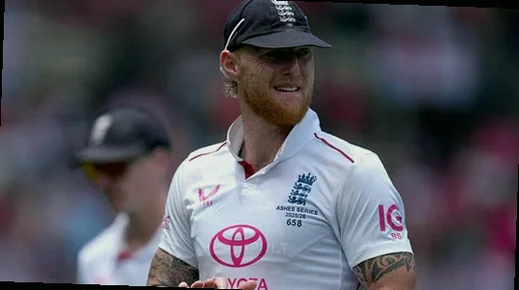
Ben Stokes has been cautioned against getting trapped in a loop of “too much tinkering” with his batting as England gear up for the Test summer, with former captains Nasser Hussain and Michael Atherton both pointing to Stokes’ limited competitive exposure as a key concern. The all-rounder has returned to county cricket with Durham, and while there are encouraging signs in at least one discipline, his early batting numbers have not yet provided the same momentum.
In his county stint, Stokes’ bowling has drawn positive attention. He has taken the new ball and produced a haul of five wickets across two County Championship appearances, giving a clear indication that his pace and control are returning well. With the bat, however, the start has been less convincing, as he has managed just 59 runs so far, leaving England’s leadership to focus on whether his upcoming Test preparation is being built on the right foundations.
Speaking on the Sky Sports Cricket Podcast, Atherton suggested the issue is not primarily about Stokes’ technique or talent, but rather about the lack of proper match time to sharpen it. In Atherton’s view, the problem sits in rhythm and repetition under pressure rather than any deficiency in ability. He argued that Stokes has generally had fewer opportunities to play red-ball cricket compared to what his batting requires, and that there are multiple reasons behind that, including time lost to injury.
Atherton referred to setbacks such as an injury break and a fractured cheekbone, among other troubles that have disrupted regular participation. He also noted that Stokes does not necessarily enjoy playing matches outside international fixtures, which can further reduce the amount of competitive cricket he gets. For Atherton, the over-netting angle and the absence of sustained match practice are the main themes that need addressing.
Hussain questions the net-focused adjustments
Hussain added a more specific concern: that periods when Stokes has been unable to bowl may have pushed him into doing too much work in the nets, particularly batting practice, and that this can lead to repeated technical changes instead of reinforcing a natural game. Hussain believes that when a player is injured or sidelined from bowling, the instinct may be to compensate by spending more time batting in practice, but that can encourage constant alterations that are not always beneficial once the ball is moving in real conditions.
Hussain said Stokes can end up doing “a little bit too much” fiddling with details. He pointed to a phase from around 18 months ago when Stokes began copying Harry Brook’s notably upright stance, despite the fact that Stokes already has his own rhythm that works for him. Hussain then described how the adjustments did not stop there—Stokes has also experimented with his position at the crease and his triggers, which in Hussain’s assessment has become a pattern rather than a brief correction.
For Hussain, the stage of Stokes’ career now demands stability rather than ongoing experimentation. He argued that at this point he needs to settle on a technique and stop overhauling it, returning to being a “very natural player” rather than constantly tinkering with how he sets up and times his innings.
The debate follows remarks from Durham head coach Ryan Campbell, who warned Stokes against picking up “bad habits” by spending excessive time in the nets. Campbell’s message, as framed in the discussion, is not about Stokes’ place in England’s team, but about whether his batting preparation is becoming too mechanical before an important Test block. The fear is that practice routines and technical repairs can start to replace the sort of pressure-tested decision-making that only comes through match situations.
Experience still needs match rhythm
Atherton reinforced the same theme of competitive rhythm, stressing that even the most seasoned players cannot simply rely on experience to recreate match intensity at will. He said that regardless of age or past achievements, a player still needs a certain amount of game time to “switch on” their batting properly, and that while some individuals may manage that transition more easily than others, the principle remains the same.
In Atherton’s view, even for the best performers, a bit of competitive game time is beneficial. With Stokes’ fitness and his return as a bowler looking like genuine positives for England, attention now turns to his batting entering the summer under a more critical lens. England will want their captain’s body ready for the demands ahead, but they will also need his run-making to be shaped by the pressure of matches—not only by net sessions and repeated technical adjustment.
