
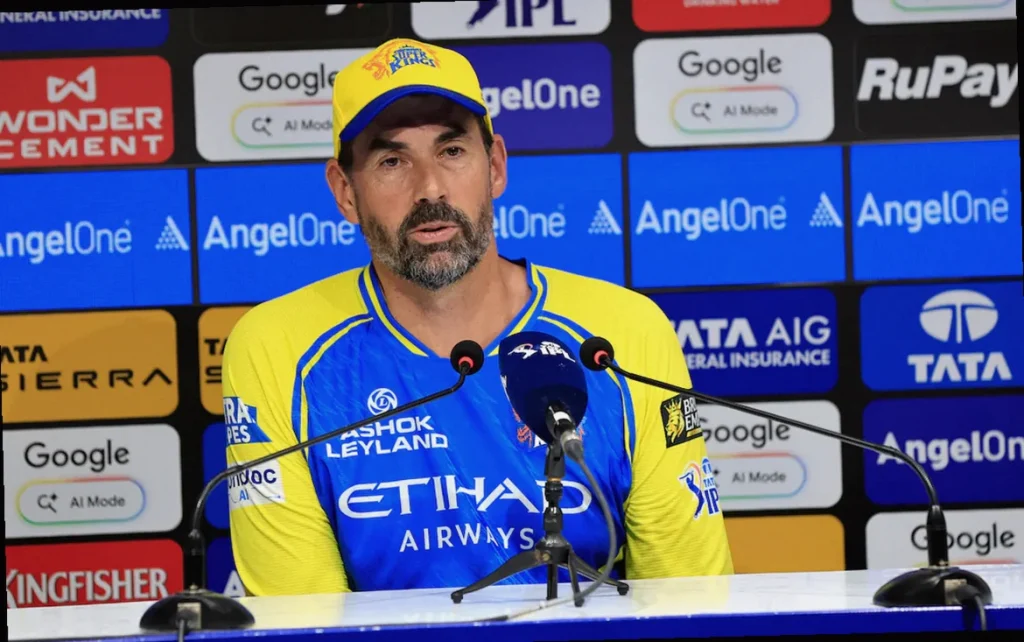
With the IPL 2026 playoffs picture slipping beyond reach for Chennai Super Kings, head coach Stephen Fleming faced a tough set of questions about the team’s direction. The most probing discussion centred on captain Ruturaj Gaikwad’s output this season, especially after CSK’s match against Sunrisers Hyderabad on Monday, where Gaikwad managed 15 runs from 21 deliveries and failed to find the boundary.
Gaikwad’s season under the spotlight
Fleming was direct when asked to assess how Gaikwad has been performing in the ongoing campaign. He acknowledged that the skipper has not produced the same run volume at the required tempo as he has done earlier in his career, and he linked the issue to a key phase of the innings.
- In the Monday game versus Sunrisers Hyderabad, Ruturaj Gaikwad scored 15 off 21 balls and struck no boundaries.
- Fleming pointed to the powerplay as the starting point for improvement, stressing that taking wickets early is central to CSK’s challenges this year.
- He also said Gaikwad has done more in past seasons and that this season’s scoring pace and quantity have not matched his standards.
- The coach admitted that Gaikwad will need to address the gap in output and expressed confidence that he will work on those shortcomings.
Powerplay pressure, partnerships and pitch pace
While Fleming focused on Gaikwad’s role and the team’s powerplay struggles, he also discussed the broader batting dynamics. He highlighted how the innings plan changes with partnerships, including the role of Urvil Patel, and he added that the match conditions made batting more challenging.
- Fleming said CSK’s wicket losses during powerplay overs have hurt the side’s momentum in the season.
- He referred to the combination angle of Gaikwad batting in tandem with Urvil Patel, describing the latter as relatively free-spirited.
- Fleming said CSK will review how that partnership combination works moving ahead.
- He felt the day’s pitch pace made batting difficult, describing the conditions as tougher than usual.
Was 180 enough? Fleming’s assessment of the total
Despite the tricky wicket, Fleming argued that CSK’s opponents were not chasing a target that could be considered easy. He maintained that 180 was more than a competitive figure on a surface where the ball gripped and slowed, and he credited Sunrisers Hyderabad’s batting for getting the job done.
- Fleming said reaching 180 was more than competitive on the day’s wicket.
- He noted the ball was not turning much, with the pitch playing slow rather than offering significant spin.
- He said he did not spend a lot of time evaluating the spin element in detail, given the limited turn.
- He referenced Sunrisers’ use of Akeal Hosein, along with Veer and Noor, as part of what CSK will consider in review.
- Fleming added that the damage, when looking at Sunrisers’ attack, came mainly from their seam bowlers hitting cutters hard into the wicket.
- He concluded that CSK’s bowling attack looked somewhat different compared to the threat Sunrisers created.
Captaincy future: learning, transition and confidence
Asked about Ruturaj Gaikwad’s captaincy future, Fleming refused to write the story as finished. He stressed that Gaikwad has been learning steadily and that the captaincy transition has been shaped by shifting circumstances, including the captain’s availability across recent seasons.
- Fleming said there has been a lot of change, with Gaikwad present throughout this year due to injury-related absence last season.
- He argued it would be unfair to judge Gaikwad’s captaincy based solely on the previous year, when Gaikwad was not available.
- He said the staff has put significant work behind the scenes to understand the group of players.
- Fleming acknowledged mistakes that CSK made but also pointed to good performances, particularly in the second half of the season.
- He said CSK won a number of games after that period and stayed in the fight, but added that the team was not accurate enough consistently.
From MS Dhoni to Gaikwad: a “big transition”
Fleming also addressed the wider context of the captaincy handover from MS Dhoni to Gaikwad, describing it as a major change that takes time. He expressed belief that Gaikwad is doing well, earning respect within the squad and applying what he learns every day.
- Fleming called the shift from Dhoni—one of cricket’s most accomplished franchise captains—to a new captain a major transition.
- He said it would take time for Gaikwad to fully settle into the role and truly fill the void left by the India icon.
- He praised Gaikwad’s work, saying the skipper has a massive level of respect from the group and is learning continuously.
- Fleming ended with a vote of confidence, saying he has no doubt Gaikwad will become a fine captain for the franchise going forward.
